Sign before praying: A new conversion law is affecting churchgoers in Indian stateJanhavee Moole,BBC Marathi, MumbaiandZoya Mateen,BBC News, DelhiAFP via Getty ImagesA new anti-conversion law in Maharashtra has sparked fears among Christians Some churches in and around India's financial capital Mumbai have begun asking worshippers to give a declaration in writing - "I came here to pray of my own free will."Visitors write down their names, sometimes add an ID card number, and sign to say that nobody forced or enticed them to attend church. The forms, a copy of which the BBC has seen, have no official standing. Churches keep them in case a prayer meeting is challenged and its organisers are accused of trying to convert those inside.The practice began at some churches in late August, just before a new law against religious conversion took effect in Maharashtra state, of which Mumbai is the capital.The law prohibits religious conversions brought about by force, fraud, coercion or inducement. It also requires people who want to convert voluntarily to notify authorities in advance. An unlawful conversion can lead to a prison sentence of up to seven years, rising to 10 for a repeat offence.Maharashtra's government says the law protects people, particularly those who are socially or economically vulnerable, from being forced or deceived into changing their religion.But critics say its broad definitions, severe penalties and scrutiny of even voluntary conversions risk drawing the state and the police into one of the most private decisions a person can make. The state government did not respond to the BBC's repeated requests for comment.While the law applies to all religions, the anxiety is being felt most deeply at places where minorities, especially Christians, worship. At the heart of the debate is a long-running tension over allegations, usually made by right-wing groups, about people being coerced or induced to change their religion for benefits.Devdan Tribhuvan has seen some of that anxiety up close.A fourth-generation Christian in Vasai, a suburb of Mumbai, he is part of an organisation that provides legal aid to Christians in and around the city. In recent months, he says, people have increasingly approached him not about court cases, but with accounts of disrupted prayer meetings and questions about what they are still free to do.Some have described strangers walking into churches and questioning those inside: "What is your name? Why are you here? Has anyone offered you something?"Getty ImagesPeople from all religions visit the famous Mount Mary Church in Mumbai The questions can become more pointed, Tribhuvan said, when a worshipper has a name that does not sound Christian: "Has anyone forced you to come? Has anyone offered you an inducement?"Many who contact him are not looking to take legal action. They want to know whether simply gathering to pray could leave them vulnerable to an accusation of conversion.In July, an investigation by The Indian Express documented five disruptions of Christian prayer meetings around Mumbai between April and July. Nine police cases followed - seven against worshippers or prayer organisers, and two against members of the Hindu nationalist group Bajrang Dal. Police did not respond to detailed questions about the cases or the action taken."Is gathering for prayer itself conversion?" Tribhuvan asks.In Mumbai, Tribhuvan's question carries particular weight. The city grew by drawing people from across India and beyond, bringing their gods and rituals with them. A church bell can sound within earshot of a mosque's call to prayer; a shrine belonging to one faith can draw followers of another.People of many faiths make their way to the Muslim shrine Haji Ali. Hindus light candles at Mount Mary, a Catholic basilica overlooking the city. Crowds fill the streets around Lalbaug during the Hindu festival of Ganesh Chaturthi and stream to Siddhivinayak temple throughout the year.Maharashtra is the latest of more than a dozen states to restrict religious conversion. The laws differ, but their reach has expanded in recent years, particularly in states governed by Prime Minister Narendra Modi's Bharatiya Janata Party. Several are being challenged before the Supreme Court.Behind that expansion lie claims long made by Hindu nationalist groups, that Christians use money, schooling or medical care to draw poor and tribal communities away from Hinduism, and that Muslim men court Hindu women to convert them - an alleged conspiracy they call "love jihad."ReutersA bunch of anti-conversion laws in Indian states have made interfaith marriages more challengingCritics say such accusations have fuelled harassment of Christian prayer meetings and interfaith couples, and that the laws give those making them a way to draw the police into questions of prayer, marriage and belief.Maharashtra's government says the new law leaves people free to convert by choice, while addressing what it says is a rise in forced conversions that existing laws have failed to curb.Critics question where it draws the line between force and choice."We do not support forceful conversions, if any," said Samsuddin Tamboli, president of the Muslim Satyashodhak Mandal (Muslim Truth-seeking Society), a reformist organisation. His concern is what the law counts as inducement.Its definition of "allurement" includes employment, free education at a religious institution, a promise of marriage, a "better lifestyle" and "divine healing". Even glorifying one religion over another can fall within it."The definition has been kept so vague that almost any benefit accruing to a person can be considered or argued to be an allurement," said Abhay Thipsay, a retired Bombay High Court judge."If a person receives some benefit and consciously chooses to convert for that reason, why should it be considered wrong?"The law also allows parents, siblings and other relatives to complain to police about an allegedly unlawful conversion, leaving the person accused of causing or assisting it to prove that it was lawful.Critics say for interfaith couples, that provision adds another potential obstacle to marriages that can already face family opposition.Indian law allows people of different faiths to marry without converting, but requires a month's notice. Lara Jesani, a lawyer who has helped interfaith couples obtain court protection, said details of planned weddings have sometimes reached relatives and Hindu nationalist groups opposed to them within that notice period. Getty ImagesCritics fear the new law may give families or right-wing organisations a new way to target interfaith couplesIn cases she has handled, she said, families have taken women away, even from the marriage registrar's office.Now, she fears the new law may give the families or right-wing organisations a new way to target such couples."Even when neither intend to convert, [the couples] fear a relative could accuse one partner of trying to convert the other."The Maharashtra government did not respond to detailed questions from the BBC about these concerns. But when the law was passed, state minister Pankaj Bhoyar said it did not infringe upon the right to change religion. The notification requirement, he said, was intended to establish whether a conversion was voluntary, while allowing the state to act against those brought about by fraud, coercion or inducement.But Tribhuvan is still worried, an anxiety, he says, which reaches even the small prayer gatherings held closer to home when a church is too far away. Fifty people might attend, he said, sometimes 100 - and someone who is not Christian might join too."If someone else wishes to come and pray, we cannot stop them," he said. "That is what we call the right to choose."To Thipsay, the retired judge, the precaution points to a larger question."If an adult has the power to make major decisions - such as whom to marry - and has been given the right to vote," he said, "why should they not have the power to make this decision too?"
SRCBBC News - World
LANGEN
LEANCenter
WORDS1 265
ENT12
TUE · 2026-09-29 · 00:50 GMTBRIEF NSR-2026-0929-114836
NSR-2026-0929-114836News Report·EN·Human Rights
Sign before praying: A new conversion law is affecting churchgoers in Indian state
A new anti-conversion law in Maharashtra, India, has led some churches in Mumbai to ask worshippers to sign declarations stating they are attending voluntarily. The law, which took effect in late August, prohibits religious conversions through force, fraud, coercion, or inducement, and requires voluntary converts to notify authorities.
1 hour agoBBC News - WorldFiled 2026-09-29 · 00:50 GMTLean · CenterRead · 6 min
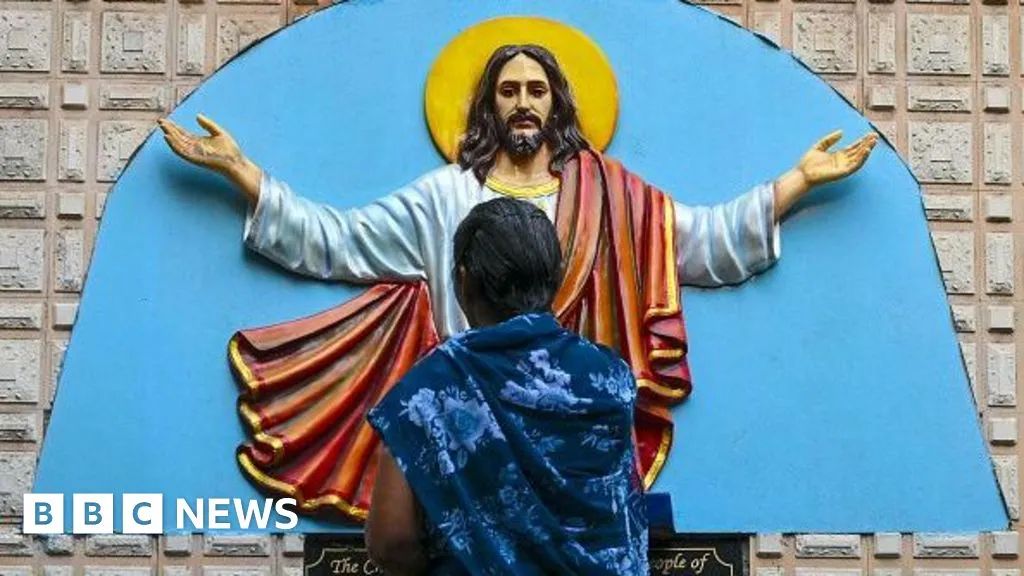
BBC News - WorldFIG 01
Reading time
6min
Word count
1 265words
Sources cited
2cited
Entities identified
12entities
Quality score
100%
§ 01
Briefing Summary
AI-generatedNEWSAR · AI
A new anti-conversion law in Maharashtra, India, has led some churches in Mumbai to ask worshippers to sign declarations stating they are attending voluntarily. The law, which took effect in late August, prohibits religious conversions through force, fraud, coercion, or inducement, and requires voluntary converts to notify authorities. While the government claims the law protects vulnerable individuals, critics argue its broad definitions and penalties could lead to police interference in private decisions. The law applies to all religions, but Christians are experiencing significant anxiety, with reports of disrupted prayer meetings and questioning of attendees. This measure is part of a trend of similar laws enacted in several Indian states, often fueled by allegations from right-wing groups about forced conversions.
Confidence 0.90Sources 2Claims 5Entities 12
§ 02
Article analysis
Model · rule-basedFraming
Human Rights
Legal & Judicial
Tone
Mixed Tone
AI-assessed
CalmNeutralAlarmist
Factuality
0.70 / 1.00
Factual
LowHigh
Sources cited
2
Limited
FewMany
§ 03
Key claims
5 extracted01
An unlawful conversion in Maharashtra can lead to a prison sentence of up to seven years, rising to 10 for a repeat offense.
factual
Confidence
0.95
02
A new anti-conversion law in Maharashtra prohibits religious conversions brought about by force, fraud, coercion or inducement.
factual
Confidence
0.95
03
Some churches in Maharashtra have begun asking worshippers to provide a written declaration stating they came to pray of their own free will.
factual
Confidence
0.90
04
Critics argue that the law's broad definitions and severe penalties risk involving the state and police in private decisions about religion.
factualCritics
Confidence
0.85
05
Right-wing groups often allege that people are coerced or induced to change their religion for benefits.
factualRight-wing groups
Confidence
0.80
§ 04
Full report
6 min read · 1 265 words§ 05
Entities
12 identifiedKey playerOppositionContextPositiveNeutralNegative
Organizations4
Locations5
§ 06
Keywords & salience
9 termsanti-conversion law
1.00
religious conversion
0.90
maharashtra
0.80
churchgoers
0.70
christian minorities
0.70
mumbai
0.60
voluntary conversion
0.50
legal aid
0.50
right-wing groups
0.40
§ 07
Topic connections
Interactive graph No topic relationship data available yet. This graph will appear once topic relationships have been computed.