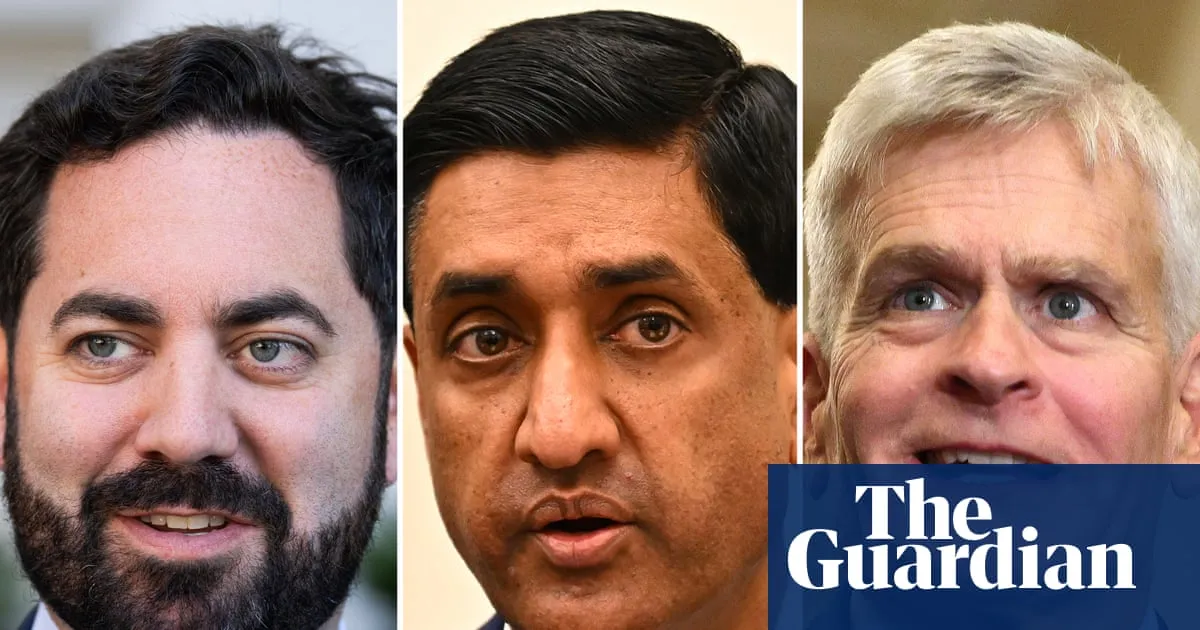
New campaign finance disclosure data shines a light on which US political campaigns are using AI tools and how much they are spending on them.Candidates’, parties’, and committees’ spending reveals that AI is fast becoming an essential tool of politics. The candidates themselves are quiet about how they are using the technology in their own campaigns. It’s a sensitive issue that we have been tracking closely since we started writing our book, Rewiring Democracy, which examined how AI is beginning to influence politics. A September 2025 Pew survey of Americans found that more than 70% would think less of a candidate if they used AI to help write a speech.Itemized expenditure disclosure data from the US Federal Election Commission, dating back to 2020, reveals at least $17m in disclosed spending on AI technology vendors across 523 federal candidates and campaigns. Data from four states, California, Colorado, Massachusetts, and Washington, provides a more localized picture going back to 2022.Beginning with the AI behemoths, at least 80 federal campaigns and committees have reported spending with OpenAI since 2024. The total spending is not huge: only about $50,000 reported, skewing slightly more Republican than Democratic. The Republican National Committee is the largest overall buyer, with nearly $10,000 in reported expenses. Top individual users include the campaigns of Republicans Mike Lawler, John Kennedy and Bill Cassidy, as well as California Democrats Ro Khanna and Ted Lieu. Most of these expenses are listed as office expenses, subscriptions to ChatGPT for staff, or research tools, rather than as specific political services. The company’s policies prohibit some political uses of their ChatGPT tool.OpenAI’s biggest competitor, Anthropic, has rapidly built a similar level of usage, but with a different split. At least 65 candidates or committees now report paying the Claude maker in 2026, up from essentially zero in previous years, with a nearly two-to-one Democrat-to-Republican ratio. However, the largest individual user is the campaign of Tom Cotton, a Republican senator from Arkansas, who reported more than $4,000 in spend on Anthropic software in his June filing. Other major users are Montana Independent Senate candidate Seth Bodnar and Jason Knapp, who lost a Democratic House primary in Virginia, and Democratic Alaska Senate candidate Mary Peltola.Candidates use either Claude or ChatGPT, rarely both, according to the disclosures. Only about 12% of campaigns or committees using either tool reported expenditures to both vendors. The Democratic lean of Anthropic usage may reflect the company’s alleged liberal skew and clashes with the Trump administration.In contrast, Elon Musk’s xAI caters to Republican interests and, accordingly, its meager usage comes almost entirely from the political right. Just seven federal and two state-level candidates or committees have reported paying xAI, a total of about $5,000, the majority of which was spent by the presidential campaign of RFK Jr in 2024, but also includes Republicans Dave McCormick and Thomas Massie.More dollars go to the vendors specializing in political campaign applications of AI. For years, AmplifAI, which provides automated text messaging, essentially a new iteration on robocalling technology, was a dominant target of spending, soaking up $4.7m in campaign spending in the 2022 cycle alone. It was used heavily by Democratic candidates including Mark Kelly, Joe Biden, Bernie Sanders and Adam Schiff. Now owned by the troubled media conglomerate Triller, spending on AmplifAI seems to have tapered off in the years since 2022.The new rising Democratic solution for AI-powered text messaging is Daisychain, which has so far garnered about $300,000 in reported candidate spend in the 2026 cycle-up from only about $50,000 reported in 2024. More than half of this year’s spending comes from the Senate campaign of Democrat Abdul El-Sayed in Michigan.The closest equivalent on the Republican side has been Campaign Nucleus, associated with former Trump campaign manager Brad Parscale. The AI-powered voter engagement tool has attracted six-figure spending from the Republican National Committee, multiple Pacs aligned with Donald Trump, and five-figure investments from Mike Johnson, Kari Lake and other candidates. It is displacing the legacy Republican-serving texting vendor Prompt.io, which has retained about $375,000 in 2026 spending to date, down from more than $500,000 in the 2022 cycle. But it continues to be used: the A More Affordable California Pac sponsored by Uber has single-handedly spent more than $1m on Prompt.io in 2026. Republican Massachusetts gubernatorial nominee Michael Minogue has been a recurring customer, as has failed Republican California gubernatorial candidate Ché Ahn and Republican-aligned Super Pac Neighbors for a Better Colorado.At the state levelAt the state level, the AI spending is smaller but growing fast. Across the four states studied, we found a total of at least $92,000 in spending confidently attributable to modern generative AI vendors since 2022. The spending is spread across at least 108 candidates and committees. The growth has been explosive; there has already been about ten times the amount of state-level AI spending reported in 2026 as there was in all of 2024.skip past newsletter promotionafter newsletter promotionMuch of the state spending mirrors federal patterns. Daisychain again has the highest overall spend, and OpenAI and Claude dominate among the general-purpose AI vendors. DonorAtlas – the AI-powered prospect research tool – sticks out for its usage in these states, sitting behind only Daisychain and OpenAI and buoyed up by nearly $4,000 in spending by the California Democratic party.Even though it has dominated so much media conversation, few candidates seem to be reporting spending on AI tools designed specifically to create synthetic audio and video, also known as “deepfakes”. We found just six federal candidates or committees reporting spending on the popular AI audio generator tool from ElevenLabs, with total spending of about $1,400 led by independent candidate for Colorado’s sixth congressional district Samir Witta. The AI image generator service Midjourney has five reported federal campaign or committee users reporting about $1,600, led by Sholdon Daniels, the Republican primary runner-up in the Texas 30th district. Combined, those two firms had less than $100 in reported spend across the four states.However, recent data from the Wesleyan Media Project shows that at least 164 political ads in this cycle have included AI-generated media, supported by at least $80m in ad spending. What this illustrates is that candidate and committee disclosure reports are just the tip of the iceberg. They don’t cover spending on AI by political consultants, media firms, and other vendors hired by the campaigns or by Pacs, or independent committees raising and spending money aimed at boosting candidates’ campaigns. Those entities aren’t required to disclose detailed expenditure reports, and are very likely where the bulk of campaign AI usage is happening.Since a large fraction of all spending in the campaign cycle will happen in the final weeks leading to November, much remains to be seen about the totality of how campaigns will leverage AI and what impact its use will have on voters’ decisions.
SRCThe Guardian - World News
LANGEN
LEANCenter-Left
WORDS1 133
ENT12
TUE · 2026-09-29 · 11:00 GMTBRIEF NSR-2026-0929-114954
NSR-2026-0929-114954News Report·EN·Political Strategy
New campaign disclosures reveal how much American political campaigns spend on AI tools
New campaign finance disclosures reveal that American political campaigns are increasingly spending on AI tools, with over $17 million disclosed on AI technology vendors by 523 federal candidates and campaigns since 2020. While candidates remain largely silent about their AI usage, data shows significant spending with major AI companies like OpenAI and Anthropic, with differing partisan leanings.
Nathan Sanders and Bruce SchneierThe Guardian - World NewsFiled 2026-09-29 · 11:00 GMTLean · Center-LeftRead · 5 min
The Guardian - World NewsFIG 01
Reading time
5min
Word count
1 133words
Sources cited
0cited
Entities identified
12entities
Quality score
100%
§ 01
Briefing Summary
AI-generatedNEWSAR · AI
New campaign finance disclosures reveal that American political campaigns are increasingly spending on AI tools, with over $17 million disclosed on AI technology vendors by 523 federal candidates and campaigns since 2020. While candidates remain largely silent about their AI usage, data shows significant spending with major AI companies like OpenAI and Anthropic, with differing partisan leanings. Campaigns are also investing in specialized AI political applications, such as automated text messaging services. This trend indicates AI is becoming an essential, though often undisclosed, tool in political campaigning across federal and state levels.
Confidence 0.90Claims 5Entities 12
§ 02
Article analysis
Model · rule-basedFraming
Political Strategy
Technology
Tone
Measured
AI-assessed
CalmNeutralAlarmist
Factuality
0.80 / 1.00
Factual
LowHigh
Sources cited
0
No named sources
FewMany
§ 03
Key claims
5 extracted01
Elon Musk's xAI has seen meager usage, with only nine federal and state-level candidates or committees reporting payments.
statistic
Confidence
1.00
02
At least 65 candidates or committees reported paying Anthropic in 2026, with a nearly two-to-one Democrat-to-Republican ratio.
statistic
Confidence
1.00
03
At least 80 federal campaigns and committees have reported spending with OpenAI since 2024, totaling about $50,000.
statistic
Confidence
1.00
04
US political campaigns have disclosed at least $17 million in spending on AI technology vendors since 2020.
statistic
Confidence
1.00
05
More than 70% of Americans would think less of a candidate if they used AI to help write a speech, according to a September 2025 Pew survey.
statisticPew survey
Confidence
0.90
§ 04
Full report
5 min read · 1 133 words§ 05
Entities
12 identifiedKey playerOppositionContextPositiveNeutralNegative
People5
Organizations5
Locations1
§ 06
Keywords & salience
10 termspolitical campaigns
1.00
ai tools
1.00
campaign finance
0.90
spending
0.80
openai
0.70
anthropic
0.70
claude
0.60
chatgpt
0.60
us federal election commission
0.50
pew survey
0.40
§ 07
Topic connections
Interactive graph Network visualization showing 51 related topics
View Full Graph Person Organization Location Event|Click node to navigate|Edge numbers = shared articles