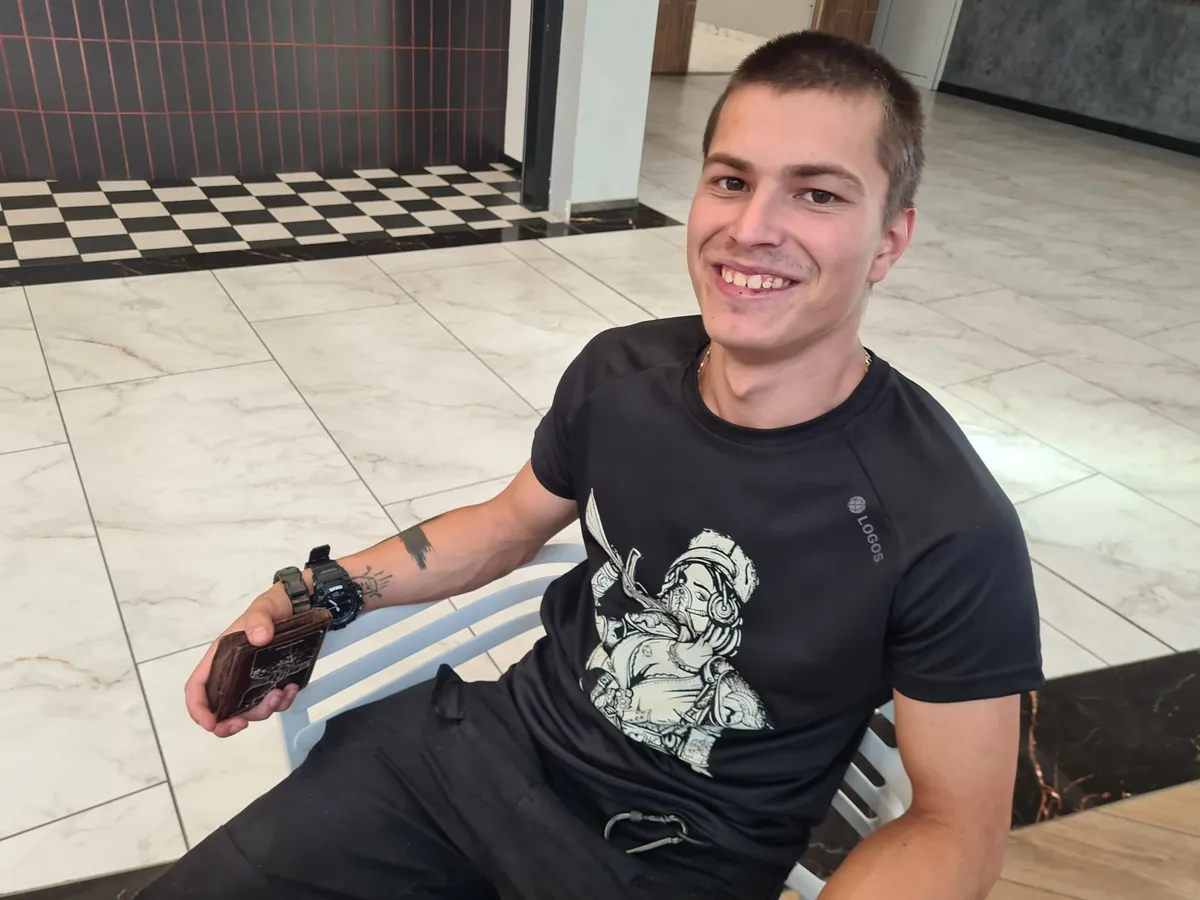
Denys Kostev says he was forcibly transferred from Kherson in 2022 and coerced into pro-Russian campaigns before finally escaping.Denys Kostev, 22, says he was forced into filming pro-Russian videos but has since returned to Ukraine to fight for Kyiv [Mansur Mirovalev/Al Jazeera]Published On 30 Sep 2026Kyiv, Ukraine – When the full-scale Ukraine" class="entity-link entity-event" data-entity-id="23997" data-entity-type="event">Russian invasion of Ukraine began, Denys Kostev was 18 and living in an orphanage in Kherson. Appalled by the war, he used to film social media videos decrying the invading Russian forces.But he was soon forcibly transferred to occupied Crimea, and his rhetoric suddenly went in the other direction.Recommended Stories list of 4 itemslist 1 of 4At least 10 people killed in Russian and Ukrainian attackslist 2 of 4Lavrov: Russia’s war in Ukraine will continue ‘through to the end’list 3 of 4Russia scales up strikes on Ukraine as largest steelmaker halts operationslist 4 of 4Russian strikes kill eight, injure dozens across Ukraineend of listNow in Kyiv four years later, Kostev told Al Jazeera he played the role of a poster child for wartime Russia just to survive.Sprightly, eloquent and photogenic, he used to attend a theatre club at his orphanage in the southern Ukrainian city, where he lived after his mother’s incarceration and death.The experience helped him “star” in numerous videos for Russian television networks – because refusing to be filmed meant risking physical assault or being threatened with jail, he said.“It was useful to play this pro-Russian role,” said Kostev, who, having ultimately escaped Russia, is now preparing to fight for Ukraine. “I wanted to live.”But surviving did not come easy, he said.Kostev’s terrifying journeyTanks rolled into Kherson days after the war began. People suspected of pro-Ukrainian sympathies were rounded up and interrogated. Some were allegedly abused.In late 2022, while at the orphanage, Kostev also studied in a trade school. But as the war intensified, he and others were relocated to the Luchisty (“Full of Sunshine”) summer camp in Russia-annexed-Crimea" class="entity-link entity-location" data-entity-id="211657" data-entity-type="location">Russia-annexed Crimea.“Every morning, you wake up to the Russian anthem, and every Monday, there’s a celebratory hoisting of the Russian flag,” Kostev said of his time there.The orphans were isolated, he added.“They’re without parents, no one to explain what’s right or wrong,” he said. “At a certain point, you begin to repeat pro-Russian narratives.”At least one teenager Kostev met in the camp enlisted to fight against Kyiv, he said.Ukraine is working to return allegedly abducted children and collect evidence against individuals suspected of being involved in their capture. More than 2,600 children have returned so far.The summer camp’s “administration” has not responded to Al Jazeera’s request for comment. Kyiv said that 84 Ukrainian orphans were held there in 2023.Those who left were among almost 4,000 children forcibly taken from orphanages in Russia-occupied Ukrainian regions, according to Ukrainian rights groups. Kyiv claims that Moscow has herded almost 20,000 Ukrainian minors to Russia to “brainwash” them during the war.While the Kremlin acknowledges that children are being “re-educated”, it rejects Ukraine’s claims, saying that any children who have been moved were rescued from war zones.Some of these children lost parents during Russian shelling, and others ended up in “summer camps” after pro-Moscow authorities reportedly convinced their parents to let them go for “safety reasons”.Ukraine claims that some children were abducted from parents who refused to collaborate with Moscow-installed “administrations” in Russia-occupied areas.Russian forces and their Ukrainian collaborators have also been accused by Ukrainian rights groups of interrogating and abusing parents – and checking their bodies for pro-Kyiv tattoos or bruises left by recoiling firearms.‘Deeply disturbing reports’International rights groups decry the alleged abduction and indoctrination of children as one of the Kremlin’s gravest crimes.“The physical destruction of this war is visible to everyone, but the campaign to abduct and ‘re-educate’ Ukrainian children as Russian represents something more sinister altogether,” Ivar Dale, a senior policy adviser with the Norwegian Helsinki Committee, a rights watchdog, told Al Jazeera.“It’s unacceptable,” he said. “There are deeply disturbing reports that Russia is carrying out military indoctrination with a view to use some of these children in the armed forces in their war against Ukraine.”Some 5,500 young Ukrainians in Russia-occupied areas were sent into Yunarmiya (“Young Army”), a movement that provides military training, according to Ukrainian officials.The earlier the age, the deeper the transformation of a child’s worldview, according to Svitlana Chunikhina, vice president of the Association of Political Psychologists of Ukraine, a group in Kyiv.“Children have a flexible psyche; they quickly adapt to a new environment, they mostly trust adults – sometimes involuntarily, but they have no other choice – and take many things for granted,” she said.That is why they cannot resist Moscow’s narratives, she said.“But it doesn’t mean that the same will surely happen to all Ukrainian children,” Chunikhina said.While younger children studied in the camp according to the Russian curriculum, the education system did not appear to have had a thorough, comprehensive programme for teenagers such as Kostev.Along with his friends, he hung around a Soviet-era compound dotted with cypresses, acacias and evergreen shrubs.They were not allowed to leave it – but occasionally sneaked out to buy cigarettes and alcohol. Those who were caught drunk were isolated for three days in the hospital and were threatened with prison by the camp’s security chief, a former officer with Ukraine’s special forces who had switched sides, said Kostev, who is now 22.The idea that the children would “never return to Ukraine” was drummed into them, he said.In April 2023, after months in camps in Crimea, Kostev was sent back to the occupied southern town of Henichesk – and learned that Russian troops had withdrawn from Kherson seven months earlier.He enrolled in another trade school and was housed in a squalid, ice-cold dormitory he complained about in a video that went viral.The next morning, Russia-installed police strip-searched him, claiming he was “spying” for Kyiv and threatened him with jail, he said.Then he was forced to extol Russia on camera.In one video, he said he had joined a Kremlin-funded youth movement, wrapped himself in a Russian flag and declared that he wanted to enlist.But he told Al Jazeera that he was forced and coerced into championing Russia, and had always wanted to leave.In early 2024, Kostev got in touch with his elder brother and grandmother who had relocated to Germany. He managed to join them and later crossed into Poland, where he spent months awaiting a new Ukrainian passport.In April, he returned to Ukraine. He said he has attended a military training camp and is now in the early stages of his military career as a drone pilot.“Wherever you are – home is better,” he said, sitting in a shopping mall in a Kyiv suburb, shortly before air raid sirens forced everyone outside.
SRCAl Jazeera
LANGEN
LEANCenter
WORDS1 114
ENT9
WED · 2026-09-30 · 09:54 GMTBRIEF NSR-2026-0930-115269
NSR-2026-0930-115269News Report·EN·Human Interest
‘I wanted to live’: A Ukrainian orphan’s journey through Russian occupation
Denys Kostev, a 22-year-old Ukrainian orphan, recounts his experience of being forcibly transferred from Kherson to Russian-annexed Crimea in late 2022. While at an orphanage, he was coerced into filming pro-Russian propaganda videos for Russian television networks to ensure his survival, fearing physical assault or imprisonment if he refused.
Mansur MirovalevAl JazeeraFiled 2026-09-30 · 09:54 GMTLean · CenterRead · 5 min
Al JazeeraFIG 01
Reading time
5min
Word count
1 114words
Sources cited
1cited
Entities identified
9entities
Quality score
100%
§ 01
Briefing Summary
AI-generatedNEWSAR · AI
Denys Kostev, a 22-year-old Ukrainian orphan, recounts his experience of being forcibly transferred from Kherson to Russian-annexed Crimea in late 2022. While at an orphanage, he was coerced into filming pro-Russian propaganda videos for Russian television networks to ensure his survival, fearing physical assault or imprisonment if he refused. Kostev describes the isolation and indoctrination faced by orphans in Crimea, where they were exposed to Russian anthems and flag-raising ceremonies. He states that he ultimately escaped and is now preparing to fight for Ukraine. Ukraine is actively working to return abducted children and gather evidence of alleged forced transfers and indoctrination, with thousands of Ukrainian minors reportedly taken to Russia.
Confidence 0.90Sources 1Claims 5Entities 9
§ 02
Article analysis
Model · rule-basedFraming
Human Interest
Human Rights
Tone
Measured
AI-assessed
CalmNeutralAlarmist
Factuality
0.70 / 1.00
Factual
LowHigh
Sources cited
1
Limited
FewMany
§ 03
Key claims
5 extracted01
Kostev has since returned to Ukraine and is preparing to fight for Kyiv.
factualDenys Kostev
Confidence
0.90
02
Kostev states he was coerced into filming pro-Russian videos to survive under Russian occupation.
factualDenys Kostev
Confidence
0.90
03
Denys Kostev, a 22-year-old Ukrainian orphan, claims he was forcibly transferred from Kherson to occupied Crimea in 2022.
factualDenys Kostev
Confidence
0.90
04
Kyiv claims that 84 Ukrainian orphans were held at the Luchisty summer camp in 2023.
factualKyiv
Confidence
0.80
05
He alleges that refusing to be filmed meant risking physical assault or threats of jail.
factualDenys Kostev
Confidence
0.80
§ 04
Full report
5 min read · 1 114 words§ 05
Entities
9 identifiedKey playerOppositionContextPositiveNeutralNegative
Organizations1
Locations6
§ 06
Keywords & salience
10 termsrussian occupation
1.00
ukrainian orphan
1.00
forced transfer
0.90
pro-russian campaigns
0.90
kyiv
0.80
kherson
0.80
survival
0.70
propaganda
0.60
russian invasion
0.50
crimea
0.40
§ 07
Topic connections
Interactive graph Network visualization showing 51 related topics
View Full Graph Person Organization Location Event|Click node to navigate|Edge numbers = shared articles