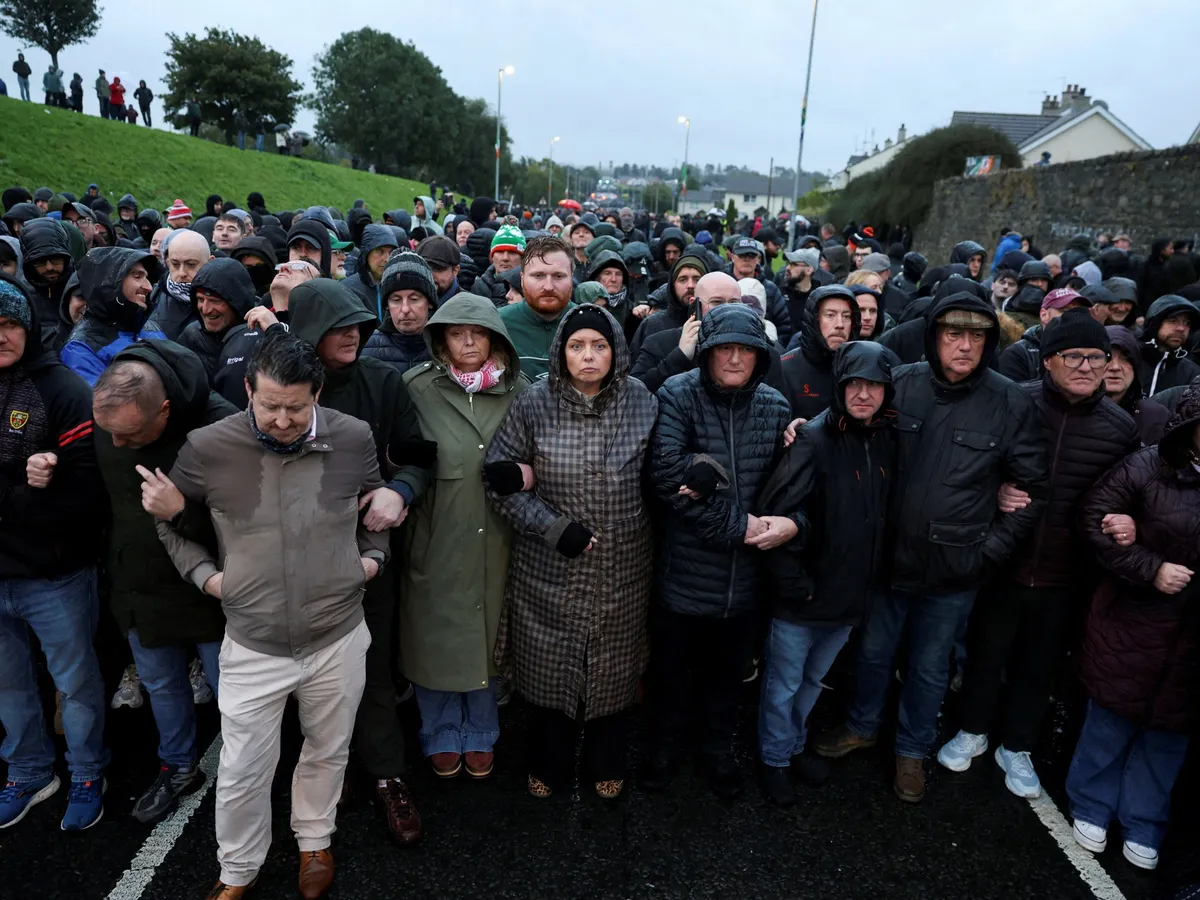
Residents block an Orange Order parade in a standoff that has revived tensions, legal disputes and political conflict.Published On 30 Sep 2026Portadown, Northern Ireland – On the Garvaghy Road in Northern Ireland, residents have spent days gathering to stand guard in their community.They have linked arms and blocked their road, preparing to stop a Protestant Orange Order parade from attempting to march through this predominantly Catholic area for the first time in 28 years.Recommended Stories list of 3 itemslist 1 of 3Northern Ireland protesters block Orange Order march in Portadownlist 2 of 3Northern Ireland protesters block Orange Order march into Catholic arealist 3 of 3Protesters block Orange Order march in Northern Irelandend of listSome pitched tents. Others brought food and stayed through the night, keeping watch.“We’ll be here as long as we have to be,” said one local woman, who asked not to be identified for fear of violent reprisals. “I’ve seen the fighting when those Orangemen come along here, and I’m not having it back here – none of us are.”A demonstrator holds a placard, as people protest on the Garvaghy Road, a Catholic enclave in the largely Protestant town of Portadown, against the Protestant Orange Order’s annual Drumcree parade, in Northern Ireland, September 27, 2026 [Cathal McNaughton/Reuters]The Orange Order, a Protestant organisation with a historically anti-Catholic tradition, has been banned from marching on Garvaghy Road for the last 28 years.The High Court order has overturned that ban. Now, a small group of Orangemen gathers at Drumcree Church each day in their traditional regalia, ready to march.But they have not been able to get beyond the end of the road. Police stand in their way, refusing them permission to pass and citing the risk of violence with so many protesters waiting a few hundred metres away.This has infuriated the Orange Order, which has called for the Police Service of Northern Ireland chief constable, Jon Boutcher, to be removed. The group believe they have a legal right to march and accuse police of yielding to the protesters.“We hold a positive determination issued by the Parades Commission and reinforced by the High Court judge,” Nigel Dawson, district master of the Portadown-orange-lodge" class="entity-link entity-organization" data-entity-id="211774" data-entity-type="organization">Portadown Orange Lodge, told Al Jazeera. “The chief constable must comply with the law.”In the 1990s, there were protests and violence when the Orange Order tried to return from Drumcree Parish Church along the road.When asked how much longer the Orangemen are prepared to wait, Dawson said, “I’ve been at Drumcree for 28 years.”Dawson warned of a dangerous precedent in which “might makes right”.If a protest is big enough, the police can refuse to uphold a court ruling, he said, adding, “We have the law on our side here.”Ultan Larkin, a protester who travelled to Portadown from the neighbouring town of Armagh to show support for the Garvaghy Road residents, said, “The law is on their side, but justice is not on their side.“There’s hurt here. There’s pain here. Just because you can doesn’t mean you should.”The standoff has so far been peaceful. But history tells the story of why this confrontation has a real risk of escalation.‘Justice is not on their side’Garvaghy Road was one of the most potent flashpoints of The Troubles – a 30-year conflict between mostly Protestant unionists who fought for Northern Ireland to remain part of the UK, and predominantly Catholic republicans who want a united Ireland.Orange marches through the Catholic area were usually accompanied by some of the worst sectarian violence Northern Ireland has seen.The peace deal known as the Good Friday Agreement was signed in 1998, and it transformed Northern Ireland.Large-scale violence largely ended, former enemies shared power in a devolved assembly at Stormont, and a generation grew up in an era of peace without soldiers manning checkpoints on their streets.Following this peace process, the Orange Order was prevented from parading along Garvaghy Road – an effective ban that has lasted almost three decades, until now.In an unexpected decision, the Northern Ireland Parades Commission allowed for a scaled-down Orange march to go ahead under strict conditions. Only 35 Orangemen could take part in the march, and they would have to do so in silence without their usual flutes and drums.Residents of Garvaghy Road were appalled and legally challenged this ruling.A High Court judge initially granted an injunction preventing the parade, but the Court of Appeal overturned that ruling late on Saturday, clearing the legal way for the march to proceed on Sunday morning.A further High Court challenge was subsequently dismissed.Ultan grew up during the Troubles. He was convicted for having a senior role in the Real IRA and was sentenced to four years in prison – a conviction quashed years later on appeal.“We have to live together, and to do that we have to respect each other,” he said. “But where is the respect if you’re marching through a community that doesn’t want you and where the people of that community are asking you to march somewhere else?”“On the Irish tricolour we have green, white, and orange. The green is for the Irish Catholics here, and the orange is for the Protestant community, with white symbolising peace. We all have our place.”He said there are old wounds on Garvaghy Road.“People here suffered a lot when the Orange marches came. They remember how bad things were here – the intimidation and that sort of thing – and some people just aren’t able to forgive that.”Political falloutThe standoff has become a political crisis in Northern Ireland, affecting the power-sharing government that runs the country.Sinn Fein First Minister Michelle O’Neill visited Garvaghy Road to stand beside the protesters, alongside Sinn Fein President Mary Lou McDonald.The Democratic Unionist Party (DUP) accuses nationalist politicians of breaking the law by supporting a protest that blocked Garvaghy Road, and observers have questioned how the first minister can continue in her role when she has openly rejected a High Court ruling.The confrontation is particularly awkward as the DUP and Sinn Fein are supposed to govern together, representing the two principal political traditions that emerged from the conflict as part of the peace process.The language between them has become increasingly bitter, and in less than nine months, Northern Ireland faces an Assembly election.For now, the DUP and Sinn Fein remain in government together, while accusing the other of threatening the political settlement that followed the Good Friday Agreement.Meanwhile, attempts to find a resolution continue.Northern Ireland Secretary Chris Bryant has met representatives of the two communities, but talks have so far failed to produce a breakthrough.His future is also now on the line over this.Bryant could revoke the Orange Order’s right to march, but he has not exercised this power. Unionists have threatened to call for his resignation if he tries. Irish nationalists say they will do likewise if this parade goes ahead.
SRCAl Jazeera
LANGEN
LEANCenter
WORDS1 129
ENT12
WED · 2026-09-30 · 15:06 GMTBRIEF NSR-2026-0930-115324
NSR-2026-0930-115324News Report·EN·Conflict
Garvaghy Road standoff brings Northern Ireland’s old wounds back to surface
Residents on Garvaghy Road in Portadown, Northern Ireland, are blocking an Orange Order parade, reviving tensions from "The Troubles." The Protestant Orange Order, historically anti-Catholic, has been banned from marching on Garvaghy Road for 28 years, but a recent High Court ruling overturned this. Police are preventing the parade from proceeding due to the risk of violence, angering the Orange Order who claim a legal right to march.
Peter SmithAl JazeeraFiled 2026-09-30 · 15:06 GMTLean · CenterRead · 5 min
Al JazeeraFIG 01
Reading time
5min
Word count
1 129words
Sources cited
3cited
Entities identified
12entities
Quality score
100%
§ 01
Briefing Summary
AI-generatedNEWSAR · AI
Residents on Garvaghy Road in Portadown, Northern Ireland, are blocking an Orange Order parade, reviving tensions from "The Troubles." The Protestant Orange Order, historically anti-Catholic, has been banned from marching on Garvaghy Road for 28 years, but a recent High Court ruling overturned this. Police are preventing the parade from proceeding due to the risk of violence, angering the Orange Order who claim a legal right to march. Residents, many of whom experienced sectarian violence in the past, are determined to prevent the parade, citing historical hurt and a lack of respect. The standoff, though currently peaceful, highlights the lingering divisions in Northern Ireland following the Good Friday Agreement.
Confidence 0.90Sources 3Claims 5Entities 12
§ 02
Article analysis
Model · rule-basedFraming
Conflict
Legal & Judicial
Tone
Mixed Tone
AI-assessed
CalmNeutralAlarmist
Factuality
0.70 / 1.00
Factual
LowHigh
Sources cited
3
Well sourced
FewMany
§ 03
Key claims
5 extracted01
The Orange Order warns of a dangerous precedent where 'might makes right' if police refuse to uphold court rulings.
quoteNigel Dawson
Confidence
1.00
02
The Orange Order believes they have a legal right to march and accuses police of yielding to protesters.
quoteNigel Dawson
Confidence
1.00
03
Police are preventing the Orange Order from marching due to the risk of violence.
factual
Confidence
1.00
04
The High Court overturned a ban preventing the Orange Order from marching on Garvaghy Road.
factual
Confidence
1.00
05
Garvaghy Road residents are blocking an Orange Order parade for the first time in 28 years.
factual
Confidence
1.00
§ 04
Full report
5 min read · 1 129 words§ 05
Entities
12 identifiedKey playerOppositionContextPositiveNeutralNegative
Organizations5
§ 06
Keywords & salience
10 termsorange order parade
1.00
northern ireland
1.00
garvaghy road standoff
1.00
sectarian tensions
0.90
protestant-catholic conflict
0.80
political conflict
0.70
legal disputes
0.70
drumcree parade
0.60
high court order
0.50
police service of northern ireland
0.40
§ 07
Topic connections
Interactive graph Network visualization showing 51 related topics
View Full Graph Person Organization Location Event|Click node to navigate|Edge numbers = shared articles