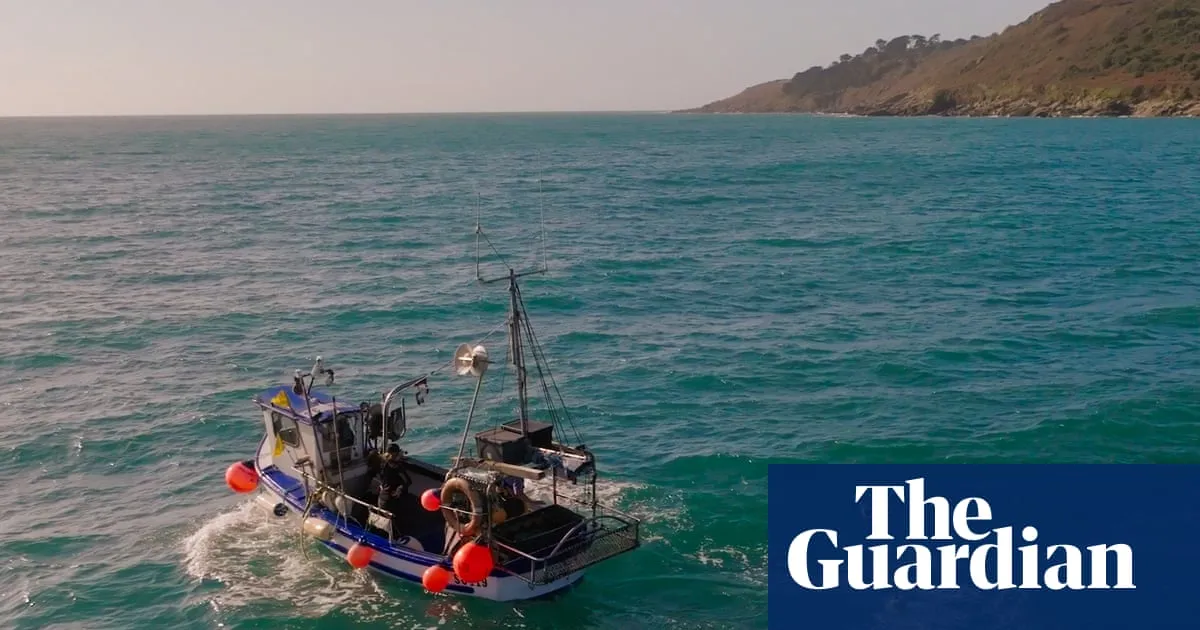
Bird-shaped kites and a floating scarecrow are being tested to try to stop endangered seabirds drowning in fishing nets.Every year an estimated 95,000 diving birds, including razorbills and guillemots, are accidentally caught in nets off European coasts.But simple deterrents tested by Cornish fishers and devised by scientists and the RSPB have been shown to reduce the toll by about two-thirds.The scarecrow – or more properly a looming-eyes buoy – has a spinning head with two large eyes that scare diving birds away from gillnets, walls of netting which hang vertically beneath the surface.The LEB was tested alongside a commercially available scarybird kite.The buoy cut the chance of seabirds being caught in gillnets by 59%. Kites achieved a 71% figure. Photograph: Nina Constable MediaTen Cornish fishers and Fishtek Marine, which created the LEB, fitted cameras to boats to monitor the effect of the devices on seabird behaviour.The results of the two-year trial, which was analysed by scientists from the University of Exeter and published in the journal Conservation Letters, showed that the chance of seabirds being caught in gillnets fell by 59% using LEBs and by 71% using kites.The research revealed that in Cornwall most seabirds were caught in winter, which will help target the use of the devices by season.Tom Horton, lead author of the University of Exeter research, said: “This study provides some of the strongest evidence to date that simple, practical deterrents can substantially reduce seabird bycatch in gillnet fisheries.“By also identifying when and where bycatch risk is highest, we now have a clear opportunity to target mitigation measures where they can deliver the greatest conservation benefit for vulnerable seabird populations and encourage sustainable fishing practices.”Yann Rouxel, bycatch programme manager at the RSPB, said: “After over a decade of research into gillnet bycatch and its solutions, it’s great to see this work moving towards real-world implementation.“The performance of the LEB and kite, as evidenced in this study, is a major milestone in the effort to reduce seabird bycatch without impeding gillnet fishers while at sea.”
SRCThe Guardian - World News
LANGEN
LEANCenter-Left
WORDS337
ENT11
WED · 2026-09-30 · 23:01 GMTBRIEF NSR-2026-1001-115405
NSR-2026-1001-115405News Report·EN·Environmental
Floating scarecrows: how Cornish fishers are stopping seabirds drowning in their nets
Cornish fishers, in collaboration with scientists and the RSPB, have tested simple deterrents to reduce seabird bycatch in fishing nets. A two-year study analyzed the effectiveness of a "looming-eyes buoy" (LEB) and bird-shaped kites in preventing razorbills and guillemots from drowning.
Patrick BarkhamThe Guardian - World NewsFiled 2026-09-30 · 23:01 GMTLean · Center-LeftRead · 2 min
The Guardian - World NewsFIG 01
Reading time
2min
Word count
337words
Sources cited
3cited
Entities identified
11entities
Quality score
100%
§ 01
Briefing Summary
AI-generatedNEWSAR · AI
Cornish fishers, in collaboration with scientists and the RSPB, have tested simple deterrents to reduce seabird bycatch in fishing nets. A two-year study analyzed the effectiveness of a "looming-eyes buoy" (LEB) and bird-shaped kites in preventing razorbills and guillemots from drowning. The LEB reduced the chance of seabirds being caught by 59%, while kites achieved a 71% reduction. These devices aim to mitigate the accidental entanglement of an estimated 95,000 diving birds annually in European gillnets. The research, published in Conservation Letters, highlights the potential for these practical solutions to significantly benefit vulnerable seabird populations and promote sustainable fishing.
Confidence 0.90Sources 3Claims 5Entities 11
§ 02
Article analysis
Model · rule-basedFraming
Environmental
Technology
Tone
Measured
AI-assessed
CalmNeutralAlarmist
Factuality
0.90 / 1.00
Factual
LowHigh
Sources cited
3
Well sourced
FewMany
§ 03
Key claims
5 extracted01
Simple, practical deterrents can substantially reduce seabird bycatch in gillnet fisheries.
quoteTom Horton
Confidence
1.00
02
Kites achieved a 71% reduction in seabird entanglement in gillnets.
statisticUniversity of Exeter
Confidence
1.00
03
The looming-eyes buoy cut the chance of seabirds being caught in gillnets by 59%.
statisticUniversity of Exeter
Confidence
1.00
04
Bird-shaped kites and a floating scarecrow are being tested to stop endangered seabirds drowning in fishing nets.
factual
Confidence
1.00
05
An estimated 95,000 diving birds are accidentally caught in nets off European coasts annually.
statistic
Confidence
0.90
§ 04
Full report
2 min read · 337 words§ 05
Entities
11 identifiedKey playerOppositionContextPositiveNeutralNegative
Organizations4
§ 06
Keywords & salience
10 termsseabird bycatch
1.00
fishing nets
0.90
deterrents
0.80
gillnets
0.70
conservation
0.60
scarybird kite
0.50
looming-eyes buoy
0.50
sustainable fishing
0.50
university of exeter
0.40
rspb
0.40
§ 07
Topic connections
Interactive graph Network visualization showing 6 related topics
View Full Graph Person Organization Location Event|Click node to navigate|Edge numbers = shared articles