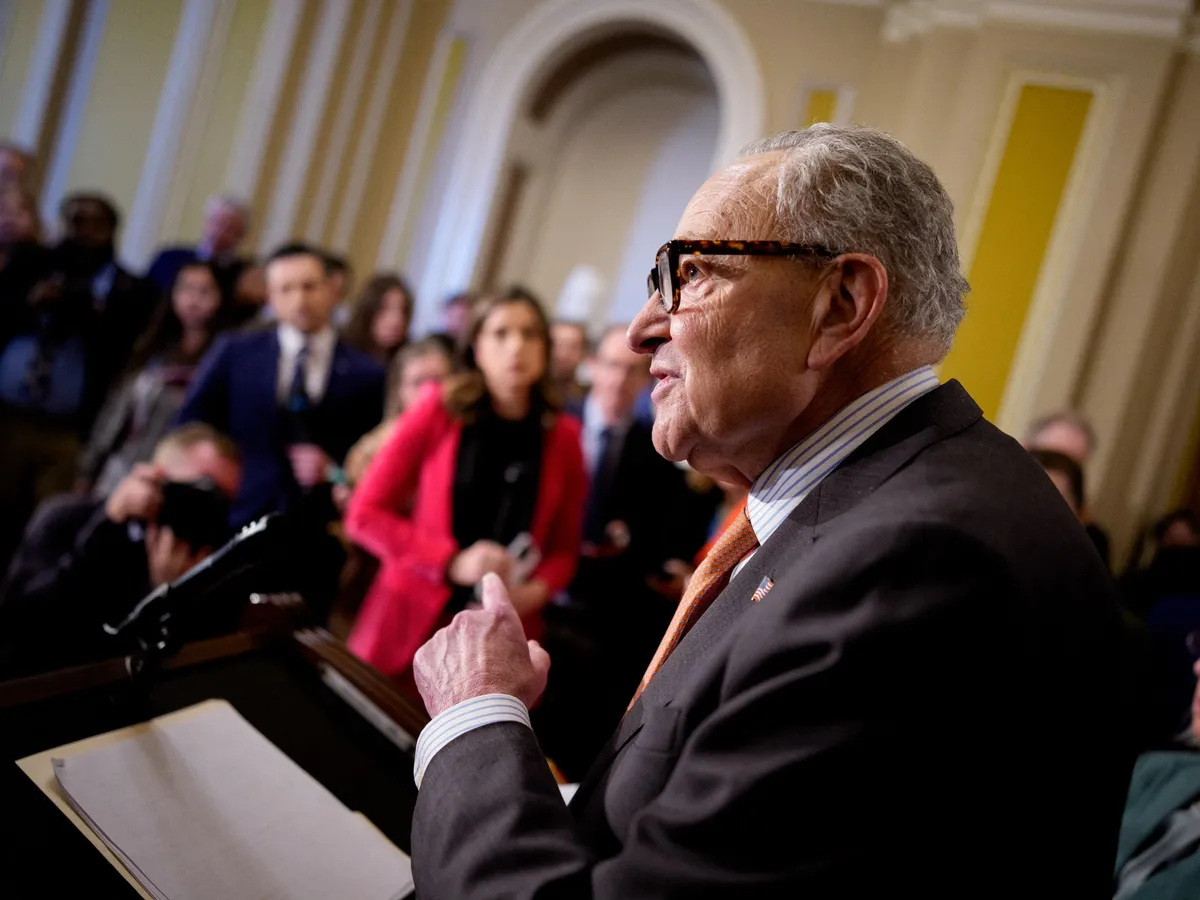
Democrats criticise bill as lacking ‘teeth’ and push for mandatory measures to address soaring electricity bills.The United States Senate has thwarted a bill that would have required state regulators to consider forcing data centres and other major electricity users to bear the costs of the infrastructure built to serve them.The measure failed by a vote of 57 to 43 on Wednesday. The proposal needed to pass by at least 60 votes to prevent a filibuster, a procedural hurdle in the Senate that can stymie a bill indefinitely.Recommended Stories list of 3 itemslist 1 of 3What’s the US–China AI ‘hotline’ that Trump plans to pitch to Xi Jinping?list 2 of 3China vs US: Who is winning the AI race, in four chartslist 3 of 3How an OpenAI ‘agent’ hacked Australia’s Medicare and what that meansend of listOnly four Democrats — Maggie Hassan, Amy Klobuchar, Jon Ossoff and Raphael Warnock — joined Republicans to support the bill, which proponents argue would have eased the burden of rising energy costs on individual households.The Artificial Intelligence (AI) boom has led to increasing demand for data centres, which provide computing power for the new technology.There are as many as 5,400 data centres currently in the US, according to some estimates. Critics argue the facilities require substantial amounts of energy to operate, contributing to higher electricity costs.The Ratepayer Protection Act, a first-of-its-kind bipartisan bill, was aimed at addressing the economic concerns linked to the expansion of data centres.It passed the House of Representatives earlier this month in a landslide vote of 417 to three.But Democrats in the Senate argued the bill does not go far enough to protect consumers from high electricity bills. Rather than requiring states to “consider” a federal utility rate standard, some senators advocated instead for mandatory enforcement to guarantee consumer relief.
SRCAl Jazeera
LANGEN
LEANCenter
WORDS299
ENT11
WED · 2026-09-30 · 22:58 GMTBRIEF NSR-2026-1001-115413
NSR-2026-1001-115413News Report·EN·Economic Impact
US Senate rejects bill targeting AI data centre electricity costs
The US Senate rejected a bill, the Ratepayer Protection Act, by a vote of 57 to 43 on Wednesday. The bill, which had previously passed the House of Representatives, aimed to address rising electricity costs by requiring state regulators to consider making data centers and other large electricity users bear the costs of infrastructure built to serve them.
Al Jazeera StaffAl JazeeraFiled 2026-09-30 · 22:58 GMTLean · CenterRead · 2 min
Al JazeeraFIG 01
Reading time
2min
Word count
299words
Sources cited
0cited
Entities identified
11entities
Quality score
100%
§ 01
Briefing Summary
AI-generatedNEWSAR · AI
The US Senate rejected a bill, the Ratepayer Protection Act, by a vote of 57 to 43 on Wednesday. The bill, which had previously passed the House of Representatives, aimed to address rising electricity costs by requiring state regulators to consider making data centers and other large electricity users bear the costs of infrastructure built to serve them. Proponents argued this would ease the burden on households, especially with the increasing demand for electricity driven by the AI boom and the proliferation of data centers. However, most Senate Democrats criticized the bill as lacking sufficient enforcement, advocating for mandatory measures rather than just requiring states to "consider" a federal utility rate standard.
Confidence 0.90Claims 5Entities 11
§ 02
Article analysis
Model · rule-basedFraming
Economic Impact
Technology
Tone
Measured
AI-assessed
CalmNeutralAlarmist
Factuality
0.80 / 1.00
Factual
LowHigh
Sources cited
0
No named sources
FewMany
§ 03
Key claims
5 extracted01
The Ratepayer Protection Act passed the House of Representatives by a vote of 417 to three.
statistic
Confidence
1.00
02
Democrats argued the bill lacked 'teeth' and pushed for mandatory measures to address soaring electricity bills.
quoteDemocrats
Confidence
1.00
03
The bill failed by a vote of 57 to 43, needing 60 votes to prevent a filibuster.
statistic
Confidence
1.00
04
US Senate rejected a bill requiring state regulators to consider forcing data centers to bear infrastructure costs.
factual
Confidence
1.00
05
The AI boom has led to increasing demand for data centers, which require substantial energy.
factual
Confidence
0.90
§ 04
Full report
2 min read · 299 words§ 05
Entities
11 identifiedKey playerOppositionContextPositiveNeutralNegative
People4
Organizations4
Locations1
§ 06
Keywords & salience
9 termselectricity costs
1.00
ai data centres
1.00
us senate
0.90
ratepayer protection act
0.80
energy consumption
0.70
consumer relief
0.60
infrastructure costs
0.50
democrats
0.40
republicans
0.40
§ 07
Topic connections
Interactive graph Network visualization showing 51 related topics
View Full Graph Person Organization Location Event|Click node to navigate|Edge numbers = shared articles