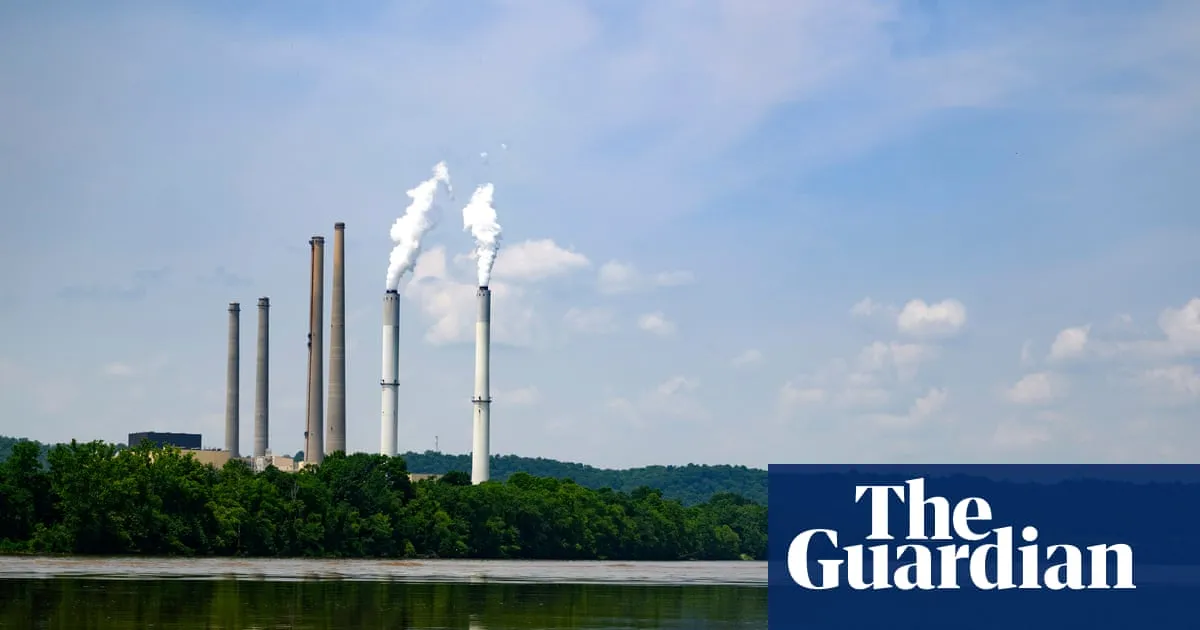
States and cities sued the Trump administration on Thursday for repealing rules that limit planet-warming greenhouse gas emissions from power plants fueled by coal and natural gas.Twenty-one states, led by New York, are challenging the Environmental Protection Agency’s power plant rule. The Democratic-led coalition also includes Pennsylvania’s governor, the District of Columbia, New York City, Chicago and the city and county of Denver. They argue that “gutting one of the country’s most significant climate protections” will set the nation back decades and worsen the climate crisis.The EPA announced last month it’s revoking the Biden-era rule, and said it is taking a separate but related step to prevent future administrations from regulating climate pollution from power plants.New York attorney general Letitia James said the federal government is showing “callous disregard” for Americans’ health and the environment, and future generations will pay the price. Power plants that burn fossil fuels are a major source of planet-warming pollution.“Dismantling these protections is a betrayal of American families, and the stakes are too high to allow this administration to once again put profits over people,” James said in a statement Thursday.The EPA said Thursday it does not comment on pending litigation. However, it said in announcing the repeal that it would save the industry more than $300bn in costs and help “unleash” American energy. EPA assistant administrator Aaron Szabo said in September that it will allow utilities to “make the best decision for the ratepayers based on cost and cost savings, instead of being required to shut down facilities”.The coalition is petitioning the US court of appeals for the District of Columbia to review the EPA’s decision and strike down the repeal. It says the EPA unlawfully abandoned the pollution limits without properly considering reasonable alternatives or the enormous health and climate costs of allowing more pollution into the atmosphere. The coalition also told the EPA it intends to sue over the agency’s failure to regulate pollution from many gas-fired power plants.The suit comes as the supreme court prepares to hear a landmark case in which the city and county of Boulder, Colorado, are suing oil and gas companies to force them to help pay for damage caused by disasters linked to Climate Change.The case is part of a wave of Climate Change litigation around the country and the world with billions of dollars at stake. The high court will hear the case on Monday, the first day of its new term.The rule change for power plants, first proposed last year, represents a fundamental shift from efforts by Democrats Joe Biden and Barack Obama to address Climate Change and regulate carbon dioxide and other greenhouse gases that trap the sun’s heat. Environmental groups say it will come at a cost to Americans’ health and further degrade the environment.The separate rule proposed last month could prevent future administrations from regulating greenhouse gas emissions from power plants. The proposal, expected to be made final next year, follows EPA’s action earlier this year revoking a scientific finding that long has been the central basis for US action to regulate greenhouse gas emissions and fight Climate Change.The coalition includes the states of New York, Arizona, California, Colorado, Connecticut, Delaware, Hawaii, Illinois, Maine, Maryland, Massachusetts, Michigan, Minnesota, New Jersey, New Mexico, North Carolina, Oregon, Rhode Island, Vermont, Washington and Wisconsin.
SRCThe Guardian - World News
LANGEN
LEANCenter-Left
WORDS550
ENT12
THU · 2026-10-01 · 22:24 GMTBRIEF NSR-2026-1002-115668
NSR-2026-1002-115668News Report·EN·Environmental
US states and cities sue over Trump EPA’s repeal of emissions rules
Twenty-one states, led by New York, along with the District of Columbia, New York City, Chicago, and Denver, have sued the Trump administration over the Environmental Protection Agency's repeal of rules limiting greenhouse gas emissions from coal and natural gas power plants. The Democratic-led coalition argues this action will significantly harm climate protection efforts and worsen the climate crisis.
Associated PressThe Guardian - World NewsFiled 2026-10-01 · 22:24 GMTLean · Center-LeftRead · 3 min
The Guardian - World NewsFIG 01
Reading time
3min
Word count
550words
Sources cited
3cited
Entities identified
12entities
Quality score
100%
§ 01
Briefing Summary
AI-generatedNEWSAR · AI
Twenty-one states, led by New York, along with the District of Columbia, New York City, Chicago, and Denver, have sued the Trump administration over the Environmental Protection Agency's repeal of rules limiting greenhouse gas emissions from coal and natural gas power plants. The Democratic-led coalition argues this action will significantly harm climate protection efforts and worsen the climate crisis. The EPA revoked a Biden-era rule and is also proposing measures to prevent future administrations from regulating power plant climate pollution. The states contend the EPA unlawfully abandoned pollution limits without considering alternatives or the environmental and health costs. The EPA stated the repeal will save the industry money and allow utilities to make cost-based decisions.
Confidence 0.90Sources 3Claims 5Entities 12
§ 02
Article analysis
Model · rule-basedFraming
Environmental
Legal & Judicial
Tone
Measured
AI-assessed
CalmNeutralAlarmist
Factuality
0.70 / 1.00
Factual
LowHigh
Sources cited
3
Well sourced
FewMany
§ 03
Key claims
5 extracted01
The EPA said in announcing the repeal that it would save the industry more than $300bn in costs and help 'unleash' American energy.
factualEPA
Confidence
1.00
02
New York attorney general Letitia James said the federal government is showing 'callous disregard' for Americans’ health and the environment.
quoteLetitia James
Confidence
1.00
03
The EPA announced last month it’s revoking the Biden-era rule, and said it is taking a separate but related step to prevent future administrations from regulating climate pollution from power plants.
factual
Confidence
1.00
04
The coalition argues that 'gutting one of the country’s most significant climate protections' will set the nation back decades and worsen the climate crisis.
quoteCoalition of states and cities
Confidence
1.00
05
Twenty-one states, led by New York, are challenging the Environmental Protection Agency’s power plant rule.
factual
Confidence
1.00
§ 04
Full report
3 min read · 550 words§ 05
Entities
12 identifiedKey playerOppositionContextPositiveNeutralNegative
Organizations2
Locations8
§ 06
Keywords & salience
10 termsclimate crisis
1.00
emissions rules
1.00
environmental protection agency
0.90
trump administration
0.80
power plants
0.80
greenhouse gas emissions
0.70
climate change litigation
0.60
repeal
0.50
fossil fuels
0.50
new york
0.40
§ 07
Topic connections
Interactive graph Network visualization showing 27 related topics
View Full Graph Person Organization Location Event|Click node to navigate|Edge numbers = shared articles