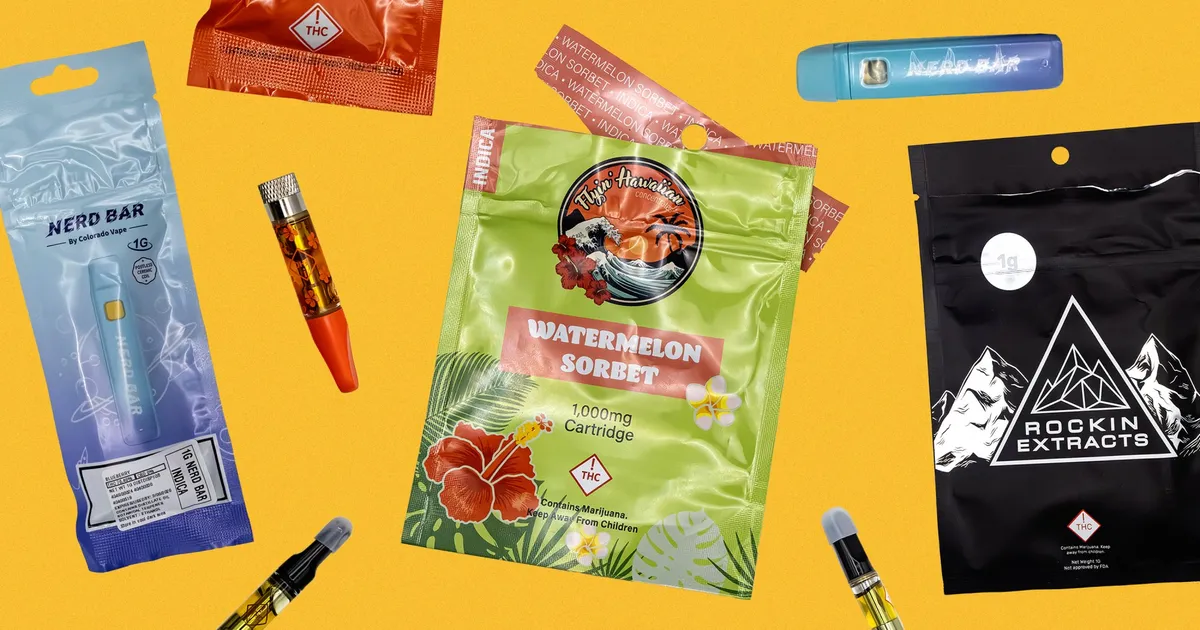
Leaders in the Colorado marijuana industry have complained in recent years that intoxicating products derived from hemp are endangering consumers and creating unfair competition, threatening to upend the first regulated recreational marijuana market in the United States. While labs have developed the technology to distinguish between hemp and marijuana, the state has been slow to implement a random testing program to check the quality of products on dispensary shelves. In the absence of official testing, The Denver Gazette and ProPublica set out to test whether the claims of widespread hemp substitution were accurate, purchasing 14 vapes at dispensaries across the Denver area. Hemp naturally has high levels of the nonintoxicating compound CBD but only trace amounts of THC, the chemical in marijuana that gets people high. But some manufacturers have been caught by Colorado’s Marijuana Enforcement Division converting CBD from hemp into THC using solvents — a process banned in the state. Labs can detect indicators of this process by looking for versions of THC known as delta-8 and delta-10, which often emerge when CBD from hemp is chemically converted to THC. They can also identify residues of solvents that are typically used in that process but not in marijuana production. Three of the news organizations’ samples had levels of delta-8 or delta-10 THC between 1.1% and 3.3%, which experts said was significant because they rarely show up at those levels naturally. “Anything beyond trace amounts is suspicious,” said Monica Pittiglio, the analytical director for Colorado Chromatography Labs, which has done research into hemp-derived THC. “Anything over 1% is insane,” she noted after reviewing the news outlets’ test results. Experts consulted by the news organizations, however, weren’t unanimous that the results amounted to conclusive evidence of hemp-derived THC. Some noted that compounds extracted from plant material can degrade into those rarer compounds with age or imprecise processing. Dutch Botanicals, an Aurora marijuana manufacturer whose license the state suspended in May, pending a final determination. Regulators accused the company of producing intoxicating hemp-derived THC. Two of its vape products tested by the news outlets were positive for delta-8 THC. Owner Jenny Tran acknowledged the state’s allegations but denied using hemp and said she is fighting the state’s efforts to revoke her license. Rockin Extracts, a marijuana processor in Pueblo County. A vape showed anomalous levels of delta-10 THC. It also contained residues of volatile solvents that were different from those listed on the package. The company’s attorney denied it used hemp additives and blamed the anomalous compound on natural degradation, though the product was tested eight months before the sell-by date. The oil used to make the vapes, the attorney said, was purchased from another company. C2CC, a Denver marijuana manufacturer that does business as Bonanza. The company’s Flyin’ Hawaiian vape contained toluene, a dangerous solvent that was not listed on the packaging. Independent chemists said it should not be found in marijuana products and is indicative of hemp-derived THC, as it can be used in the conversion process. Conlan Keller, co-founder of C2CC, said the distillate was purchased from a supplier and that his company requires certificates of analysis for any product it buys to ensure compliance and quality. Experts said findings like these could warrant further investigations into the processes used to make the products. They also said the ambiguity around determining conclusively whether a product was derived or partially derived from hemp highlights a need for more effective regulations. The Marijuana Enforcement Division declined to comment on The Gazette and ProPublica’s test results. Last fall, Colorado launched a pilot off-the-shelf testing program to buy products from dispensaries and double-check the work of labs. State regulators planned to collect up to 150 samples from October to December, a small fraction of the more than $1 billion in marijuana products sold in the state annually. But the new program has already run into delays. Heather Draper, the division’s spokesperson, said the off-the-shelf testing program remains in “initial steps.” Permanently establishing it, she said, will require “increased resources with appropriate funding.” We will continue to share our areas of interest as the news develops. I cover health and the environment and the agencies that govern them, including the Environmental Protection Agency. Contact me I cover justice and the rule of law, including the Justice Department, U.S. attorneys and the courts. Contact me I report on immigration and labor, and I am based in Chicago. Contact me I cover housing and transportation, including the companies working in those fields and the regulators overseeing them. Contact me to stay in touch. Slide 2 Slide 3 Slide 4 Slide 5 Slide 6 Firm Tied to Kristi Noem Secretly Got Money From $220 Million DHS Ad Contracts
SRCProPublica
LANGEN
LEANCenter-Left
WORDS782
ENT5
THU · 2026-01-29 · 10:25 GMTBRIEF NSR-2026-0129-11567
NSR-2026-0129-11567News Report·EN·Economic Impact
We Tested Vapes in Colorado for Signs of Hemp. This Is What We Found.
Leaders in Colorado's marijuana industry have raised concerns about hemp-derived THC products being sold as recreational marijuana. To investigate, The Denver Gazette and ProPublica purchased 14 vapes at dispensaries across Denver and tested them for signs of hemp.
Christopher OsherProPublicaFiled 2026-01-29 · 10:25 GMTLean · Center-LeftRead · 4 min
ProPublicaFIG 01
Reading time
4min
Word count
782words
Sources cited
4cited
Entities identified
5entities
Quality score
100%
§ 01
Briefing Summary
AI-generatedNEWSAR · AI
Leaders in Colorado's marijuana industry have raised concerns about hemp-derived THC products being sold as recreational marijuana. To investigate, The Denver Gazette and ProPublica purchased 14 vapes at dispensaries across Denver and tested them for signs of hemp. Three samples showed levels of delta-8 or delta-10 THC between 1.1% and 3.3%, which experts considered suspicious due to their rarity in natural hemp products. However, not all experts agreed that the results were conclusive evidence of hemp-derived THC. The investigation found that some manufacturers may be using solvents to convert CBD from hemp into THC, a process banned in Colorado. This has raised concerns about product quality and safety.
Confidence 0.90Sources 4Claims 5Entities 5
§ 02
Article analysis
Model · rule-basedFraming
Economic Impact
Public Health
Tone
Measured
AI-assessed
CalmNeutralAlarmist
Factuality
0.80 / 1.00
Factual
LowHigh
Sources cited
4
Well sourced
FewMany
§ 03
Key claims
5 extracted01
A vape from Rockin Extracts showed anomalous levels of delta-10 THC and contained residues of volatile solvents.
factualnull
Confidence
1.00
02
Owner Jenny Tran acknowledged the state’s allegations but denied using hemp.
quoteJenny Tran, owner of Dutch Botanicals
Confidence
1.00
03
Regulators accused Dutch Botanicals of producing intoxicating hemp-derived THC.
factualnull
Confidence
1.00
04
Anything over 1% is insane.
quoteMonica Pittiglio, the analytical director for Colorado Chromatography Labs
Confidence
1.00
05
Three of the news organizations’ samples had levels of delta-8 or delta-10 THC between 1.1% and 3.3%.
factualThe Denver Gazette and ProPublica
Confidence
1.00
§ 04
Full report
4 min read · 782 words§ 05
Entities
5 identifiedKey playerOppositionContextPositiveNeutralNegative
§ 06
Keywords & salience
9 termshemp-derived thc
1.00
vape testing
0.80
marijuana industry
0.70
delta-8 thc
0.70
cbd conversion
0.60
dispensary
0.60
colorado
0.50
solvent residues
0.50
product quality
0.40
§ 07
Topic connections
Interactive graph Network visualization showing 37 related topics
View Full Graph Person Organization Location Event|Click node to navigate|Edge numbers = shared articles