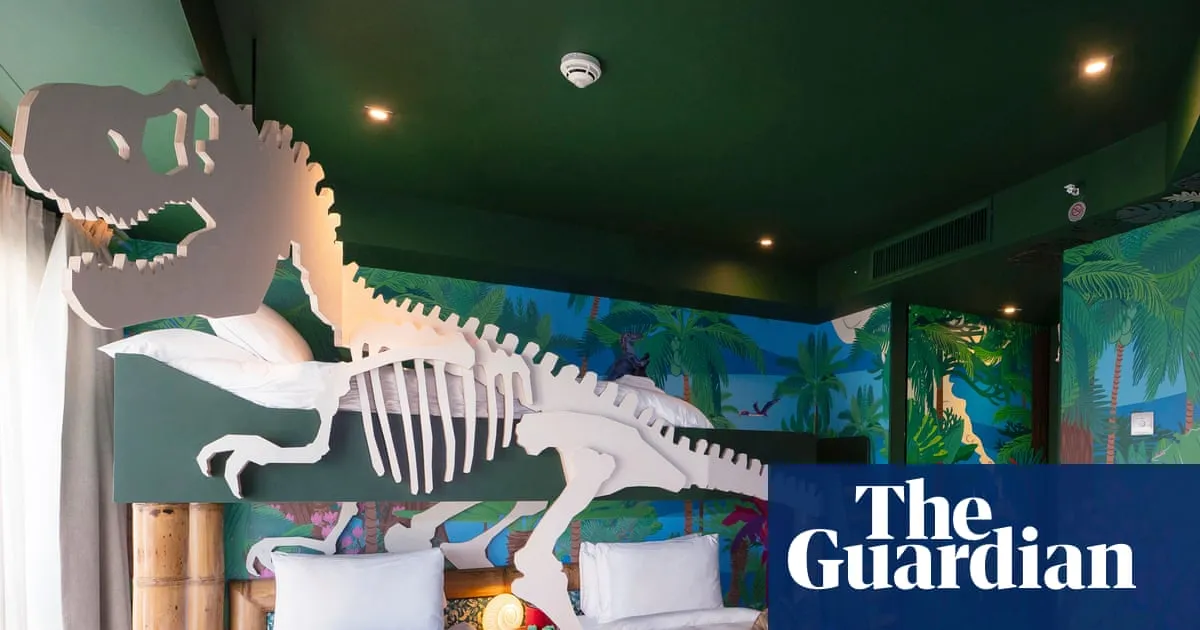
They are often free to visit but museums are bolstering their finances by putting their stamp on everything from upmarket hotel suites to trendy jumpsuits and virtual reality experiences.Forget buying a T-shirt. If you can afford the “from £724” price tag, you can spend the night in the Natural History Museum family suite at the Park Plaza London Riverbank hotel, which has an interior inspired by the museum’s founder, Sir Richard Owen, complete with Tyrannosaurus rex bunk beds.Deals such as this are becoming more commonplace as cultural institutions look to leverage their renowned collections and trusted brands in the face of funding cuts and rising costs.One of the Natural History Museum’s previous deals was with the paint manufacturer Farrow & Ball. Photograph: Farrow & Ball x Natural History MuseumData shows that overall UK sales of licensed merchandise and services grew 7% to $19.2bn (£14.5bn) last year, according to the industry trade body Licensing International.A breakdown of the UK market figures shows that the “art property” category, which includes museums, grew by more than 8%, while “attractions and promotions” (which includes immersive experiences at museums and art galleries) soared by 53%.“Our licensing programme continues to grow consistently at about 15% year on year,” said Louisa Skevington, the licensing manager at the Natural History Museum, who added that “experiences” were becoming an increasingly important part of that. “It’s about finding creative ways to bring the museum and its stories to people wherever they are, while continuing to grow the reach and impact of the programme.”The Natural History Museum’s previous deals include a Farrow & Ball paint range inspired by Werner’s Nomenclature of Colours and a collection with the fashion brand Lucy & Yak featuring dinosaur-print jumpsuits and dungarees, aimed at millennials and gen Z. More recently it worked with the virtual reality experience company Sandbox on the prehistoric adventure Age of Dinosaurs.Gameplay footage from the Age of Dinosaurs. Photograph: Sandbox VR & Natural History MuseumThe importance of licensing means a growing number of museums, galleries and heritage organisations are exhibiting at this week’s Brand Licensing Europe conference in London.New attenders include the National Gallery, the National Trust for Scotland, the Ashmolean Museum in Oxford and Tate Enterprises. They join the British Museum, the Natural History Museum, the Victoria and Albert Museum and the Imperial War Museum. The competition is stiff, however, as the agenda includes talks on the “Bluey effect” and the new Harry Potter TV series.The British Museum has collaborated with the London department store Liberty for a Bayeux tapestry collection. Photograph: Liberty LondonThe huge demand for Bayeux tapestry tickets “demonstrates the appetite for major cultural moments, and the opportunity to build on that interest beyond a visit to the museum”, says Craig Bendle, the manager of product licensing at the British Museum.Indeed, the Bayeux tapestry merchandise created by its separate retail team, which includes a collaboration with the London department store Liberty, made it into Vogue.Bendle reports growing interest from brands that want to create something “genuinely distinctive”, with the museum’s collection of more than 8m objects an “extraordinary source of inspiration”, he says.The V&A is also looking for novel ways to draw on its 2.8m objects. It launched 63 product ranges in 2025, which demonstrates the “growing role licensing plays in taking the V&A beyond our museum walls”, said Jen Maude-Roxby, its head of licensing and business development.That programme includes William Morris-inspired phone cases with the tech accessories brand CASETiFY, and pictures for the art store of Samsung’s “the Frame” TV, which displays artworks when the TV is off, transforming the blank monitor into a picture.
SRCThe Guardian - World News
LANGEN
LEANCenter-Left
WORDS597
ENT12
MON · 2026-10-05 · 05:00 GMTBRIEF NSR-2026-1005-116373
NSR-2026-1005-116373News Report·EN·Economic Impact
From hotel suites to virtual reality, museums turn to licensing deals as costs rise
Museums like the Natural History Museum and the British Museum are increasingly turning to licensing deals to boost finances amidst rising costs and funding cuts. These institutions are leveraging their collections and brands to create a variety of products and experiences, from luxury hotel suites and fashion items to virtual reality adventures.
Zoe WoodThe Guardian - World NewsFiled 2026-10-05 · 05:00 GMTLean · Center-LeftRead · 3 min
The Guardian - World NewsFIG 01
Reading time
3min
Word count
597words
Sources cited
3cited
Entities identified
12entities
Quality score
100%
§ 01
Briefing Summary
AI-generatedNEWSAR · AI
Museums like the Natural History Museum and the British Museum are increasingly turning to licensing deals to boost finances amidst rising costs and funding cuts. These institutions are leveraging their collections and brands to create a variety of products and experiences, from luxury hotel suites and fashion items to virtual reality adventures. The UK market for licensed merchandise and services, particularly in the "art property" and "attractions and promotions" categories, has seen significant growth. Museums are actively participating in industry events like Brand Licensing Europe to expand their reach and find creative ways to connect with audiences beyond physical visits. This strategy allows them to generate revenue and extend their cultural impact by making their collections accessible in new and innovative ways.
Confidence 0.90Sources 3Claims 5Entities 12
§ 02
Article analysis
Model · rule-basedFraming
Economic Impact
Human Interest
Tone
Measured
AI-assessed
CalmNeutralAlarmist
Factuality
0.80 / 1.00
Factual
LowHigh
Sources cited
3
Well sourced
FewMany
§ 03
Key claims
5 extracted01
New museum and heritage organizations attending Brand Licensing Europe include the National Gallery and the Ashmolean Museum.
factual
Confidence
1.00
02
The Natural History Museum's licensing program grows about 15% year on year.
statisticLouisa Skevington, Natural History Museum
Confidence
1.00
03
The 'art property' category, including museums, grew by over 8%, while 'attractions and promotions' soared by 53%.
statisticLicensing International
Confidence
1.00
04
Overall UK sales of licensed merchandise and services grew 7% to $19.2bn (£14.5bn) last year.
statisticLicensing International
Confidence
1.00
05
Museums are bolstering finances through licensing deals for hotel suites, jumpsuits, and virtual reality experiences.
factual
Confidence
1.00
§ 04
Full report
3 min read · 597 words§ 05
Entities
12 identifiedKey playerOppositionContextPositiveNeutralNegative
Organizations9
NH
Natural History Museum
EducationalKey Player
8x
100
PP
Park Plaza London Riverbank
CompanyContext
70
F&
Farrow & Ball
CompanyContext
2x
60
LI
Licensing International
NGOContext
50
L&
Lucy & Yak
CompanyContext
50
SV
Sandbox VR
CompanyContext
2x
50
AM
Ashmolean Museum
EducationalContext
40
NG
National Gallery
EducationalContext
40
NT
National Trust for Scotland
NGOContext
40
§ 06
Keywords & salience
10 termsmuseums
1.00
licensing deals
1.00
rising costs
0.90
funding cuts
0.90
virtual reality
0.80
brand licensing
0.70
licensed merchandise
0.60
cultural institutions
0.50
natural history museum
0.50
experiences
0.40
§ 07
Topic connections
Interactive graph Network visualization showing 2 related topics
View Full Graph Person Organization Location Event|Click node to navigate|Edge numbers = shared articles