The genocide has killed many and left the rest broken. For us, survivors, recovery is not on the horizon.Published On 6 Oct 2026A young Palestinian man stands amid the rubble of residential buildings in Gaza City, destroyed during Israel's genocidal war, on September 28, 2026 [Dawoud Abu Alkas/Reuters]It has been three years of the genocidal horror in Gaza. Three years of death, destruction, despair and doom.More than 74,000 people have been killed, including more than 1,400 since the so-called “ceasefire” took effect in October last year. Countless others have died preventable deaths due to lack of healthcare.The rest of us survivors live in permanent trauma – a trauma we can’t begin to recover from because the genocide has not stopped.The scale of the psychological devastation is difficult to put into words. There are some numbers that international organisations have started to use to call for urgent attention to the “mental health crisis”.Analysis by the United Nations Population Fund has concluded that more than one million children in Gaza require psychosocial support, and 96 percent of them feel that death is imminent.Among adolescents and young adults, approximately 61 percent suffer from post-traumatic stress disorder (PTSD), 38 percent from depression and 41 percent from anxiety.One study estimated that some 88 percent of adults in Gaza have PTSD.These are children and adults who had already been traumatised by repeated wars before. By 2020 – after three months-long wars – half of Gaza’s children displayed symptoms of PTSD. By 2022, 71 percent of adults had depression.What these numbers do not say is what it is like to live with trauma when the chance of recovery is not even on the horizon.We had known war before, but not total genocidal war.Nothing prepared us for it. Not running from our homes when the Israeli army invaded in 2008. Not taking cover when Israeli bombardment levelled homes in 2012, 2014 and 2021.Total, never-ending war is different. It overpowers; it crushes because it eliminates the hope of survival.I had read about it in books. Hemingway’s A Farewell to Arms comes to mind.I remember the detailed descriptions of shelling and gunfire, of mangled limbs, dead bodies carried away on stretchers, doctors covered in blood like “butchers”.Death in Gaza is nothing like that. It has a smell: of gunpowder, of burning rubble, of something rotten. It has a sound: a whoosh of a missile and the muffled screams from under the rubble. It has a bodily feeling of pure terror.Nothing in the war prose I read prepared me for what I have seen and experienced.In the first two months of the war, six houses in my immediate neighbourhood were bombed, and 60 of my neighbours were killed. One bomb fell so close that it burst a wall and windows of our house, injuring my younger sister, my mother and me.The bombing was incessant – day and night. During the day, the smoke would fill up the air and hide the blue of the sky. At night, the dark and dust would be pierced by phone torches, as we would rush to dig our neighbours out of the rubble.I saw a child’s body lodged in a shattered wall next to a man’s severed hand.I lifted the corpse of a baby from under the ruins.I watched a mother get out from under a collapsed home, blood streaming down her cheeks, while smoke-filled faces screamed and terror-stricken neighbours rummaged through pulverised concrete walls looking for their families.And one horrific day, I found my own eight-year-old student Mohammed face down in the rubble. I rolled him onto his back to check for a pulse. No pulse, no breath. He had been coming to my house for English lessons with his sister. The bombing took his innocent life, but spared his sister. I pulled her out alive.The classics are gentle. Gaza is not.My trauma is stuck in my body like shrapnel. It tightens my chest when a drone passes overhead. It shakes my hands when I hear the crack of gunfire nearby.I feel numb. I cannot concentrate. I almost never smile.“The world breaks everyone and afterward many are strong at the broken places. But those that will not break it kills. It kills the very good and the very gentle and the very brave impartially,” Hemingway wrote.Indeed, it is not just the trauma that has overcome us, the broken people. It is also the survivor’s guilt. The very best and the most noble have been taken away from us. I have lost relatives, friends, students: the brightest, the most generous, the kindest.I no longer read to learn and enrich myself. I read to forget. I read until my vision gets blurry and sleep overcomes me, as I try to keep images of death out of my head.Fiction can no longer move me, shock me. I saw humanity die and the rest of the world watch on, indifferently. What could be more fictional than this?The views expressed in this article are the author’s own and do not necessarily reflect Al Jazeera’s editorial stance.
SRCAl Jazeera
LANGEN
LEANCenter
WORDS837
ENT12
TUE · 2026-10-06 · 14:42 GMTBRIEF NSR-2026-1006-116811
NSR-2026-1006-116811Opinion·EN·Human Rights
In Gaza, we cannot even begin to recover from trauma
A Palestinian survivor in Gaza describes the ongoing trauma three years after a "genocidal war" began in October 2023. The conflict has resulted in over 74,000 deaths and widespread destruction, leaving survivors in a state of perpetual trauma with no prospect of recovery.
Said AlsaloulAl JazeeraFiled 2026-10-06 · 14:42 GMTLean · CenterRead · 4 min
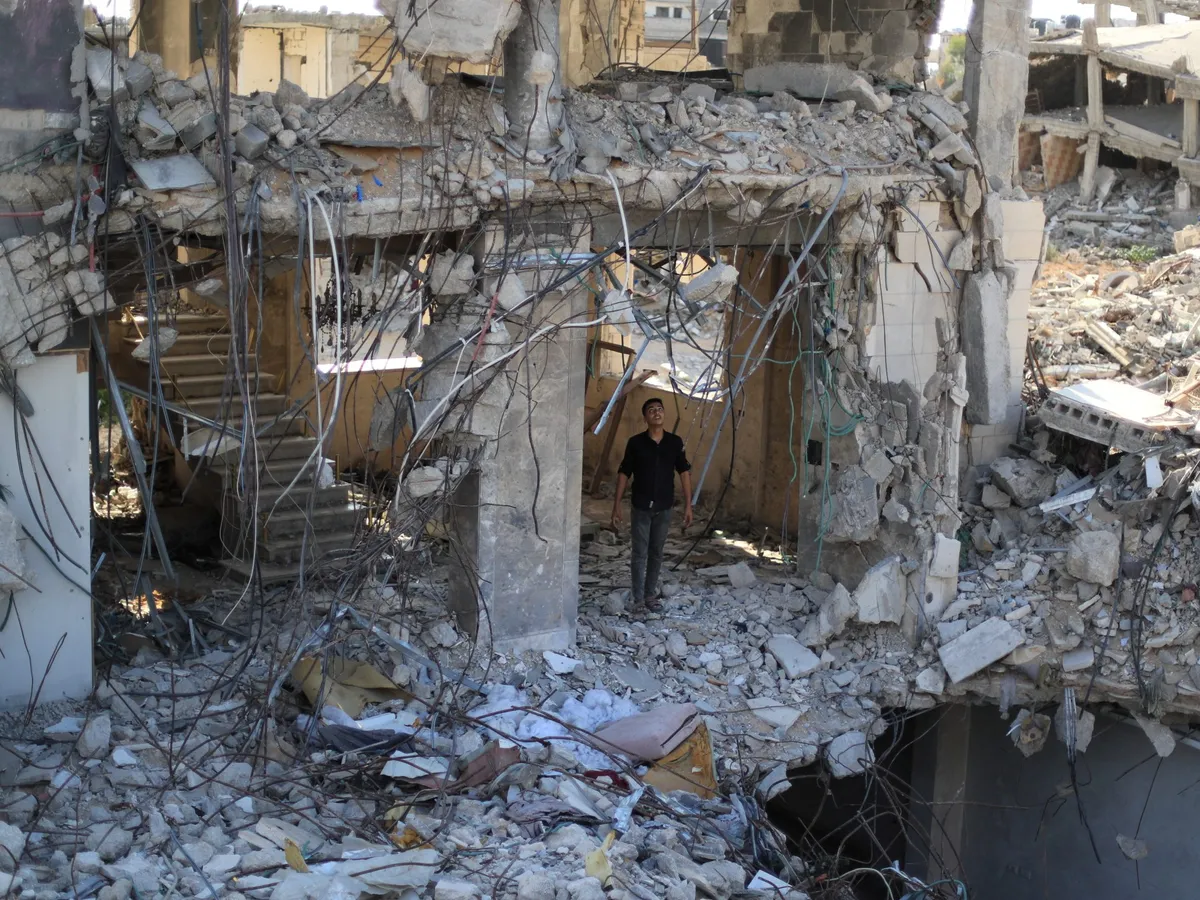
Al JazeeraFIG 01
Reading time
4min
Word count
837words
Sources cited
2cited
Entities identified
12entities
Quality score
100%
§ 01
Briefing Summary
AI-generatedNEWSAR · AI
A Palestinian survivor in Gaza describes the ongoing trauma three years after a "genocidal war" began in October 2023. The conflict has resulted in over 74,000 deaths and widespread destruction, leaving survivors in a state of perpetual trauma with no prospect of recovery. International organizations report that over a million children require psychosocial support, with high percentages of children and adults experiencing PTSD, depression, and anxiety, exacerbated by previous conflicts. The author details the visceral experience of constant bombardment, loss of loved ones, and the psychological impact of witnessing horrific scenes, stating that the scale of this "total, never-ending war" is unlike anything previously experienced. The ongoing violence and loss prevent any possibility of healing or recovery for the population.
Confidence 0.90Sources 2Claims 5Entities 12
§ 02
Article analysis
Model · rule-basedFraming
Human Rights
Conflict
Tone
Sensational
AI-assessed
CalmNeutralAlarmist
Factuality
0.30 / 1.00
Opinion-Heavy
LowHigh
Sources cited
2
Limited
FewMany
§ 03
Key claims
5 extracted01
The author's house was bombed, injuring their sister, mother, and themselves.
quotearticle
Confidence
1.00
02
More than one million children in Gaza require psychosocial support.
statisticUnited Nations Population Fund
Confidence
0.95
03
Some 88 percent of adults in Gaza have PTSD.
statisticarticle
Confidence
0.90
04
Approximately 61 percent of adolescents and young adults in Gaza suffer from PTSD.
statisticarticle
Confidence
0.90
05
More than 74,000 people have been killed in Gaza.
statisticarticle
Confidence
0.90
§ 04
Full report
4 min read · 837 words§ 05
Entities
12 identifiedKey playerOppositionContextPositiveNeutralNegative
Locations4
§ 06
Keywords & salience
10 termstrauma
1.00
genocide
1.00
gaza
1.00
mental health crisis
0.90
psychosocial support
0.80
post-traumatic stress disorder
0.80
children
0.70
survivors
0.60
war
0.50
recovery
0.40
§ 07
Topic connections
Interactive graph Network visualization showing 51 related topics
View Full Graph Person Organization Location Event|Click node to navigate|Edge numbers = shared articles