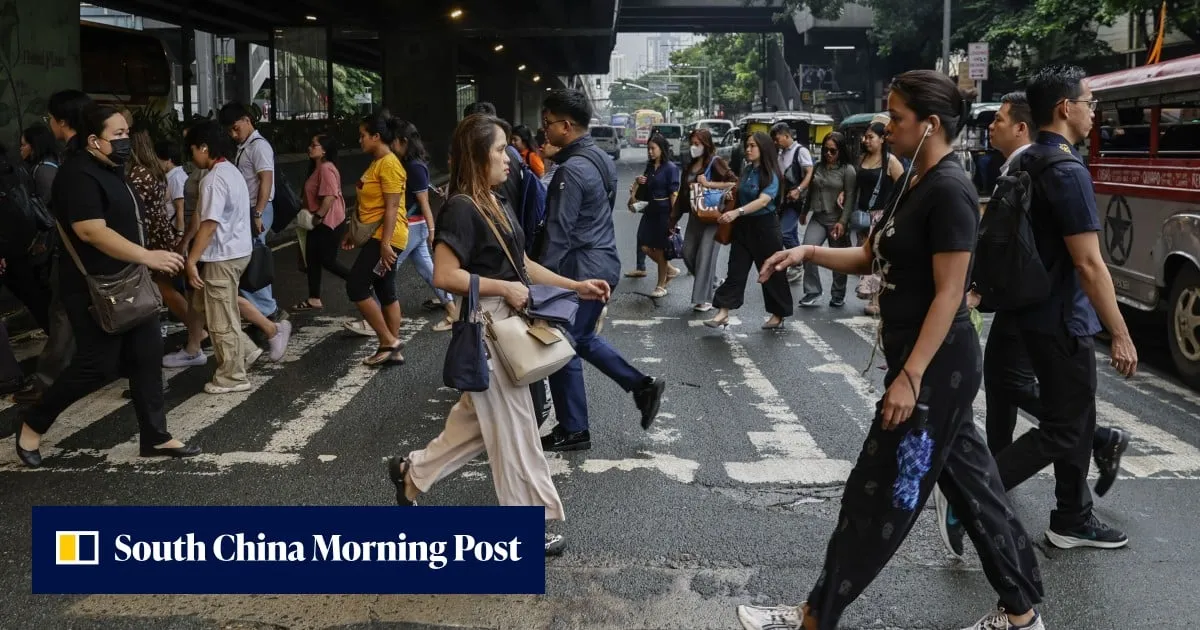
As households across Southeast Asia face rising prices, higher borrowing costs and insecure jobs, analysts say governments should do more to protect a middle class that drives consumer spending but can fall between the cracks of social protection systems designed primarily for poorer households. The issue has come into sharper focus in the Philippines, where the Asian Development Bank Institute (ADBI) urged the government in September to provide targeted support for the middle class to protect...
SRCSouth China Morning Post
LANGEN
LEANCenter-Right
WORDS76
ENT9
THU · 2026-10-08 · 01:30 GMTBRIEF NSR-2026-1008-117195
NSR-2026-1008-117195Analysis·EN·Economic Impact
Protect the middle? Why Southeast Asia should care about a vulnerable class
Analysts are urging Southeast Asian governments to increase support for their middle class, who are facing economic challenges like rising prices, higher borrowing costs, and job insecurity. This demographic is crucial for driving consumer spending but often lacks adequate social protection, which is typically designed for lower-income households.
Sam BeltranSouth China Morning PostFiled 2026-10-08 · 01:30 GMTLean · Center-RightRead · 1 min
South China Morning PostFIG 01
Reading time
1min
Word count
76words
Sources cited
1cited
Entities identified
9entities
Quality score
100%
§ 01
Briefing Summary
AI-generatedNEWSAR · AI
Analysts are urging Southeast Asian governments to increase support for their middle class, who are facing economic challenges like rising prices, higher borrowing costs, and job insecurity. This demographic is crucial for driving consumer spending but often lacks adequate social protection, which is typically designed for lower-income households. The situation has become particularly evident in the Philippines, where the Asian Development Bank Institute (ADBI) recommended in September that the government implement targeted assistance for the middle class. The goal is to safeguard this vulnerable group and maintain economic stability within the region.
Confidence 0.85Sources 1Claims 4Entities 9
§ 02
Article analysis
Model · rule-basedFraming
Economic Impact
Social Justice
Tone
Measured
AI-assessed
CalmNeutralAlarmist
Factuality
0.70 / 1.00
Factual
LowHigh
Sources cited
1
Limited
FewMany
§ 03
Key claims
4 extracted01
The Asian Development Bank Institute (ADBI) urged the Philippines government to provide targeted support for the middle class.
quoteAsian Development Bank Institute (ADBI)
Confidence
0.95
02
Households across Southeast Asia face rising prices, higher borrowing costs, and insecure jobs.
factual
Confidence
0.90
03
Social protection systems are primarily designed for poorer households, potentially leaving the middle class unprotected.
factual
Confidence
0.85
04
Governments should do more to protect the middle class, which drives consumer spending.
quoteanalysts
Confidence
0.80
§ 04
Full report
1 min read · 76 words§ 05
Entities
9 identifiedKey playerOppositionContextPositiveNeutralNegative
§ 06
Keywords & salience
9 termsmiddle class
1.00
southeast asia
0.90
social protection systems
0.80
consumer spending
0.70
rising prices
0.60
insecure jobs
0.50
borrowing costs
0.50
asian development bank institute
0.40
philippines
0.40
§ 07
Topic connections
Interactive graph Network visualization showing 2 related topics
View Full Graph Person Organization Location Event|Click node to navigate|Edge numbers = shared articles