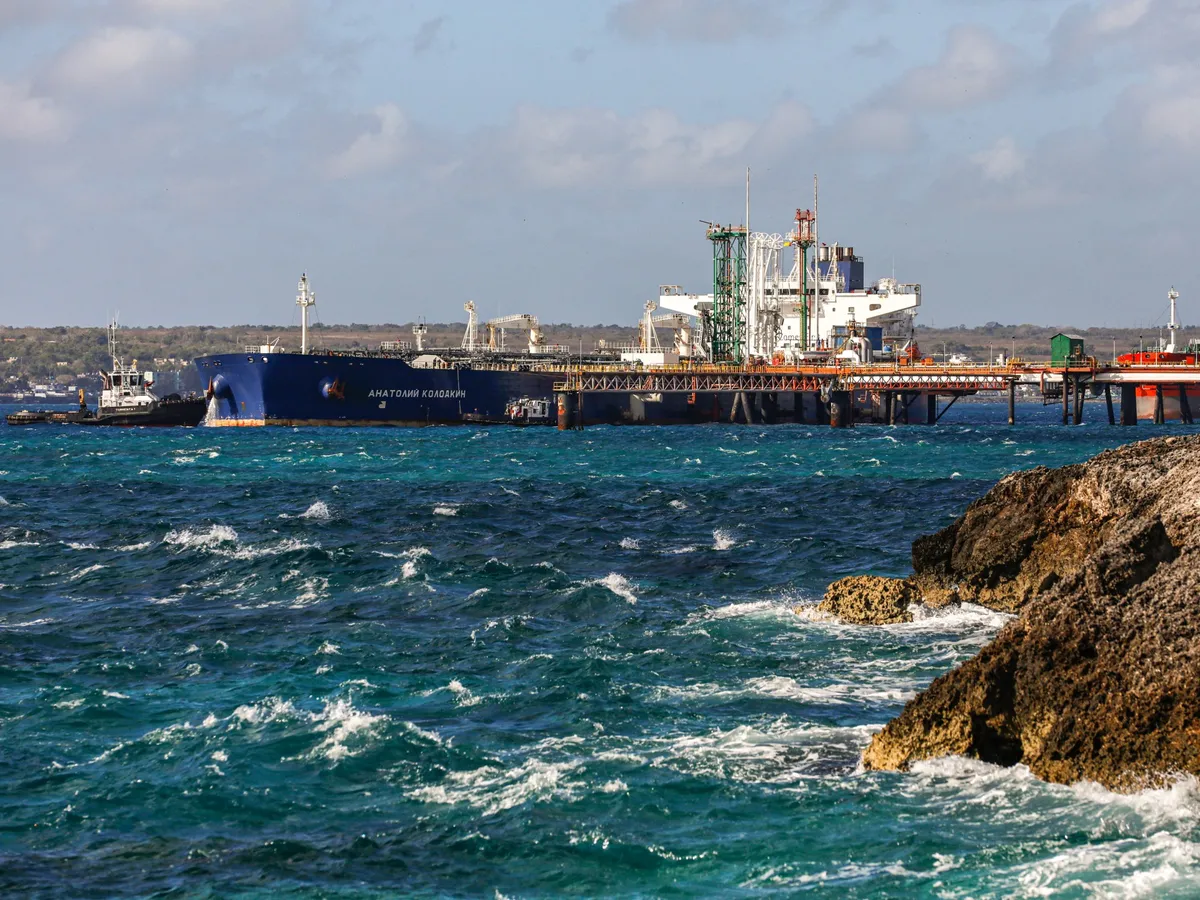
Cuban energy minister denies link to fuel shipments intercepted by US, says oil imports by private firms insufficient.A Russian oil tanker carrying 730,000 barrels of crude oil arrives at the port of Matanzas in northwestern Cuba on March 31, 2026 [Yamil Lage/AFP]Published On 12 Oct 2026The Cuban government is pushing ahead with its plans to transition to renewable energy, amid a de facto oil blockade from the United States that has strangled the island’s economy.In an interview with the Reuters news agency on Monday, Cuban Minister of Energy and Mines Vicente de la O Levy explained that the blockade has forced Cuba to explore domestic alternatives to foreign fuel imports.Recommended Stories list of 4 itemslist 1 of 4Cuba works to restore power after another major nationwide blackoutlist 2 of 4US open to Cuba talks on government change, Marco Rubio sayslist 3 of 4Cuba condemns US ‘collective punishment’ as Trump predicts deallist 4 of 4Cuba accuses US at UN of deliberately inflicting humanitarian sufferingend of list“We are seeking our own alternative solutions, using our own resources, our sun, wind, tides, fuel, Cuban crude oil and the gas produced in our wells,” de la O Levy said.He said 144 solar farms with a combined capacity of about 1,418 megawatts have been installed on the island in recent years.China has been the largest supplier of solar panels to the island, and shipments have increased since the blockade began in early January.At the time, US President Donald Trump halted all oil shipments from Venezuela, a close ally of the Cuban government.Later that month, Trump also announced he would impose heavy tariffs on any country that exported oil to Cuba, justifying the threat by calling the island’s government a “national security” threat.Since then, only a single oil tanker from Russia has reached Havana. The US has increased its shipments of oil to Cuba’s private sector, but it has largely barred fuel exports for nationalised industries on the communist-led island.The government-run electrical grid, widely considered to be antiquated, relies heavily on fossil fuels. Only 40 percent of Cuba’s electricity comes from domestic oil production, according to the International Energy Agency.As of 2023, only nine percent of the country’s energy consumption was covered by renewable sources.De la O Levy admitted in his interview with Reuters that the country was facing difficulties. The blockade has caused shortages of medicine, water and fuel, pushing Cuba to the brink of a humanitarian crisis.“We are surviving and moving forward, little by little, even if not at the pace we would like,” he said.“We face long hours of blackouts and lack fuel for cooking and transportation. We lack fuel, but we are gradually making headway through our own solutions and our people.”Cuba’s production of domestic crude oil remains stable, he added, but is almost entirely allocated to power plants.Aris Lopez Torres, owner of the Fuego Lento restaurant, speaks with technician Josecal Duarte during the installation of solar panels on the roof of her business along Havana’s waterfront [File: Lucien Migne/Al Jazeera]The United Nations and human rights watchdogs have criticised the oil blockade as a violation of international law.Cuban Foreign Minister Bruno Rodriguez Parrilla also condemned the oil blockade in his speech at the UN General Assembly last month.“It is an unusual and unprecedented action,” Rodriguez said of the blockade.“A superpower unilaterally deprives all states of their right to export the commodities that they wish to the country that they wish.”The US has maintained an economic embargo on Cuba for more than 60 years, since the Cold War era.But since taking office for a second term as president, Trump has sought to squeeze Cuba’s economy further, as part of a “maximum pressure” campaign. His administration has indicated that it wants to topple Cuba’s government.On October 7, US authorities announced they had seized 90 biodiesel fuel shipments valued at over $2.8m destined for Cuba.“These shipments were part of an attempt to unlawfully export fuel to Cuba in violation of federal export laws,” US Immigration and Customs Enforcement (ICE) said in a statement.But in his interview with Reuters, de la O Levy denied the Cuban government had any link to the shipments.“No Cuban state-owned company has managed to secure a fuel contract, whether for small or large quantities,” he said.He added that any US oil shipments to private firms fall far short of the country’s requirements.“I would venture to say that the amount entering the country doesn’t even cover 3 percent of its fuel needs,” de la O Levy said.
SRCAl Jazeera
LANGEN
LEANCenter
WORDS745
ENT12
MON · 2026-10-12 · 18:52 GMTBRIEF NSR-2026-1012-118403
NSR-2026-1012-118403News Report·EN·Economic Impact
Cuba forges ahead with renewable energy plans amid US oil blockade
Cuba is accelerating its renewable energy initiatives in response to a de facto US oil blockade that is straining its economy. Minister of Energy and Mines Vicente de la O Levy stated that Cuba is developing domestic alternatives, including solar power, with 144 solar farms installed recently.
By Reuters and The Associated PressAl JazeeraFiled 2026-10-12 · 18:52 GMTLean · CenterRead · 3 min
Al JazeeraFIG 01
Reading time
3min
Word count
745words
Sources cited
2cited
Entities identified
12entities
Quality score
100%
§ 01
Briefing Summary
AI-generatedNEWSAR · AI
Cuba is accelerating its renewable energy initiatives in response to a de facto US oil blockade that is straining its economy. Minister of Energy and Mines Vicente de la O Levy stated that Cuba is developing domestic alternatives, including solar power, with 144 solar farms installed recently. The US halted oil shipments from Venezuela and imposed tariffs on other exporters to Cuba, significantly reducing fuel imports. While the US has allowed some oil shipments to Cuba's private sector, de la O Levy claims these are insufficient for national needs. The blockade has led to shortages of essential goods and long blackouts. The UN and human rights groups have criticized the blockade as a violation of international law.
Confidence 0.90Sources 2Claims 5Entities 12
§ 02
Article analysis
Model · rule-basedFraming
Economic Impact
Diplomatic
Tone
Mixed Tone
AI-assessed
CalmNeutralAlarmist
Factuality
0.70 / 1.00
Factual
LowHigh
Sources cited
2
Limited
FewMany
§ 03
Key claims
5 extracted01
The US blockade has forced Cuba to explore domestic alternatives to foreign fuel imports.
quoteVicente de la O Levy
Confidence
1.00
02
As of 2023, only nine percent of Cuba’s energy consumption was covered by renewable sources.
statistic
Confidence
0.90
03
Only 40 percent of Cuba’s electricity comes from domestic oil production.
statisticInternational Energy Agency
Confidence
0.90
04
144 solar farms with a combined capacity of about 1,418 megawatts have been installed in Cuba.
statisticVicente de la O Levy
Confidence
0.90
05
Cuba is forging ahead with renewable energy plans due to a US oil blockade.
factual
Confidence
0.90
§ 04
Full report
3 min read · 745 words§ 05
Entities
12 identifiedKey playerOppositionContextPositiveNeutralNegative
Organizations1
Locations7
§ 06
Keywords & salience
10 termsus oil blockade
1.00
renewable energy
1.00
cuba
0.90
energy transition
0.80
fuel imports
0.70
domestic alternatives
0.60
solar farms
0.60
economic blockade
0.50
fossil fuels
0.50
national security
0.40
§ 07
Topic connections
Interactive graph Network visualization showing 51 related topics
View Full Graph Person Organization Location Event|Click node to navigate|Edge numbers = shared articles