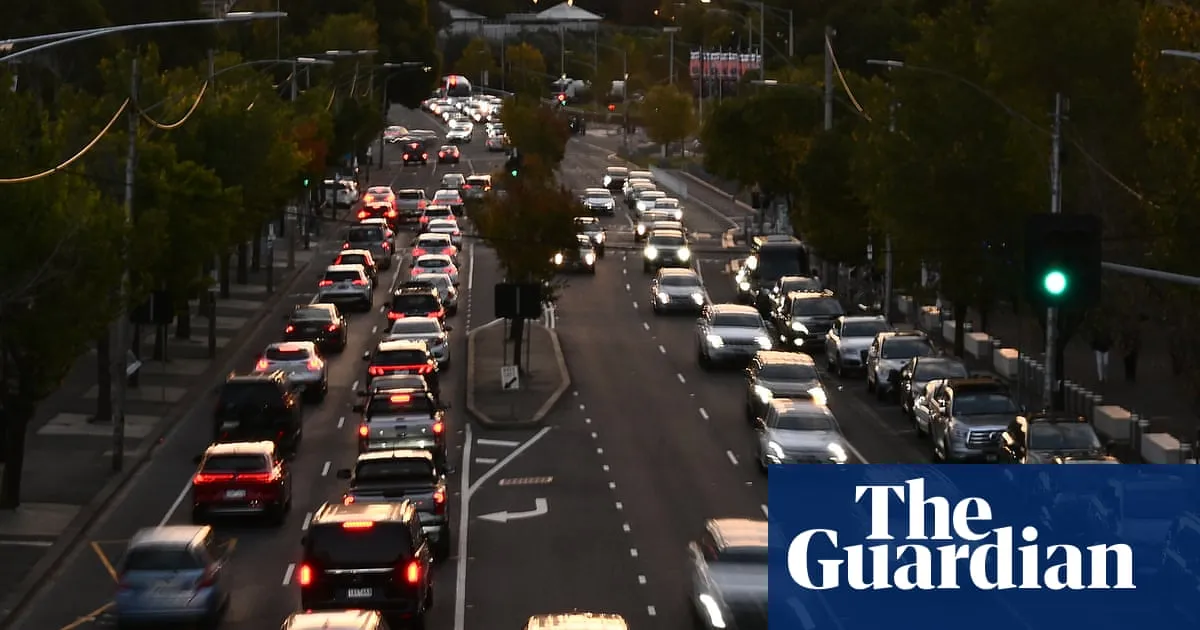
Traffic in Melbourne. The International Monetary Fund’s World Economic Outlook modelling shows a scenario under which global oil prices could jump to US$130 a barrel. Photograph: Joel Carrett/AAP View image in fullscreen Traffic in Melbourne. The International Monetary Fund’s World Economic Outlook modelling shows a scenario under which global oil prices could jump to US$130 a barrel. Photograph: Joel Carrett/AAP ‘Clear and present danger’: fuel prices could rise by 30c a litre across Australia under IMF scenario IMF’s World Economic Outlook shows how a worsening Middle East crisis could affect global growth and inflation Follow our Australia politics live blog for latest updates Get our breaking news email, free app or daily news podcast An International Monetary Fund scenario where global oil prices jump to US$130 a barrel over coming months could push Australian petrol prices up by another 30 cents per litre and pile pressure on the Reserve Bank to hike interest rates, economists say. In its latest World Economic Outlook, the IMF modelled the impact on global growth and inflation from a worsening Middle East crisis that extended into next year, highlighting the “clear and present danger” to a resilient global economy from turmoil in commodity and bond markets. The Washington-based institution did not publish the impact on Australia from a hypothetical US$30 jump in the price of crude oil, from over US$106 a barrel now. The IMF described a scenario where “the conflict persists through the end of June 2027, keeping the Straits of Hormuz and Bab el-Mandeb largely closed to commercial shipping, extending damages to oil infrastructures in the region, and delaying the recovery in oil supply to the end of 2027”. “With limited scope for further inventory drawdown, oil prices reach $US130 from the fourth quarter of 2026 to the first quarter of 2027.” Unleaded petrol prices in the major east coast cities have pushed above $2.40 a litre in recent days and towards six-month highs, while diesel prices have eased but remain high at about $2.80 per litre. Using a rule of thumb that every US$10 rise in global oil prices leads to a 10c price rise at the bowser, a US$30 oil price increase could drive unleaded petrol towards $2.70 and the highest since the start of the war more than seven months ago. Economists told Australia" class="entity-link entity-organization" data-entity-id="329" data-entity-type="organization">Guardian Australia that such a move could leave inflation more than 1 percentage point higher than expected by the end of the year, adding to households’ cost of living woes and dragging on growth. Jonathan Kearns, the chief economist at Challenger, said “the reality” was that the RBA – alongside other central banks – would have to respond to higher fuel costs with higher interest rates. The RBA delivered a fourth interest rate hike last month. Minutes from that meeting released on Tuesday showed that board members discussed how “the Middle East conflict had escalated and oil prices were substantially above the level assumed in the August forecasts”. “More broadly, members noted that global cost pressures appeared to be building. Some of this came from the indirect effects of higher oil prices,” the minutes read. Johnathan McMenamin, head of economic forecasts at Barrenjoey, said he expected inflation to lift to 4.2% in the year to September, against 4% in August. McMenamin said that every 10% rise in fuel prices directly added 0.33 percentage points to headline inflation. The RBA’s prediction of a fall in headline inflation to 3.6% by the end of the year is based on the Brent crude price falling to US$81 per barrel. Should global oil prices instead push towards US$130 per barrel, as per the IMF scenario (and assuming each US$10 oil price increase leads to a 10c rise in fuel prices), inflation could instead still be as high as 4.5% in late 2026. But McMenamin was less convinced the RBA would have to respond with higher interest rates, saying the central bank has been mostly responding to underlying price pressures related to domestic capacity constraints, rather than overseas factors. Explore more on these topics Petrol prices Economics Business International Monetary Fund (IMF) Reserve Bank of Australia Interest rates news Share Reuse this content
SRCThe Guardian - World News
LANGEN
LEANCenter-Left
WORDS691
ENT12
TUE · 2026-10-13 · 02:00 GMTBRIEF NSR-2026-1013-118461
NSR-2026-1013-118461News Report·EN·Economic Impact
‘Clear and present danger’: fuel prices could rise by 30c a litre across Australia under IMF scenario
An International Monetary Fund scenario projects that a worsening Middle East crisis could cause global oil prices to surge to $130 a barrel. This hypothetical increase could lead to Australian petrol prices rising by an additional 30 cents per litre.
Patrick Commins Economics editorThe Guardian - World NewsFiled 2026-10-13 · 02:00 GMTLean · Center-LeftRead · 3 min
The Guardian - World NewsFIG 01
Reading time
3min
Word count
691words
Sources cited
3cited
Entities identified
12entities
Quality score
100%
§ 01
Briefing Summary
AI-generatedNEWSAR · AI
An International Monetary Fund scenario projects that a worsening Middle East crisis could cause global oil prices to surge to $130 a barrel. This hypothetical increase could lead to Australian petrol prices rising by an additional 30 cents per litre. Economists suggest this would put pressure on the Reserve Bank of Australia to consider further interest rate hikes, as it could push inflation higher than anticipated. The IMF's World Economic Outlook highlighted this as a "clear and present danger" to the global economy, impacting growth and inflation. Current unleaded petrol prices are already near six-month highs, and a significant oil price jump could exacerbate cost-of-living pressures for households.
Confidence 0.90Sources 3Claims 5Entities 12
§ 02
Article analysis
Model · rule-basedFraming
Economic Impact
Conflict
Tone
Mixed Tone
AI-assessed
CalmNeutralAlarmist
Factuality
0.70 / 1.00
Factual
LowHigh
Sources cited
3
Well sourced
FewMany
§ 03
Key claims
5 extracted01
The Middle East conflict had escalated and oil prices were substantially above the level assumed in the August forecasts.
factualReserve Bank of Australia board members
Confidence
1.00
02
The IMF modelled the impact on global growth and inflation from a worsening Middle East crisis.
factualInternational Monetary Fund
Confidence
1.00
03
A US$30 rise in global oil prices could lead to a 10c price rise at the bowser.
statisticrule of thumb (economists)
Confidence
0.90
04
Higher fuel costs could lead the RBA to respond with higher interest rates.
predictionJonathan Kearns (Challenger chief economist)
Confidence
0.85
05
An IMF scenario with global oil prices jumping to US$130 a barrel could push Australian petrol prices up by another 30 cents per litre.
predictioneconomists
Confidence
0.80
§ 04
Full report
3 min read · 691 words§ 05
Entities
12 identifiedKey playerOppositionContextPositiveNeutralNegative
Organizations3
Locations5
§ 06
Keywords & salience
10 termsoil prices
1.00
fuel prices
1.00
international monetary fund
0.90
middle east crisis
0.90
inflation
0.80
global growth
0.70
interest rates
0.60
commodity markets
0.50
shipping
0.40
petrol prices
0.40
§ 07
Topic connections
Interactive graph Network visualization showing 51 related topics
View Full Graph Person Organization Location Event|Click node to navigate|Edge numbers = shared articles