Palestinians have been displaced from their homes in Tulkarem refugee camp and dream of returning home.A photo of Tulkarem camp taken from Fuad Abu Salam’s apartment which overlooks the camp; from there, he looks out at his destroyed home every day [Raghad Salameh/Al Jazeera]Published On 13 Oct 2026Ramallah, occupied West Bank – Every day, Fuad Abu Salam sips his morning coffee outside his rented home in the Thinnabeh suburb, gazing at every detail of the sprawling Tulkarem refugee camp in front of him. This West Bank camp he can see in the distance once housed a two-storey building comprising four apartments, each measuring 300 square metres (3,229sq feet), in which he and his extended family lived.After he was displaced from the camp, he, his wife, his four children, and his mother were confined to a small, rented apartment no bigger than 100sq metres (1,076sq feet) in Thinnabeh. His home in Tulkarem was partially destroyed when he left the camp.Recommended Stories list of 3 itemslist 1 of 3Israeli campaign of West Bank destruction moves on to region’s food basketlist 2 of 3Hamas slams Board of Peace for refusal to work with UNRWA in Gazalist 3 of 3‘My hands are empty’: Displaced Palestinians struggle to surviveend of listEverything changed for Fuad and his family on January 21, 2025, when Israel launched a military assault in the occupied West Bank dubbed “Iron Wall”, initially targeting the Jenin refugee camp. A week later, the operation expanded to include the Tulkarem and Nur Shams camps in the city of Tulkarem.Israeli forces forcibly displaced the entire populations of the three camps during January and February 2025 and continue to prevent their return, the United Nations has said.Mass displacementData from UNRWA cited in a report titled, Destruction of Palestinian Refugee Camps in the Northern West Bank, stated that 33,362 Palestinians remain forcibly displaced from the three camps. By October 2025, 52 percent of structures in the Jenin camp, 48 percent in the Nur Shams camp, and 36 percent in the Tulkarem camp had been destroyed or damaged.The Israeli operation has affected hundreds of homes, roads, and infrastructure, including water and electricity networks, while humanitarian aid to the camps has been cut off.Israeli forces killed 102 Palestinians, including 21 children, during the period covered, according to the report. This represents 46 percent of the total number of Palestinians killed by Israeli forces in the West Bank during this period.On Sunday, the Israeli Supreme Court ordered the government to provide a timeline for the return of displaced people to the three camps, setting November 23 as a deadline for a response.Israel’s far-right Finance Minister Bezalel Smotrich rejected the ruling, warning that the return of residents could allow for the reconstruction of what he termed “terror infrastructure”. He called on the government not to implement the decision.Meanwhile, Israeli Defence Minister Israel Katz opposed the court’s intervention, asserting that the army’s continued presence in the camps was a security decision and stating his intention to maintain a military presence there.Fuad, 42, a greenhouse installer, found himself forced to flee with all the camp’s other residents and more than 40 family members. But he and his neighbours carried with them the hope of returning home.They moved between the homes of relatives, enduring harsh living conditions, until he finally settled in the Thinnabeh suburb of Tulkarem.Fuad Abu Salam sits with his children in his rented apartment overlooking the Tulkarem camp, gazing at their destroyed home [Raghad Salameh/Al Jazeera]The neighbourhood, which overlooks the camp, has “restored his spirit” because he can see his home even if it’s from afar. Although he is unable to reach the building, he can gaze at it and imagine a time when he can return.“If a decision were issued right now allowing us to return, I would go back immediately without a moment’s hesitation,” he said.But his home is no longer what it used to be. It was partially demolished and set on fire by Israeli soldiers, rendering more than 80 percent of the apartment block uninhabitable. Fuad plans to use the rubble to rebuild his home.“I will never waver in my resolve to return, even if it means pitching a tent over the ruins and living there,” he declared.Mohamad Ararawi, 18, from the Jenin refugee camp, also saw his home razed to the ground with a wide road replacing it.He told Al Jazeera that his family of 40, who had lived in a five-story building in the al-Damaj neighbourhood, all fled the camp when the Israeli military operation began, seeking shelter in homes belonging to other relatives.“My mother, father, five sisters, and I took refuge in my brother’s unfinished apartment. We endured harsh conditions, suffering through biting cold and scorching heat, before gradually completing the construction until it became somewhat habitable,” he added.Returning is all that matters to them, and they refuse to live anywhere but the camp, even if it lacks basic amenities.A near-impossible returnReturning the displaced back to their homes is not merely an issue of clearing roads for residents. Returning would mean living in a camp in which infrastructure has been damaged and hundreds of homes destroyed, all amid a lack of necessities.Nihad Shawish, a member of the Nur Shams camp Popular Services Committee, told Al Jazeera that the scale of destruction makes the residents’ return fraught with immense difficulties, despite their will to go back to their homes.Approximately 400 homes, most of them three to four stories high, were destroyed, he said, while about 100 homes were burned down during the Israeli army’s presence in the camp.Even the ones that survived are not necessarily habitable; they sustained severe damage affecting doors, windows, and interior facilities. The collapse of some buildings has also damaged neighbouring homes.Approximately 10,900 camp residents remain displaced, including families staying in private homes and others at a school in the Thinnabeh suburb.Faisal Salameh, an official with the Tulkarem Camp Popular Committee, told Al Jazeera that more than 2,000 housing units were completely destroyed, while approximately 90 per cent of the camp’s homes sustained partial damage, rendering them uninhabitable.“Israel has turned the camp into an environment that drives residents away, given the widespread destruction and the ban on reconstruction in certain areas that have been converted into roads,” he noted.Despite these conditions, Salameh said that displaced residents are eager to return to the camp as soon as a decision by the Israeli government permits them to.The camp was home to approximately 15,000 people. The majority of the displaced currently live in rented homes or with relatives, while others have sought shelter in schools, mosques, or makeshift tin shacks.Israeli rejectionWhile the Israeli Supreme Court’s ruling opens the door to discussing the return of displaced persons to camps in the northern West Bank, its rejection by Israeli government ministers raises questions about whether it will be implemented. Until then, the lives of the displaced families remain in limbo.Mohamad Halaseh, an expert on Israeli affairs, told Al Jazeera that the Israeli right-wing isn’t just trying to alter the structure of the judicial system, but also seeking to undermine its legitimacy and exert pressure on judges.He explained that the effect of political stances is evident in the disregard for Supreme Court rulings. He cites the issue of Palestinian prisoner visitations, a case in which the state failed to comply with the court’s decisions, as one example of this.
SRCAl Jazeera
LANGEN
OutletState media · Qatar
WORDS1,222
ENT12
TUE · 2026-10-13 · 14:02 GMTBRIEF NSR-2026-1013-118631
NSR-2026-1013-118631News Report·EN·Human Interest
Palestinians dream of returning home after Israel raids West Bank camps
Following an Israeli military operation dubbed "Iron Wall" in January and February 2025, thousands of Palestinians were forcibly displaced from Tulkarem, Jenin, and Nur Shams refugee camps in the occupied West Bank. The operation resulted in significant destruction of homes and infrastructure, with UNRWA reporting that a substantial percentage of structures in these camps were damaged or destroyed.
Fayha ShalashAl JazeeraFiled 2026-10-13 · 14:02 GMTOutlet · State media · QatarRead · 5 min
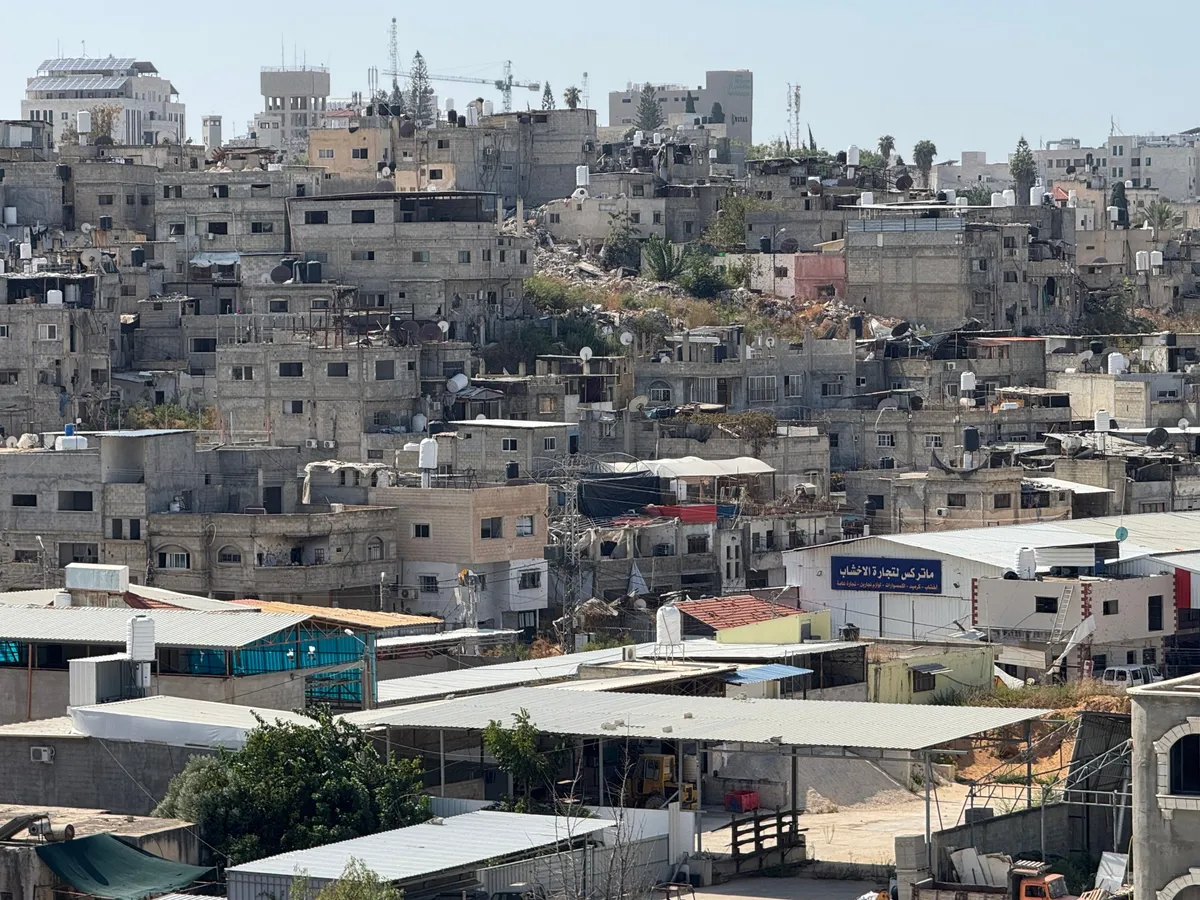
Al JazeeraFIG 01
Reading time
5min
Word count
1,222words
Sources cited
3cited
Entities identified
12entities
NEWSAR · AI
Following an Israeli military operation dubbed "Iron Wall" in January and February 2025, thousands of Palestinians were forcibly displaced from Tulkarem, Jenin, and Nur Shams refugee camps in the occupied West Bank. The operation resulted in significant destruction of homes and infrastructure, with UNRWA reporting that a substantial percentage of structures in these camps were damaged or destroyed. Hundreds of homes, roads, and essential services were affected, and humanitarian aid was cut off. Israeli forces killed 102 Palestinians, including 21 children, during this period. While the Israeli Supreme Court ordered the government to provide a timeline for the return of displaced residents, far-right ministers have opposed this, citing security concerns. Displaced individuals, like Fuad Abu Salam, express a strong desire to return to their destroyed homes, despite the challenges.
Confidence 0.90Sources 3Claims 5Entities 12
Framing
Human Interest
Human Rights
Tone
Measured
AI-assessed
CalmNeutralAlarmist
Factuality
0.70 / 1.00
Factual
LowHigh
Sources cited
3
Well sourced
FewMany
01
Israeli forces killed 102 Palestinians, including 21 children, during the period covered.
statisticUNRWA
Confidence
1.00
02
By October 2025, 36% of structures in Tulkarem camp were destroyed or damaged.
statisticUNRWA
Confidence
1.00
03
The UN states that 33,362 Palestinians remain forcibly displaced from Jenin, Nur Shams, and Tulkarem camps.
statisticUNRWA
Confidence
1.00
04
Israeli forces launched a military assault dubbed 'Iron Wall' in January 2025, expanding to Tulkarem and Nur Shams camps.
factual
Confidence
1.00
05
Palestinians were forcibly displaced from Tulkarem refugee camp and dream of returning home.
factual
Confidence
1.00
§ 04
Full report
5 min read · 1,222 wordsKey playerOppositionContextPositiveNeutralNegative
Locations7
Events1
palestinian displacement
1.00
west bank camps
0.90
refugee camp destruction
0.80
israeli military assault
0.70
forced displacement
0.70
tulkarem refugee camp
0.60
nur shams camp
0.50
jenin refugee camp
0.50
humanitarian aid
0.40
occupied west bank
0.40
§ 07
Connections
Who appears together in the newsIn this articleWider coverageLine weight = articles in common
Laying out network…
Strongest ties articles in common
- 814
- 692
- 594
- 257
- 154
- 89
Recurring context not named in this article
- OHamaslinks 5
- PDonald Trumplinks 5
- LPalestinelinks 5
- PBenjamin Netanyahulinks 5
- LUnited Stateslinks 5
- LGaza Striplinks 5
- LFrancelinks 5
- LLebanonlinks 5