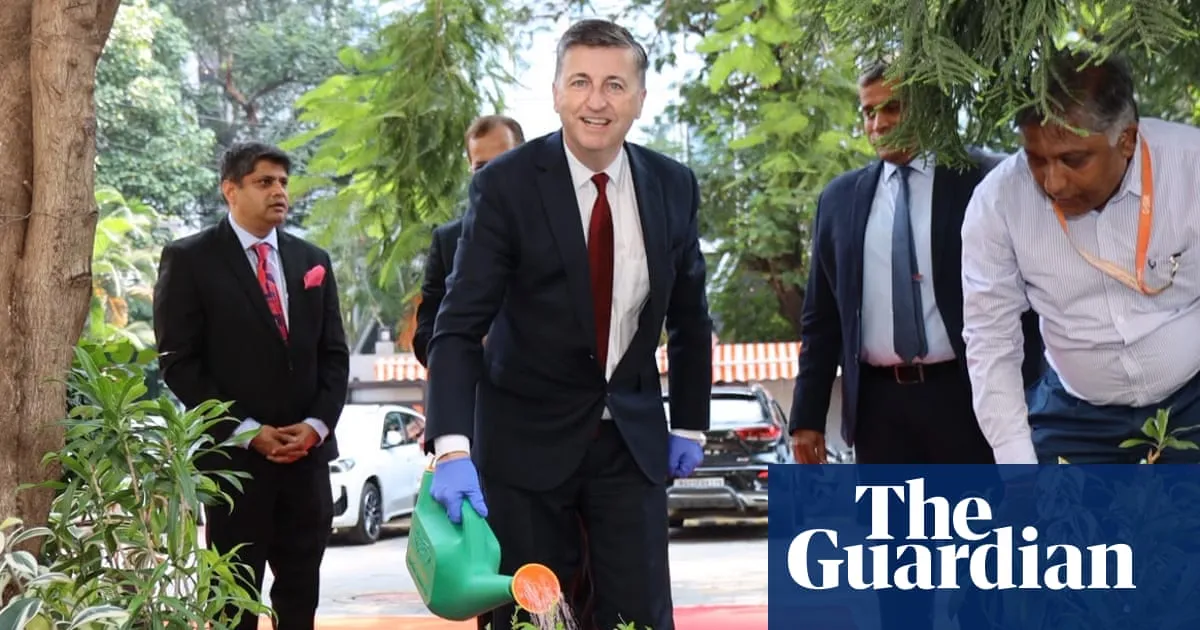
Britain will benefit from much closer trading relations with the EU even if that means giving up its ability to negotiate free trade agreements, the Scotland secretary has said.Douglas Alexander helped negotiate deals with India and the US when he was a trade minister under Keir Starmer.But he has told The Guardian he thinks joint trading arrangements with the EU – whether under a customs union or full membership – would be a bigger economic prize, not least because the EU has now negotiated its own similar deal with India.When Starmer was prime minister, ministers would argue against rejoining the EU because it would mean having to abandon trade agreements with other countries.Douglas Alexander: ‘We’re paying a real economic price for putting up new barriers to our European neighbours.’ Photograph: Stefan Rousseau/PAAlexander’s comments show how much Starmer’s successor, Andy Burnham, who called this week for a “serious dialogue” on the UK’s relations with the EU, including possible re-entry, has shifted the government’s position.Speaking to The Guardian from a trade delegation to India, Alexander welcomed the progress made since the Indian agreement came into force earlier this year, since when the price of scotch whisky in India has fallen by 10-15%.But he said the economic benefits of trading agreements with the EU would be greater.“In trade policy, geography still matters,” he said. “The Channel is just 21 miles wide. Our largest trading partner is and will remain the European Union in the years to come. We trade almost twice the amount with the European Union that we do with the United States, the largest single-country trading partner.”He said: “It’s no secret that I was not a supporter of leaving the European Union, and I called out early as trade minister what I described as the ‘post-imperial delusions’ of the Brexiteers. Back in 2016, they promised a world of Britain as a buccaneering free trade nation in a world where barriers were coming down. Sadly, what we’ve witnessed in the year since is a more protectionist, more regionalised world in which barriers have been going up.“At the time we joined the Pacific trade grouping, the CPTPP [Comprehensive and Progressive Agreement for Trans-Pacific Partnership] – which undoubtedly makes a lot of sense geopolitically for the UK – our own analysis made clear that the long-term boost to UK GDP from membership is less than a tenth of 1%. If you compare that with estimates of the structural damage to the UK economy from Brexit, you get a sense of just how important Europe remains to our future trade and prosperity.“We’re already paying a real economic price for putting up new barriers to our European neighbours who, with almost half of total UK trade, remain easily our largest trading partners.”Alexander was speaking in Mumbai, where he was joined by the business secretary, Jonathan Reynolds, and the environment secretary, Angela Eagle, as well as a group of mayors from northern England. He made it clear he did not support any particular method of achieving closer relations with the EU.The ministers spent much of their time in meetings with Indian officials as they attempt to iron out what they say have been “teething problems” with the early implementation, especially for smaller businesses.Keir Starmer and Narendra Modi, India’s prime minister, in Mumbai in October 2025. Photograph: Leon Neal/PA“There are always teething problems,” Alexander said. “We’re also having a conversation at the level of regulation to see how do we overcome non-tariff barriers that can prove to be an inhibitor to the kind of progress we want to see unless they’re addressed.”Many in the government say a bigger prize will be to reach an agreement at next month’s EU summit, where Burnham hopes to sign new trading deals for emissions, electricity and agricultural products.One hurdle to delivering that is the UK’s desire to discuss the protectionist “Made in Europe” policy, which British manufacturers fear will shut them out of a key market. EU leaders say they are willing to discuss British entry into that scheme, though they are also pushing for the UK to impose tariffs on Chinese electric vehicles, without which they fear the UK will become a back door into the European market.Reynolds told The Guardian this week he would not impose tariffs simply because of pressure from Brussels.
SRCThe Guardian - World News
LANGEN
LEANCenter-Left
WORDS713
ENT11
WED · 2026-10-14 · 13:31 GMTBRIEF NSR-2026-1014-118908
NSR-2026-1014-118908News Report·EN·Economic Impact
Closer EU trade ties greater prize for UK than making separate deals, minister says
Scotland Secretary Douglas Alexander stated that closer trading relations with the EU would be a greater economic prize for the UK than negotiating separate free trade agreements, even if it means sacrificing the ability to strike independent deals. Speaking from a trade delegation in India, Alexander emphasized that the EU remains the UK's largest trading partner, with geography playing a significant role in trade policy.
Kiran Stacey in MumbaiThe Guardian - World NewsFiled 2026-10-14 · 13:31 GMTLean · Center-LeftRead · 3 min
The Guardian - World NewsFIG 01
Reading time
3min
Word count
713words
Sources cited
3cited
Entities identified
11entities
Quality score
100%
§ 01
Briefing Summary
AI-generatedNEWSAR · AI
Scotland Secretary Douglas Alexander stated that closer trading relations with the EU would be a greater economic prize for the UK than negotiating separate free trade agreements, even if it means sacrificing the ability to strike independent deals. Speaking from a trade delegation in India, Alexander emphasized that the EU remains the UK's largest trading partner, with geography playing a significant role in trade policy. He contrasted the limited economic boost from agreements like the CPTPP with the substantial damage caused by Brexit, highlighting the economic cost of new barriers to European neighbors. Alexander's comments signal a shift in the government's position on EU relations, with discussions ongoing about potential new trading arrangements.
Confidence 0.90Sources 3Claims 5Entities 11
§ 02
Article analysis
Model · rule-basedFraming
Economic Impact
Political Strategy
Tone
Measured
AI-assessed
CalmNeutralAlarmist
Factuality
0.60 / 1.00
Mixed
LowHigh
Sources cited
3
Well sourced
FewMany
§ 03
Key claims
5 extracted01
The UK is paying a real economic price for putting up new barriers to European neighbours.
quoteScotland secretary
Confidence
1.00
02
Closer trading relations with the EU would be a greater economic prize for the UK than negotiating separate trade deals.
quoteScotland secretary
Confidence
1.00
03
The UK trades almost twice the amount with the EU than with the United States.
statisticScotland secretary
Confidence
0.90
04
The price of Scotch whisky in India has fallen by 10-15% since the Indian agreement came into force earlier this year.
statisticScotland secretary
Confidence
0.90
05
The long-term boost to UK GDP from CPTPP membership is less than a tenth of 1%.
statisticScotland secretary
Confidence
0.80
§ 04
Full report
3 min read · 713 words§ 05
Entities
11 identifiedKey playerOppositionContextPositiveNeutralNegative
People3
Locations4
Events1
§ 06
Keywords & salience
10 termseu trade ties
1.00
free trade agreements
0.90
economic prize
0.80
customs union
0.70
uk trade policy
0.70
european union
0.60
geography
0.50
brexit
0.50
india trade deal
0.40
cptpp
0.40
§ 07
Topic connections
Interactive graph Network visualization showing 51 related topics
View Full Graph Person Organization Location Event|Click node to navigate|Edge numbers = shared articles