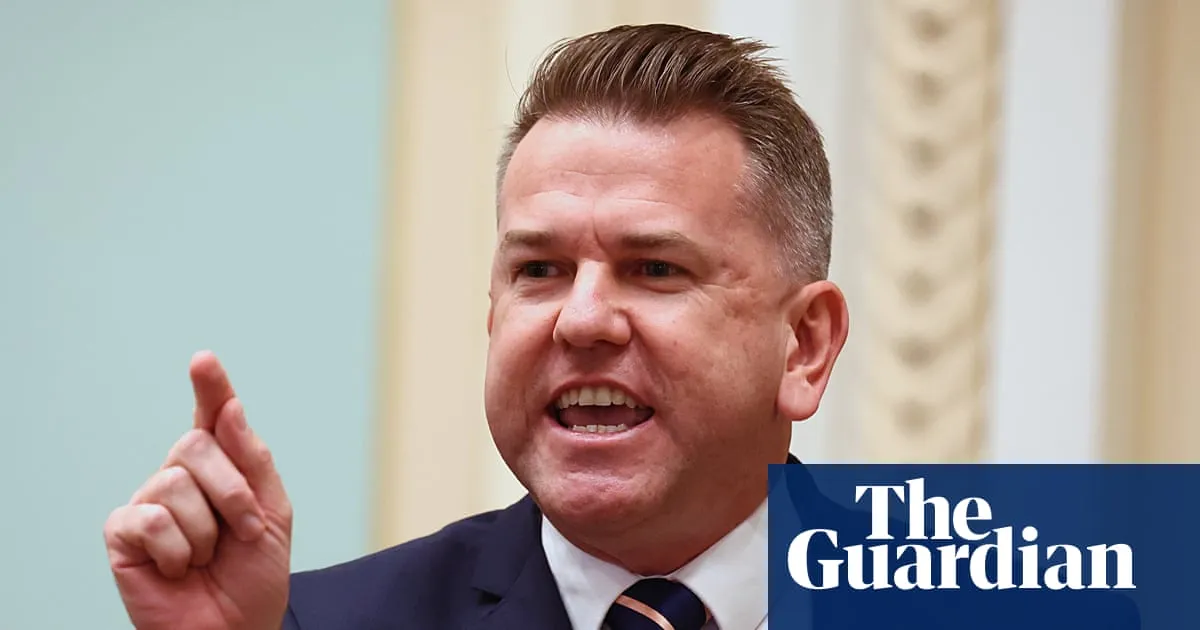
The deputy premier of Queensland, Jarrod Bleijie, wants the power to break up strikes by public sector workers. Photograph: AAP View image in fullscreen The deputy premier of Queensland, Jarrod Bleijie, wants the power to break up strikes by public sector workers. Photograph: AAP Analysis Queensland’s LNP has tread softly in government. It’s now baring its teeth over the power to break up workers’ strikes Ben Smee The controversial legislation may end up placing large sections of its suburban support – critical to the party’s lead in the polls – on the bonfire Get our breaking news email, free app or daily news podcast For almost two years, the Liberal National Party’s strategy for government in Queensland has been to stay well clear of issues that risk burning through political capital. On Wednesday, one of the most tentative conservative governments in recent history announced plans for sweeping and controversial changes to workplace laws. In doing so, the LNP risks placing large sections of its suburban support – critical to the party’s lead in the polls – on the bonfire. The proposals would give the increasingly influential deputy premier, Jarrod Bleijie, the power to break strikes by public sector workers in certain circumstances, including if it is deemed “in the public interest”. The government will also make it more difficult for public servants, including emergency services workers, to claim compensation for psychological injuries. Under the proposed laws, workers with such claims will only be entitled to support if they can show their workplace was the primary cause. Law firm Slater and Gordon said the changes would make it harder for Queenslanders to access support for psychological injuries. The United Workers Union, which represents paramedics and some healthcare workers, said the changes were “an underhanded attack on Queensland ambulance officers and other hospital staff”. The opposition leader, Steven Miles, said on Thursday morning the proposals were a “Newman-era attack on workers”, and the only thing surprising about that statement was that it took so long (roughly 14 hours) for the spectre of Campbell Newman’s government to, once again, loom over Queensland politics. The collapse of the Newman government explains almost everything about the current one. The premier, David Crisafulli, and Bleijie had front-row seats for the “crash through” tactics that quickly turned voters off Newman, including proposals to sack public sector workers, and led to mass protests. The lessons since have been that most suburban voters are uncomfortable with the LNP putting ideology on show. And so it went to the 2024 election – and won comfortably – talking mainly about crime and keeping all those vote-losing positions on things like abortion and budget cuts off the table. Approaching the midway point of the term, the LNP has finally decided to show its teeth. There are readers who will, understandably, take issue with the idea that the Crisafulli government has been “tentative” or has been, up to this point, unthreatening. It has been unapologetic in attacking Indigenous representation within government, trans healthcare, and suppressing pro-Palestine protests. These moves have been underpinned by a simple calculation: that the issues are marginal for most suburban and regional voters, whose concerns are mostly the cost of living and crime. Those who care about evidence-based policy, human rights and civil liberties have every right to be furious. The polls suggest that fury hasn’t gone mainstream, and that suburban voters are OK with the government punching down, so long as it doesn’t affect them. Workplace reforms affect them. If nothing else, those survivors of the Newman government who still sit in the cabinet room will have learned a lesson that in Queensland, the public sector (which employs more than 320,000 people) is a powerful political bloc in its own right. The morning after announcing the changes, Bleijie seemed only too aware of the scale of the coming fight. “You’re going to see a mammoth campaign by the Labor party,” he told reporters at a press conference at Newstead. “It’s going to be a lot of mistruths and misinformation, and I think everything they will be able to say … we will be able to debunk with facts.” The Crisafulli government remains comfortably ahead in the relatively few public polls, a recent snapshot in Brisbane Times seemed to show Labor in Queensland had taken the biggest hit from the rise in support for One Nation. But the bright orange cloud is still looming. And a simple look around the country reveals that in modern times, whether policy is decided by ideology or focus group, there’s no guarantee political capital will last. Better use that capital while you can. Even if it means, as it will for the Queensland LNP, picking a fight with many of the suburban middle-class voters who put the party into office. Explore more on these topics Queensland politics Queensland David Crisafulli Liberal National Party Industrial relations analysis Share Reuse this content
SRCThe Guardian - World News
LANGEN
LEANCenter-Left
WORDS817
ENT10
THU · 2026-10-15 · 14:00 GMTBRIEF NSR-2026-1015-119241
NSR-2026-1015-119241Analysis·EN·Political Strategy
Queensland’s LNP has tread softly in government. It’s now baring its teeth over the power to break up workers’ strikes
Queensland's Liberal National Party (LNP) government, after nearly two years of a cautious approach, has announced sweeping and controversial changes to workplace laws. Deputy Premier Jarrod Bleijie plans to introduce legislation granting him the power to break up public sector worker strikes under certain circumstances, including if deemed "in the public interest." The proposed laws will also make it more difficult for public servants to claim compensation for psychological injuries, requiring them to prove their workplace was the primary cause.
Ben SmeeThe Guardian - World NewsFiled 2026-10-15 · 14:00 GMTLean · Center-LeftRead · 4 min
The Guardian - World NewsFIG 01
Reading time
4min
Word count
817words
Sources cited
4cited
Entities identified
10entities
Quality score
100%
§ 01
Briefing Summary
AI-generatedNEWSAR · AI
Queensland's Liberal National Party (LNP) government, after nearly two years of a cautious approach, has announced sweeping and controversial changes to workplace laws. Deputy Premier Jarrod Bleijie plans to introduce legislation granting him the power to break up public sector worker strikes under certain circumstances, including if deemed "in the public interest." The proposed laws will also make it more difficult for public servants to claim compensation for psychological injuries, requiring them to prove their workplace was the primary cause. These reforms risk alienating suburban voters crucial to the LNP's poll lead. The opposition has criticized the move as an "attack on workers," drawing parallels to the previous Newman government's tactics.
Confidence 0.90Sources 4Claims 5Entities 10
§ 02
Article analysis
Model · rule-basedFraming
Political Strategy
Legal & Judicial
Tone
Mixed Tone
AI-assessed
CalmNeutralAlarmist
Factuality
0.60 / 1.00
Mixed
LowHigh
Sources cited
4
Well sourced
FewMany
§ 03
Key claims
5 extracted01
The United Workers Union said the changes were 'an underhanded attack on Queensland ambulance officers and other hospital staff'.
quoteUnited Workers Union
Confidence
1.00
02
Law firm Slater and Gordon said the changes would make it harder for Queenslanders to access support for psychological injuries.
quoteSlater and Gordon
Confidence
1.00
03
The deputy premier of Queensland, Jarrod Bleijie, wants the power to break up strikes by public sector workers.
factualJarrod Bleijie
Confidence
1.00
04
The government will also make it more difficult for public servants to claim compensation for psychological injuries.
factual
Confidence
0.90
05
The proposed laws would give the deputy premier the power to break strikes by public sector workers in certain circumstances, including if it is deemed 'in the public interest'.
factual
Confidence
0.90
§ 04
Full report
4 min read · 817 words§ 05
Entities
10 identifiedKey playerOppositionContextPositiveNeutralNegative
People4
Organizations4
Locations1
§ 06
Keywords & salience
8 termsworkers' strikes
1.00
public sector workers
0.90
workplace laws
0.80
jarrod bleijie
0.70
psychological injuries
0.60
lnp government
0.50
political capital
0.40
campbell newman
0.40
§ 07
Topic connections
Interactive graph Network visualization showing 42 related topics
View Full Graph Person Organization Location Event|Click node to navigate|Edge numbers = shared articles