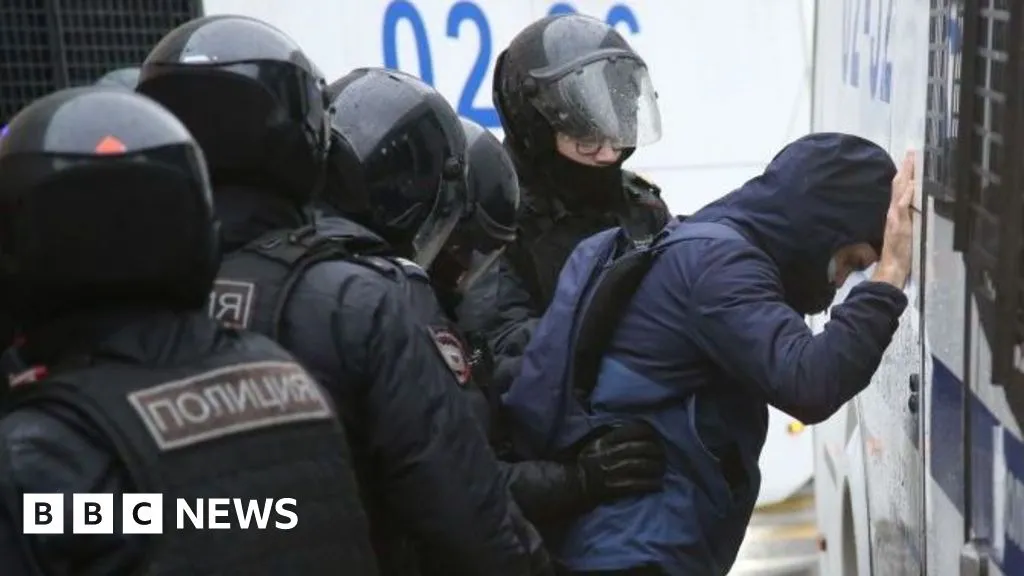
And deportations are taking place from Europe too. His organisation has changed its advice to dissidents escaping Russia: the EU is no longer safe, it is better to seek refuge elsewhere.Germany has sharply increased the number of Russian nationals it deports. Seven were sent back in 2023, rising to more than 110 in 2025, according to German government figures. More than 21,000 Russians sought Asylum in Germany between 2022 and 2025, but the proportion of positive decisions fell from 29% in 2023 to just 6.8% in the first eleven months of 2025."Protection is only granted if there is an actual, well-founded fear of persecution," Germany's migration and Asylum agency, BAMF, told the BBC.Last year, Berlin suspended its humanitarian visa programme for Russians, and across the EU, the proportion of Russian applicants granted some form of Asylum protection fell from 23% in 2024 to around 17% in the first nine months of 2025, according to EU data.Russian opposition activists fleeing repression have become caught up in a wider crackdown on Immigration, as governments across Europe and the US toughen rules amid political pressure over high numbers of irregular migrants and Asylum applications, as well as over security concerns.Western governments are "focused on limiting humanitarian programmes and Asylum seekers", says lawyer Anastasia Burakova, founder of rights group Kovcheg (Ark), which helps anti-war Russians leave the country. The clampdown is "in response to public concerns and rising support for right-wing populist parties", she adds.Following a negative Asylum decision, Russian nationals are often given the chance to leave independently, but a rising number are being forcibly returned to Russia, usually escorted via third countries.Several Russian activists in exile told the BBC that Immigration officials had told them they faced "no danger" in Russia, and that officials often lacked an adequate understanding of the risks that activists face.
SRCBBC News - World
LANGEN
LEANCenter
WORDS303
ENT10
FRI · 2026-10-16 · 04:57 GMTBRIEF NSR-2026-1016-119368
NSR-2026-1016-119368News Report·EN·Human Rights
They fled Russia, but the West sent them back
Russian anti-government activists seeking refuge in the EU and US are increasingly being deported back to Russia, despite fleeing persecution. Germany, for example, saw deportations of Russian nationals rise from seven in 2023 to over 110 in 2025, while asylum approval rates for Russians have significantly declined.
1 hour agoShareSaveAdd as preferred on GoogleWill VernonBBC News - WorldFiled 2026-10-16 · 04:57 GMTLean · CenterRead · 2 min
BBC News - WorldFIG 01
Reading time
2min
Word count
303words
Sources cited
3cited
Entities identified
10entities
Quality score
100%
§ 01
Briefing Summary
AI-generatedNEWSAR · AI
Russian anti-government activists seeking refuge in the EU and US are increasingly being deported back to Russia, despite fleeing persecution. Germany, for example, saw deportations of Russian nationals rise from seven in 2023 to over 110 in 2025, while asylum approval rates for Russians have significantly declined. This trend reflects a broader crackdown on immigration across Western countries, driven by concerns over irregular migration, asylum applications, and security, as well as rising support for right-wing populist parties. Activists report that immigration officials often underestimate the dangers they face in Russia. Consequently, organizations advising dissidents now suggest the EU may no longer be a safe haven.
Confidence 0.90Sources 3Claims 5Entities 10
§ 02
Article analysis
Model · rule-basedFraming
Human Rights
Political Strategy
Tone
Mixed Tone
AI-assessed
CalmNeutralAlarmist
Factuality
0.70 / 1.00
Factual
LowHigh
Sources cited
3
Well sourced
FewMany
§ 03
Key claims
5 extracted01
Western governments are 'focused on limiting humanitarian programmes and asylum seekers'.
quoteAnastasia Burakova
Confidence
1.00
02
The proportion of Russian asylum applicants granted protection in the EU fell from 23% in 2024 to around 17% in the first nine months of 2025.
statisticEU data
Confidence
1.00
03
Germany has sharply increased the number of Russian nationals it deports, from seven in 2023 to over 110 in 2025.
statisticGerman government figures
Confidence
1.00
04
Immigration officials have told Russian activists they face 'no danger' in Russia, and often lack understanding of risks activists face.
quoteSeveral Russian activists in exile
Confidence
0.90
05
Russian opposition activists fleeing repression have become caught up in a wider crackdown on immigration across Europe and the US.
factualarticle
Confidence
0.90
§ 04
Full report
2 min read · 303 words§ 05
Entities
10 identifiedKey playerOppositionContextPositiveNeutralNegative
Locations4
§ 06
Keywords & salience
10 termsrussian deportations
1.00
asylum seekers
0.90
eu immigration policy
0.80
dissidents
0.70
humanitarian visa
0.60
right-wing populism
0.50
political pressure
0.50
kovcheg
0.40
security concerns
0.40
bamf
0.40
§ 07
Topic connections
Interactive graph Network visualization showing 51 related topics
View Full Graph Person Organization Location Event|Click node to navigate|Edge numbers = shared articles