Several young protesters told the BBC that what was going on now was a new phase born of the previous movement.Five months of peaceful protest had been "met with humiliation, ridicule, mockery," complained one young woman called Livia. "That was a clear message from the government that our voice will not be allowed to be heard."Another called Brunela said she was worried about what might happen next: "I am very terrified because the media and the government is reacting, especially now. It was not just my voice, it is the voice of Albanian youth."An overlap between the two sets of protests may well have occurred, even though flamingo leaders have not publicly stated so and no representative of the student movement has come forward.After all, their main concerns relate to corruption, which the prime minister says must be investigated by the justice system. How is the government handling the unrest?Rama has been touring some of the damaged buildings and blaming Sali Berisha for instigating chaos."All of this is the work of the very same hand - the hand that has gripped the Albanian opposition by the throat, the hand that has burned and destroyed Albania more than once, and is now prepared to burn and destroy it again to prevent any progress. It is a blind struggle, fuelled by the most irrational hatred," he said on Friday.
SRCBBC News - World
LANGEN
LEANCenter
WORDS227
ENT12
FRI · 2026-10-16 · 14:33 GMTBRIEF NSR-2026-1016-119494
NSR-2026-1016-119494News Report·EN·Political Strategy
Albanian protests turn violent: What we know
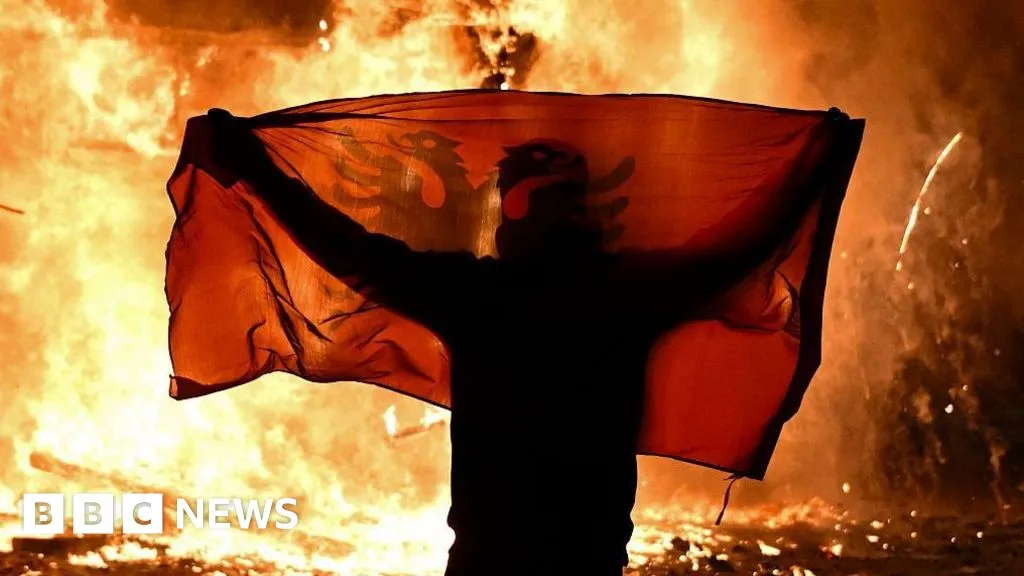
Protests in Albania's capital, Tirana, escalated to violence this week, marking a new phase for an ongoing anti-government movement. Young protesters stated that months of peaceful demonstrations were met with government ridicule, leading to frustration and a feeling that their voices were ignored.
1 hour agoShareSaveAdd as preferred on GooglePaul Kirby,Europe Digital EditorandPaulin KolaBBC News - WorldFiled 2026-10-16 · 14:33 GMTLean · CenterRead · 1 min
BBC News - WorldFIG 01
Reading time
1min
Word count
227words
Sources cited
3cited
Entities identified
12entities
Quality score
100%
§ 01
Briefing Summary
AI-generatedNEWSAR · AI
Protests in Albania's capital, Tirana, escalated to violence this week, marking a new phase for an ongoing anti-government movement. Young protesters stated that months of peaceful demonstrations were met with government ridicule, leading to frustration and a feeling that their voices were ignored. The current unrest is described as a manifestation of this sentiment, with concerns about corruption being a central issue. Prime Minister Edi Rama has blamed former leader Sali Berisha for instigating the chaos, accusing him of seeking to prevent progress through destructive actions fueled by hatred. The government maintains that corruption investigations should be handled by the justice system.
Confidence 0.90Sources 3Claims 5Entities 12
§ 02
Article analysis
Model · rule-basedFraming
Political Strategy
Social Justice
Tone
Mixed Tone
AI-assessed
CalmNeutralAlarmist
Factuality
0.40 / 1.00
Mixed
LowHigh
Sources cited
3
Well sourced
FewMany
§ 03
Key claims
5 extracted01
The prime minister states that corruption concerns must be investigated by the justice system.
quoteRama (Prime Minister)
Confidence
1.00
02
The prime minister describes the unrest as a blind struggle fueled by irrational hatred.
quoteRama (Prime Minister)
Confidence
1.00
03
The prime minister blames Sali Berisha for instigating the chaos and unrest.
quoteRama (Prime Minister)
Confidence
1.00
04
Protesters believe the government is not allowing their voices to be heard.
quoteLivia (protester)
Confidence
1.00
05
Young protesters feel their peaceful protests were met with humiliation and ridicule by the government.
quoteLivia (protester)
Confidence
1.00
§ 04
Full report
1 min read · 227 words§ 05
Entities
12 identifiedKey playerOppositionContextPositiveNeutralNegative
People5
Organizations3
Locations1
Events1
§ 06
Keywords & salience
8 termsalbanian protests
1.00
government
0.90
corruption
0.80
youth voice
0.70
unrest
0.60
sali berisha
0.50
justice system
0.40
opposition
0.40
§ 07
Topic connections
Interactive graph Network visualization showing 30 related topics
View Full Graph Person Organization Location Event|Click node to navigate|Edge numbers = shared articles