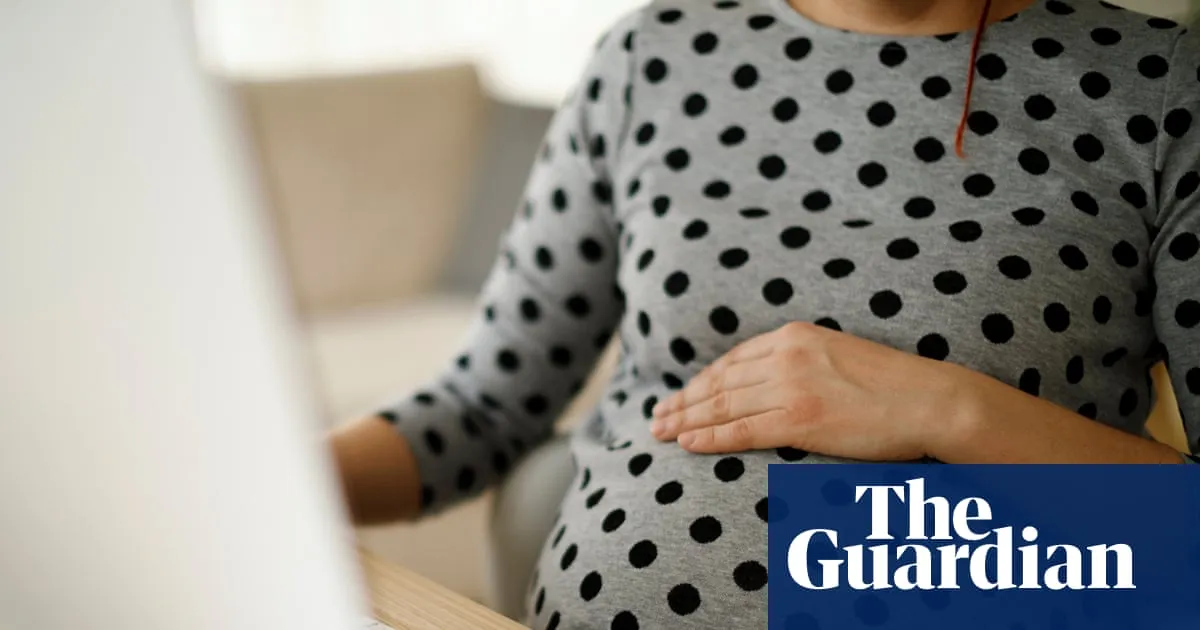
The number of pregnancy discrimination complaints to the human rights commission has increased from 52 in 2023 to 71 last year. Photograph: damircudic/Getty Images View image in fullscreen The number of pregnancy discrimination complaints to the human rights commission has increased from 52 in 2023 to 71 last year. Photograph: damircudic/Getty Images Pregnant women face workplace hostility and ‘sham redundancies’, Australian human rights report finds Sex discrimination commissioner says too often ‘it’s the woman who has the burden of bringing a complaint’ in parental discrimination cases Get our new political email, free app or daily news podcast Women are being forced out of employment through “sham redundancies”, losing shifts and facing hostile work environments after having a baby, according to a report by the Australian Human Rights Commission, which warns parental discrimination remains a major barrier to gender equality. The commission’s report suggests pregnancy discrimination is more prominent for vulnerable groups, including immigrant and First Nations women, people with disability and LGBTQ+ people. The commission held roundtables with dozens of parents, legal and community advocates when compiling the report. In one case study detailed in the Balancing Act report, Luisa*, an experienced HR manager in the healthcare industry, was made redundant one month after telling her employer she was pregnant. “Her employer questioned who would support Luisa after the baby was born, because her family lived overseas,” the report noted. “Luisa explained that her husband would take parental leave and that she planned to return to work soon after the birth. Luisa also offered to continue working on a part-time basis, but the redundancy went ahead.” The sex discrimination commissioner, Anna Cody, said urgent law reform was needed to the sex discrimination act to protect women and families, arguing legislation has not kept pace with a changing society. She said women delayed telling their employers about pregnancies for fear of losing work. “Frequently, when a woman does tell that she is pregnant … she will experience either performance management, or suddenly – if she’s in insecure work, and we know that migrant women and women targeted by racism are more likely to be an insecure and shift work – then the shifts will dry up,” Cody said. “The third thing that happens is redundancies – and they are ‘sham redundancies’. They’re not … because the job is no longer required or has been eliminated within the workplace, it’s because they no longer want that woman working in the job because she’s pregnant and is going to leave.” A 2014 national review by the AHRC found 49% of mothers reported discrimination during pregnancy, parental leave or on their return to work. Cody said discrimination remained widespread but it was hard to know whether the situation had improved. The commission would push the federal government to fund another survey, she said. The chief executive of the Parenthood, Georgie Dent, told the national press club in September that another survey was critical. “It must be reinstated,” she said at the time. “We can’t fix what we’ve stopped counting.” A 2024 survey of 1,048 parent workers by the University of South Australia found 89% reported discrimination during pregnancy, 85% reported experiencing discrimination while on parental leave and 92% reported discrimination when returning to work. The number of complaints to the human rights commission has increased from 52 in 2023 to 71 in 2025. Cody said complaints to the Fair Work Commission were higher but many parents didn’t report discrimination. “If you make the loss of a job look like a redundancy, the employer is the one who has all the evidence to show whether or not the job has actually disappeared, and yet it’s the complainant, it’s the woman, who has the responsibility, that burden, of bringing a complaint,” Cody said. “We know that when women are having their child, or are pregnant, that’s a really vulnerable time. And so then to put on top of that, ‘Now it’s your responsibility to make a complaint to either the Fair Work Commission or to the Australian Human Rights Commission,’ sometimes that’s just too much.” The AHRC takes up to a year to allocate a conciliator after a complaint is lodged, meaning there is a backlog of cases. The commission’s report, to be released this week, found some parents were given less responsibility at work after the birth of a child. Others were given fewer shifts or no opportunity for development. New parents faced difficulty asking for flexibility and safe arrangements for breastfeeding. Another case study, Michelle, told the AHRC she lost her job after asking to work longer shifts rather than multiple shorter shifts to care for her two young children and terminally ill father. “Her workplace responded to her request by no longer offering her any shifts and dismissed her from her role,” the report wrote. Meanwhile, Emily told the commission she was discouraged from taking lactation breaks while employed at a tech start-up despite its clean, accessible and secure breastfeeding area. “She was expected to work uninterrupted, long hours and was unable to take her lactation breaks. Despite the available space and policies, the culture and attitudes in her workplace made Emily feel unsupported and led her to stop breastfeeding her child earlier than she wanted to.” *Name changed by human rights commission in its report Explore more on these topics Australia news Industrial relations Human rights Women Pregnancy news Share Reuse this content
SRCThe Guardian - World News
LANGEN
LEANCenter-Left
WORDS901
ENT12
MON · 2026-10-19 · 09:30 GMTBRIEF NSR-2026-1019-120082
NSR-2026-1019-120082News Report·EN·Human Rights
Pregnant women face workplace hostility and ‘sham redundancies’, Australian human rights report finds
A report by the Australian Human Rights Commission reveals that pregnant women and new mothers are experiencing significant workplace discrimination, including "sham redundancies," loss of shifts, and hostile environments. This discrimination is a major obstacle to gender equality, disproportionately affecting vulnerable groups like immigrant and First Nations women, people with disabilities, and LGBTQ+ individuals.
Krishani DhanjiThe Guardian - World NewsFiled 2026-10-19 · 09:30 GMTLean · Center-LeftRead · 4 min
The Guardian - World NewsFIG 01
Reading time
4min
Word count
901words
Sources cited
2cited
Entities identified
12entities
Quality score
100%
§ 01
Briefing Summary
AI-generatedNEWSAR · AI
A report by the Australian Human Rights Commission reveals that pregnant women and new mothers are experiencing significant workplace discrimination, including "sham redundancies," loss of shifts, and hostile environments. This discrimination is a major obstacle to gender equality, disproportionately affecting vulnerable groups like immigrant and First Nations women, people with disabilities, and LGBTQ+ individuals. The commission notes an increase in pregnancy discrimination complaints, with a recent survey indicating widespread discrimination during pregnancy, parental leave, and upon return to work. Sex Discrimination Commissioner Anna Cody highlights the burden placed on women to prove discrimination and calls for urgent law reform, as current legislation has not kept pace with societal changes.
Confidence 0.90Sources 2Claims 5Entities 12
§ 02
Article analysis
Model · rule-basedFraming
Human Rights
Social Justice
Tone
Mixed Tone
AI-assessed
CalmNeutralAlarmist
Factuality
0.70 / 1.00
Factual
LowHigh
Sources cited
2
Limited
FewMany
§ 03
Key claims
5 extracted01
A 2014 national review by the AHRC found 49% of mothers reported discrimination during pregnancy, parental leave or on their return to work.
statisticAustralian Human Rights Commission
Confidence
1.00
02
Urgent law reform is needed to the sex discrimination act to protect women and families.
quoteAnna Cody, Sex Discrimination Commissioner
Confidence
1.00
03
Pregnancy discrimination complaints to the Australian Human Rights Commission increased from 52 in 2023 to 71 last year.
statisticAustralian Human Rights Commission
Confidence
1.00
04
Pregnancy discrimination is more prominent for vulnerable groups, including immigrant and First Nations women, people with disability and LGBTQ+ people.
factualAustralian Human Rights Commission
Confidence
0.90
05
Women are being forced out of employment through ‘sham redundancies’, losing shifts and facing hostile work environments after having a baby.
factualAustralian Human Rights Commission
Confidence
0.90
§ 04
Full report
4 min read · 901 words§ 05
Entities
12 identifiedKey playerOppositionContextPositiveNeutralNegative
Organizations1
Locations1
Topics8
§ 06
Keywords & salience
10 termspregnancy discrimination
1.00
workplace hostility
0.90
sham redundancies
0.90
parental discrimination
0.80
gender equality
0.70
australian human rights commission
0.70
law reform
0.60
vulnerable groups
0.50
insecure work
0.50
sex discrimination act
0.40
§ 07
Topic connections
Interactive graph No topic relationship data available yet. This graph will appear once topic relationships have been computed.