As Israel heads to the polls on October 27, its polarising and longest-serving prime minister is seeking re-election.To his supporters, he is known as “King Bibi”; but to his opponents, he is the king of security failures and corruption.Disputes over names aside, what is not in question is that Benjamin Netanyahu, Israel’s longest-serving prime minister, has left his mark on the country’s institutions, politics and social attitudes during a decades-long career that has been defined by Israel’s lurch to the right.Recommended Stories list of 3 itemslist 1 of 3The kingmakers who could determine Israel’s electionlist 2 of 3Hegseth meets Netanyahu on unannounced Israel visitlist 3 of 3Trump backs Netanyahu: Is the US planning a new Iran attack with Israel?end of listAs he seeks re-election in Israel’s October 27 polls, analysts say his most enduring domestic legacy may be the right-wing, militaristic opposition that he has helped create and now faces.Born in 1949, Netanyahu entered Israel’s central political stage in the early 1990s by fuelling anger at possible peace deals with the Palestinians and Syria.Israeli political leaders have accused him of leading incitement that motivated the 1995 assassination of then-Prime Minister Yitzhak Rabin, who was leading negotiations with the Palestine Liberation Organization, by an ultranationalist Israeli. Netanyahu had led rallies in which participants depicted Rabin in a Nazi SS uniform and held signs of him in the crosshairs of a gun, while others shouted “traitor”.The Likud Party leader denies any responsibility, but former security officials have said they warned Netanyahu before the assassination and asked him to dial down his rhetoric, only for him to refuse, according to Israeli media reports.In 1996, Netanyahu’s populist tactics succeeded at the ballot box, making him Israel’s youngest prime minister. Netanyahu’s transactional leadership style gave prominence to extreme-right and religious parties that are now an indispensable part of his right-wing alliance.
SRCAl Jazeera
LANGEN
OutletState media · Qatar
WORDS306
ENT5
SAT · 2026-10-24 · 05:29 GMTBRIEF NSR-2026-1024-121514
NSR-2026-1024-121514News Report·EN·Political Strategy
How Benjamin Netanyahu reshaped Israel’s institutions
As Israel heads to the polls on October 27, its polarising and longest-serving prime minister is seeking re-election.
Nour OdehAl JazeeraFiled 2026-10-24 · 05:29 GMTOutlet · State media · QatarRead · 2 min
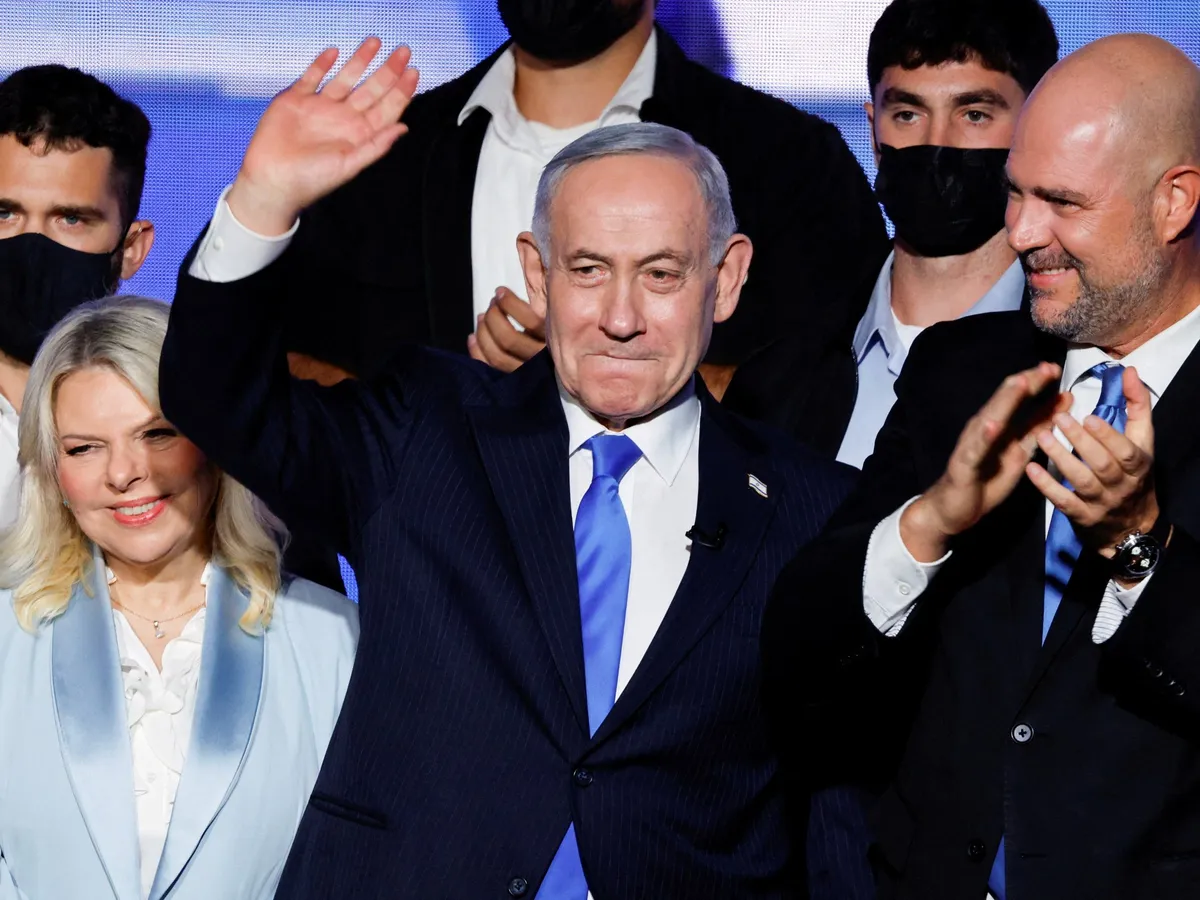
Al JazeeraFIG 01
Reading time
2min
Word count
306words
Sources cited
4cited
Entities identified
5entities
Framing
Political Strategy
Tone
Measured
AI-assessed
CalmNeutralAlarmist
Factuality
0.70 / 1.00
Factual
LowHigh
Sources cited
4
Well sourced
FewMany
01
Netanyahu’s transactional leadership style gave prominence to extreme-right and religious parties that are now an indispensable part of his right-wing alliance.
factualIsraeli media reports
Confidence
1.00
02
Netanyahu’s populist tactics succeeded at the ballot box, making him Israel’s youngest prime minister in 1996.
factualNetanyahu's own account (in 1996)
Confidence
1.00
03
Benjamin Netanyahu has led incitement that motivated the 1995 assassination of then-Prime Minister Yitzhak Rabin.
quoteIsraeli political leaders
Confidence
0.90
04
Netanyahu has helped create and now faces a right-wing, militaristic opposition that he has played a key role in shaping.
quoteAnalysts say Netanyahu's most enduring domestic legacy may be the right-wing opposition he has created.
Confidence
0.80
§ 04
Full report
2 min read · 306 wordsKey playerOppositionContextPositiveNeutralNegative
Organizations2
Locations1
§ 07
Connections
Who appears together in the newsIn this articleWider coverageLine weight = articles in common
Laying out network…
Strongest ties articles in common
- 1,506
- 11
- 7
- 6
- 5
- 3
Recurring context not named in this article
- LWest Banklinks 5
- OHamaslinks 4
- LUnited Stateslinks 4
- LJerusalemlinks 4
- OKnessetlinks 4
- LTel Avivlinks 4
- LGaza Striplinks 4
- OUnited Nationslinks 4