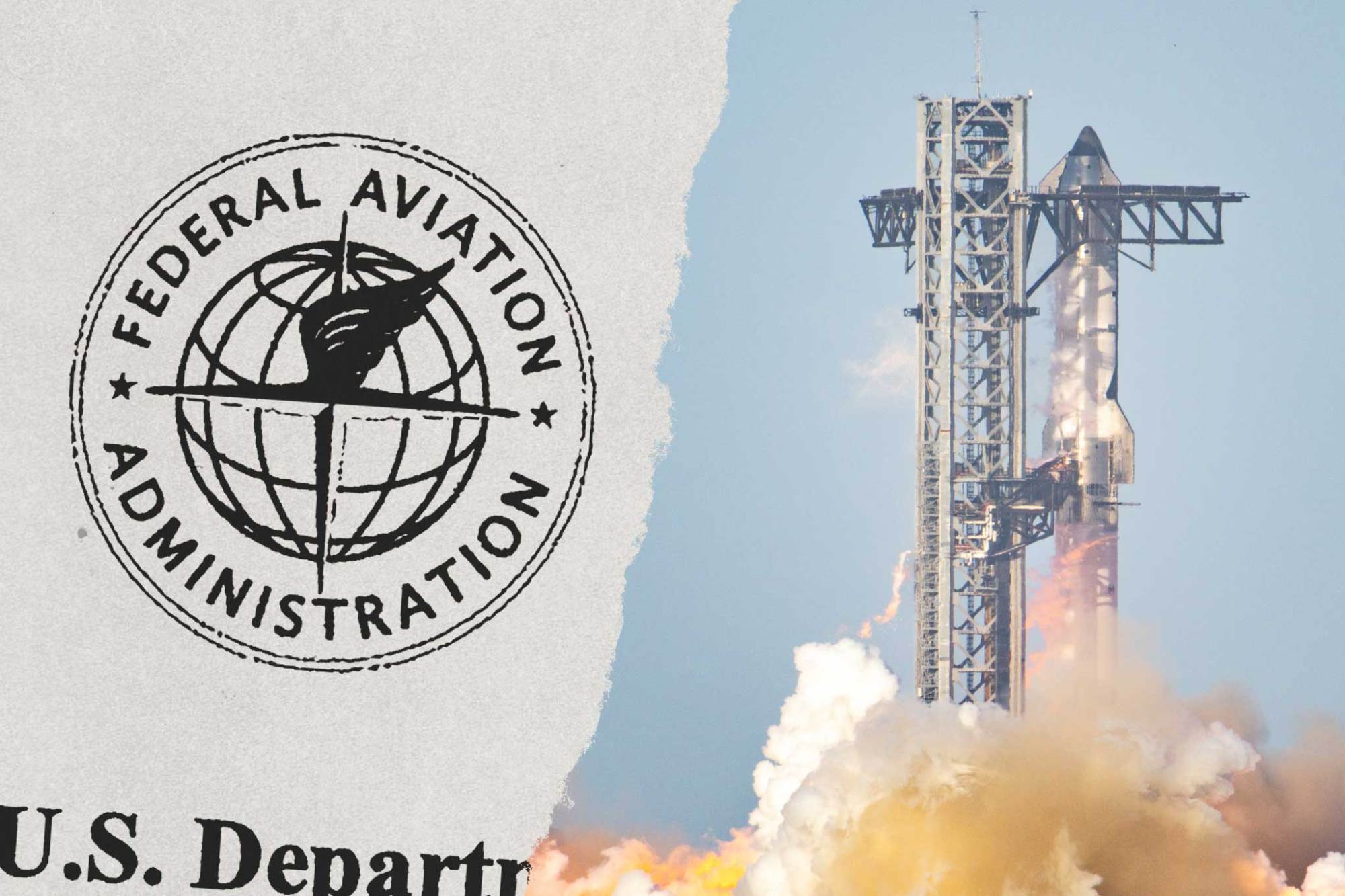
The Federal Aviation Administration has issued a sharp warning that rocket launches could “significantly reduce safety” for airplanes, urging pilots to prepare for the possibility that “catastrophic failures” could create dangerous debris fields. The official notice, known as a safety alert for operators, was dated Jan. 8, the same day that ProPublica published an investigation showing how pilots scrambled to avoid debris after two SpaceX Starship megarockets exploded over busy airspace last year. The alert was an acknowledgment that travelers were at risk on those days, when the FAA hastily activated no-fly zones to help air traffic controllers steer planes away from falling rocket parts. In the last two decades, the agency has issued about 245 such safety alerts to the aviation community about issues ranging from runway threats to mechanical problems, but last month’s warning is the first to address the danger to airplanes when rockets launch or reenter Earth’s atmosphere, according to the FAA’s website. SpaceX and other companies have ramped up launches in recent years. Starship, a version of which is supposed to one day land on the moon, has followed a flight path that soars over well-trafficked commercial airways in the Caribbean. The FAA previously told ProPublica that it “limits the number of aircraft exposed to the hazards, making the likelihood of a catastrophic event extremely improbable.” It also said it takes steps to keep pilots informed and planes safe during launches, such as creating the emergency no-fly zones, known as debris response areas. The January alert also pointed to those procedures. “Past events have shown that when a mishap does occur, debris has fallen within or near the DRA, and pilots should exercise extreme caution near these areas,” the notice said. But it warned that debris can fall in places where the FAA doesn’t enact no-fly zones, such as international airspace over oceans without radar coverage, saying pilots need to have “additional situational awareness” to avoid debris fields there. Neither SpaceX nor the FAA has released data showing where debris fell after the Starship explosions last year. SpaceX did not respond to a request for comment. Previously, the company has said that it learns from its mistakes and that each test improves Starship’s reliability. “SpaceX is committed to responsibly using airspace during launches and reentries, prioritizing public safety to protect people on the ground, at sea, and in the air,” it said on X in December. Last year, the FAA granted SpaceX permission to launch Starship as many as 25 times a year from its base in Texas. But, after repeated setbacks, only five of the giant space vehicles lifted off in 2025. In its warning, the FAA urged aircraft operators to “evaluate the impact of space launch and reentry operations on their planned flight routes and take appropriate precautionary measures.” Those should include ensuring they have enough fuel in case air traffic controllers put them in a holding pattern, the agency said. In its investigation, ProPublica found several airplanes began running low on fuel after the January 2025 Starship incident, with at least one declaring an emergency and crossing the no-fly zone to reach an airport. The world’s largest pilots union told the FAA in October that such events call into question whether “a suitable process” is in place to respond to unexpected rocket mishaps. “There is high potential for debris striking an aircraft resulting in devastating loss of the aircraft, flight crew, and passengers,” wrote Steve Jangelis, a pilot and the group’s aviation safety chair. The FAA adjusted its practices over the course of the failed launches last year but still allowed SpaceX to launch more Starship prototypes over the same airspace, adding stress to the already-taxed air traffic control system, ProPublica found. The Wall Street Journal reported in December that an air traffic controller needed to intervene to prevent a collision when at least two aircraft flew too close to each other after one of the explosions. The FAA did not respond to requests for comment for this story. Airlines for America, a trade association for the leading U.S. airlines, said it is “committed to ensuring the safety of all flights especially amid the growing number of space launches.” The association said in a statement that airlines coordinate with both the federal government and commercial space companies to make sure the airspace stays safe. Rep. Nellie Pou of New Jersey, a Democrat on the House Transportation and Infrastructure Committee’s aviation panel, applauded the FAA for issuing the warning, saying the Trump administration “must protect American travelers from all threats, including space launches and reentry operations.”“Perfect safety demands scrupulous and forward-looking attention to detail from our federal agencies and close coordination with operators,” Pou said. “I am heartened FAA is showing both here.”ProPublica’s Jan. 8 story showed how airplanes had to maneuver quickly to clear wide swaths of airspace after SpaceX Starships blew up over the Caribbean in January and March last year.
SRCProPublica
LANGEN
LEANCenter-Left
WORDS820
ENT6
MON · 2026-02-02 · 10:00 GMTBRIEF NSR-2026-0202-12623
NSR-2026-0202-12623News Report·EN·Public Health
FAA Warns Airlines About Safety Risks From Rocket Launches, Urges “Extreme Caution”
The FAA issued a safety alert to airlines in January 2024, warning of increased safety risks to airplanes from rocket launches and re-entries. The alert, prompted in part by recent SpaceX Starship explosions over busy airspace, urges pilots to exercise "extreme caution" due to potential debris fields from "catastrophic failures." This is the first FAA alert addressing dangers to airplanes from space launches.
Heather VogellProPublicaFiled 2026-02-02 · 10:00 GMTLean · Center-LeftRead · 4 min
ProPublicaFIG 01
Reading time
4min
Word count
820words
Sources cited
2cited
Entities identified
6entities
Quality score
100%
§ 01
Briefing Summary
AI-generatedNEWSAR · AI
The FAA issued a safety alert to airlines in January 2024, warning of increased safety risks to airplanes from rocket launches and re-entries. The alert, prompted in part by recent SpaceX Starship explosions over busy airspace, urges pilots to exercise "extreme caution" due to potential debris fields from "catastrophic failures." This is the first FAA alert addressing dangers to airplanes from space launches. While the FAA creates emergency no-fly zones during launches, the alert warns that debris can fall outside these zones, particularly in international airspace. The FAA emphasizes the need for pilots to maintain heightened awareness to avoid falling debris, especially as rocket launches increase. Data on debris locations from past SpaceX explosions has not been released.
Confidence 0.90Sources 2Claims 5Entities 6
§ 02
Article analysis
Model · rule-basedFraming
Public Health
Technology
Tone
Mixed Tone
AI-assessed
CalmNeutralAlarmist
Factuality
0.80 / 1.00
Factual
LowHigh
Sources cited
2
Limited
FewMany
§ 03
Key claims
5 extracted01
SpaceX is committed to responsibly using airspace during launches and reentries, prioritizing public safety.
quoteSpaceX
Confidence
1.00
02
Last year, the FAA granted SpaceX permission to launch Starship as many as 25 times a year from its base in Texas.
factual
Confidence
1.00
03
The FAA has issued about 245 safety alerts to the aviation community in the last two decades.
statistic
Confidence
1.00
04
The FAA issued a safety alert on Jan. 8, the same day ProPublica published an investigation on pilots avoiding debris after SpaceX Starship explosions.
factual
Confidence
1.00
05
FAA issued a warning that rocket launches could “significantly reduce safety” for airplanes.
factualFAA
Confidence
1.00
§ 04
Full report
4 min read · 820 words§ 05
Entities
6 identified§ 06
Keywords & salience
9 termsrocket launches
1.00
faa
0.90
safety risks
0.80
debris fields
0.70
no-fly zones
0.60
aviation safety
0.60
catastrophic failures
0.50
spacex starship
0.50
airspace safety
0.40
§ 07
Topic connections
Interactive graph Network visualization showing 6 related topics
View Full Graph Person Organization Location Event|Click node to navigate|Edge numbers = shared articles