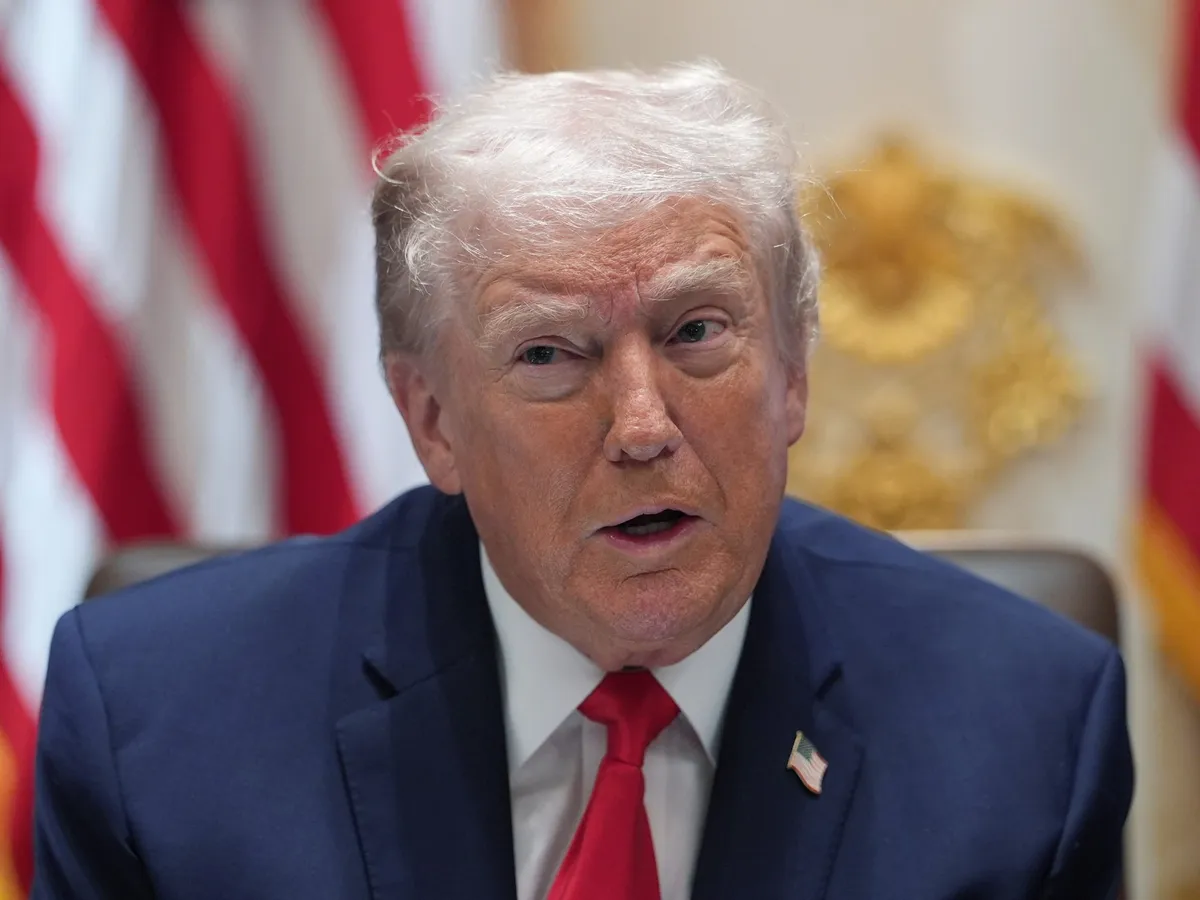
Trump had slapped India with a punitive 25 percent tariff for buying Russian oil on top of a 25 percent ‘reciprocal’ tariff.Published On 2 Feb 2026United States President Donald Trump has agreed to slash US tariffs on Indian goods to 18 percent from 50 percent in exchange for India lowering trade barriers as well as stopping its purchases of Russian oil and buying oil instead from the US and potentially Venezuela.“Out of friendship and respect for Prime Minister Modi and, as per his request, effective immediately, we agreed to a Trade Deal between the United States and India, whereby the United States will charge a reduced Reciprocal Tariff, lowering it from 25% to 18%,” Trump said in a social media post following a call with Indian Prime Minister Narendra Modi.Recommended Stories list of 4 itemslist 1 of 4Iran’s economy falters as internet shutdown hits people, businesses hardlist 2 of 4Modi to Kevin Rudd: How Epstein files set off a storm far beyond the USlist 3 of 4Trump and Petro clash over how best to uproot Colombia’s cocaine cropslist 4 of 4Italy adds a 2-euro ticket to get closer to Trevi Fountainend of listA White House official told the Reuters news agency that the US was rescinding a punitive, 25 percent duty on all imports from India over its purchases of Russian oil that had stacked on top of a 25 percent “reciprocal” tariff rate.Modi also committed to buying more than $500bn worth of US energy, technology, agricultural and other products, Trump added.“Wonderful to speak with my dear friend President Trump today. Delighted that Made in India products will now have a reduced tariff of 18%,” Modi said in a social media post on X. “Big thanks to President Trump on behalf of the 1.4 billion people of India for this wonderful announcement.”“The deal has definitely been some time in coming,” said Rachel Ziemba, adjunct senior fellow at the Center for a New American Society. “Eighteen percent puts it near the level for Southeast Asian goods into the US.”But experts also cautioned that it may be too soon to say if this was a trade deal or a tariff deal.
SRCAl Jazeera
LANGEN
LEANCenter
WORDS359
ENT8
MON · 2026-02-02 · 19:58 GMTBRIEF NSR-2026-0202-12782
NSR-2026-0202-12782News Report·EN·Economic Impact
Trump to slash US tariffs on India from 50 percent to 18 percent
In February 2026, US President Donald Trump agreed to reduce US tariffs on Indian goods from 50% to 18% following a deal with Indian Prime Minister Narendra Modi. The agreement involves the US lowering its "reciprocal" tariff from 25% to 18% and rescinding an additional 25% duty imposed on India for purchasing Russian oil.
Al JazeeraFiled 2026-02-02 · 19:58 GMTLean · CenterRead · 2 min
Al JazeeraFIG 01
Reading time
2min
Word count
359words
Sources cited
3cited
Entities identified
8entities
Quality score
100%
§ 01
Briefing Summary
AI-generatedNEWSAR · AI
In February 2026, US President Donald Trump agreed to reduce US tariffs on Indian goods from 50% to 18% following a deal with Indian Prime Minister Narendra Modi. The agreement involves the US lowering its "reciprocal" tariff from 25% to 18% and rescinding an additional 25% duty imposed on India for purchasing Russian oil. In exchange, India committed to reducing trade barriers and ceasing Russian oil imports, instead purchasing oil from the US and potentially Venezuela. Modi also pledged that India would buy over $500 billion worth of US energy, technology, agricultural products, and other goods. Experts note that the 18% tariff rate is similar to that of Southeast Asian goods entering the US, but caution that it is too soon to determine if this is a comprehensive trade deal.
Confidence 0.90Sources 3Claims 5Entities 8
§ 02
Article analysis
Model · rule-basedFraming
Economic Impact
Diplomatic
Tone
Measured
AI-assessed
CalmNeutralAlarmist
Factuality
0.80 / 1.00
Factual
LowHigh
Sources cited
3
Well sourced
FewMany
§ 03
Key claims
5 extracted01
"Wonderful to speak with my dear friend President Trump today. Delighted that Made in India products will now have a reduced tariff of 18%," Modi said.
quoteNarendra Modi
Confidence
1.00
02
The US was rescinding a 25% duty on all imports from India over its purchases of Russian oil that had stacked on top of a 25% “reciprocal” tariff rate.
factualWhite House official via Reuters
Confidence
0.90
03
Trump agreed to slash US tariffs on Indian goods to 18% from 50% in exchange for India lowering trade barriers and stopping Russian oil purchases.
factualArticle
Confidence
0.90
04
Modi committed to buying more than $500bn worth of US energy, technology, agricultural and other products.
factualTrump
Confidence
0.80
05
Eighteen percent puts it near the level for Southeast Asian goods into the US.
quoteRachel Ziemba
Confidence
0.70
§ 04
Full report
2 min read · 359 words§ 05
Entities
8 identifiedKey playerOppositionContextPositiveNeutralNegative
People3
Organizations1
§ 06
Keywords & salience
7 termsus tariffs
1.00
india
0.90
trade deal
0.80
russian oil
0.70
reciprocal tariff
0.60
trade barriers
0.50
us energy
0.40
§ 07
Topic connections
Interactive graph Network visualization showing 51 related topics
View Full Graph Person Organization Location Event|Click node to navigate|Edge numbers = shared articles