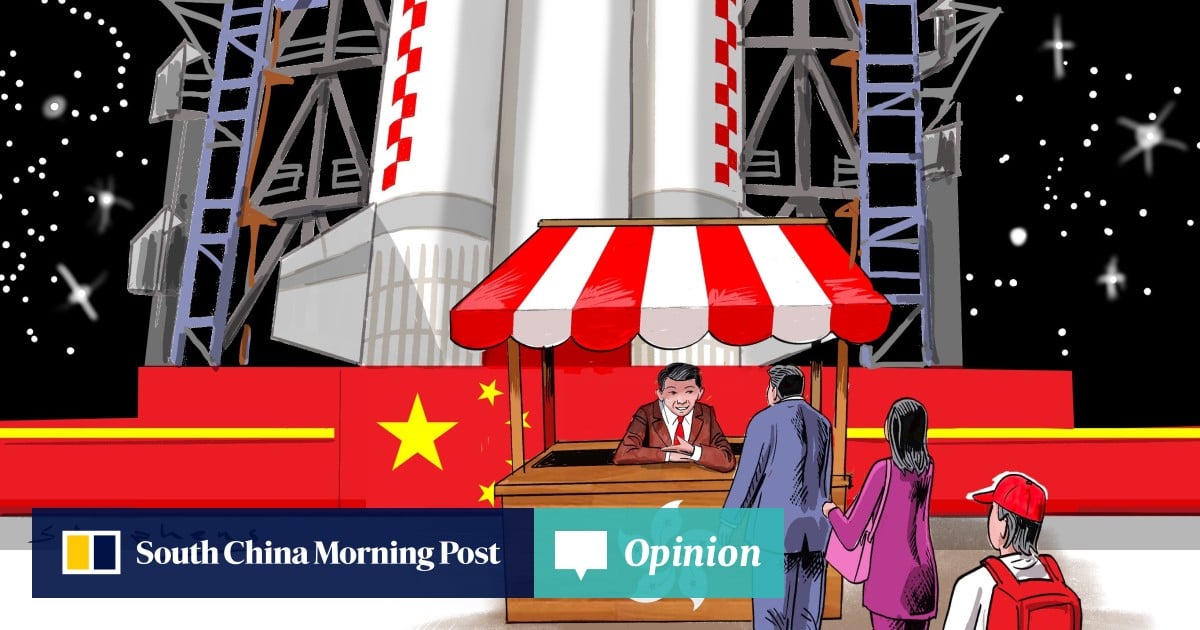
China’s commercial space sector has entered a new frontier. In January, a private Chinese aerospace company unveiled the test capsule of what is set to become the country’s first commercially developed crewed spacecraft, with plans for crewed flights by 2028 and bookings already taken from private space tourists.The project reflects a decisive shift in national policy, where commercial players are no longer peripheral participants but integral contributors to major space missions.This development follows confirmation by the China Manned Space Agency that commercial competition will be introduced for future systems, including low-cost cargo transport to the Tiangong space station and crewed lunar vehicles. This marks a structural change in how China approaches space development, blending state ambition with market mechanisms to open up a broader industrial ecosystem.Globally, this trajectory is well established. SpaceX’s Crew Dragon operates routine missions for Nasa, while reusable rockets have reduced launch costs and accelerated commercial activity in near-Earth orbit. According to a Space Foundation report released last July, in 2024, commercial activity accounted for nearly 80 per cent of the growth of the global space economy, which was valued at US$613 billion and continues to grow.China’s rapid progress in this arena signals more than technological ambition. It reflects the country’s intention to compete in a global industry where early movers shape standards, capture value and lock in advantages that last for decades. For Hong Kong, this is a moment that demands attention and action. Space development is no longer a distant scientific endeavour. It is an emerging commercial sector whose financing, governance and talent needs align closely with Hong Kong’s core strengths.Faced with Beijing’s national objective of becoming a space power, Hong Kong should not, and cannot, remain on the sidelines. Participation would not only serve national priorities but also chart a new pathway for industrial upgrading and long-term competitiveness, especially as traditional growth engines face increasing constraints.
SRCSouth China Morning Post
LANGEN
LEANCenter-Right
WORDS312
ENT6
TUE · 2026-02-03 · 01:30 GMTBRIEF NSR-2026-0203-12833
NSR-2026-0203-12833Analysis·EN·Economic Impact
As China opens up its space sector, Hong Kong should reach for the stars
China is opening its space sector to commercial companies, evidenced by the development of a private crewed spacecraft with planned flights by 2028 and the introduction of commercial competition for space station cargo and lunar vehicles. This shift aligns with the global trend where commercial activity drives the majority of growth in the space economy, currently valued at $613 billion.
Ken ChuSouth China Morning PostFiled 2026-02-03 · 01:30 GMTLean · Center-RightRead · 2 min
South China Morning PostFIG 01
Reading time
2min
Word count
312words
Sources cited
1cited
Entities identified
6entities
Quality score
100%
§ 01
Briefing Summary
AI-generatedNEWSAR · AI
China is opening its space sector to commercial companies, evidenced by the development of a private crewed spacecraft with planned flights by 2028 and the introduction of commercial competition for space station cargo and lunar vehicles. This shift aligns with the global trend where commercial activity drives the majority of growth in the space economy, currently valued at $613 billion. China's move aims to compete globally and establish long-term advantages in the space industry. The article suggests that Hong Kong should actively participate in this emerging sector to support national objectives and foster industrial growth, leveraging its strengths in finance, governance, and talent.
Confidence 0.90Sources 1Claims 5Entities 6
§ 02
Article analysis
Model · rule-basedFraming
Economic Impact
Political Strategy
Tone
Measured
AI-assessed
CalmNeutralAlarmist
Factuality
0.60 / 1.00
Mixed
LowHigh
Sources cited
1
Limited
FewMany
§ 03
Key claims
5 extracted01
The global space economy was valued at US$613 billion and continues to grow.
statisticSpace Foundation report
Confidence
1.00
02
In 2024, commercial activity accounted for nearly 80 per cent of the growth of the global space economy.
statisticSpace Foundation report
Confidence
1.00
03
Commercial competition will be introduced for future systems, including low-cost cargo transport to the Tiangong space station.
factualChina Manned Space Agency
Confidence
1.00
04
A private Chinese aerospace company plans crewed flights by 2028 and has bookings from private space tourists.
factualnull
Confidence
0.90
05
Hong Kong should participate in space development to chart a new pathway for industrial upgrading.
predictionnull
Confidence
0.70
§ 04
Full report
2 min read · 312 words§ 05
Entities
6 identifiedKey playerOppositionContextPositiveNeutralNegative
Organizations2
§ 06
Keywords & salience
8 termscommercial space sector
1.00
china
0.90
space development
0.80
hong kong
0.70
space missions
0.60
crewed spacecraft
0.50
space economy
0.50
industrial upgrading
0.40
§ 07
Topic connections
Interactive graph Network visualization showing 51 related topics
View Full Graph Person Organization Location Event|Click node to navigate|Edge numbers = shared articles