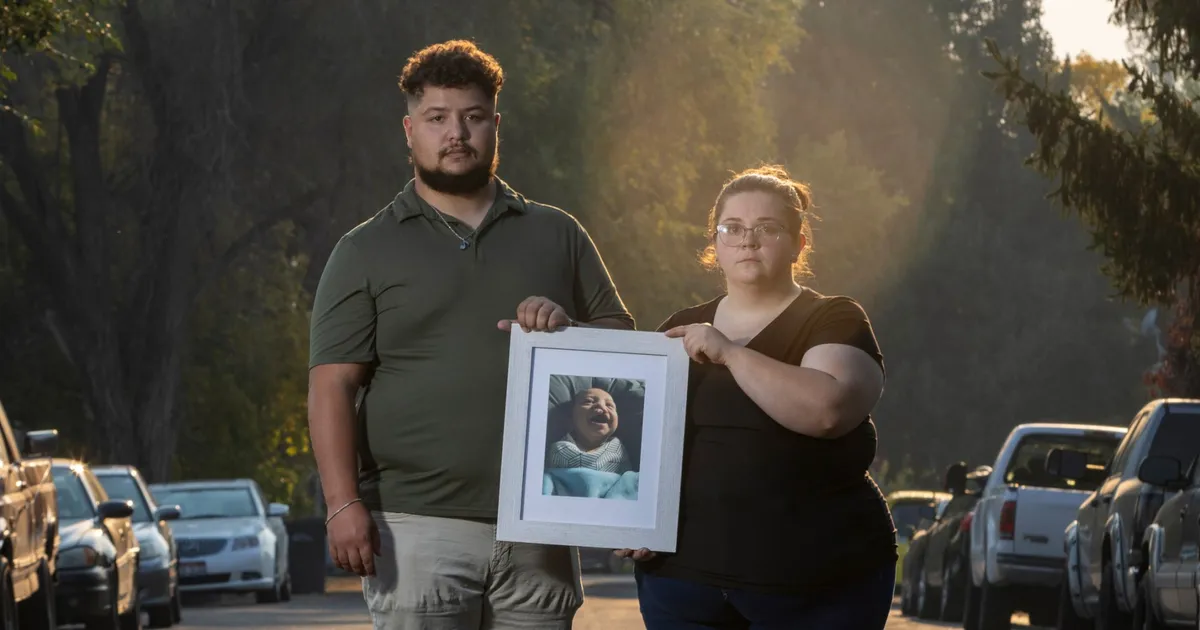
Idaho is taking steps to bolster its antiquated coroner system following stories by ProPublica that documented how lawmakers have repeatedly failed to fix problems that harm grieving families. An advisory panel created last year at the request of Gov. Brad Little is developing legislation to require autopsies in a variety of circumstances, including the unexplained death of a child. It would help coroners pay for those autopsies as long as they get a national certification that proves they can meet certain standards. The legislation would mimic a similar setup in neighboring Washington. An increase in fees on Idaho death certificates would finance the autopsy reimbursements. A ProPublica review of hundreds of death records in 2024 found that some coroners failed to meet national standards when investigating child and infant deaths, and a state oversight report found Idaho ranked last in the U.S. for autopsies when children or infants died unexpectedly. The state Office of Performance Evaluations cited poor funding as a major problem. ProPublica’s examination of training records for Idaho coroners also revealed that many failed to get the hours of continuing education required by state law. Further reporting in 2025 examined how potentially suspicious deaths can slip through the cracks of Idaho’s poorly funded system. The committee working on the legislation includes seven county coroners and a deputy coroner; representatives of city, county and state law enforcement agencies; a deputy county prosecutor; a county commissioner and a tribal member. Kelli Brassfield, co-chair of the panel and a lobbyist who represents Idaho’s county governments, cautioned that the proposal likely won’t be ready during the 2026 annual legislative session. But this is the first time in decades that coroners and other local and state officials have agreed on a path forward to improve Idaho’s system for investigating death. Idaho’s death investigation system is almost entirely funded by counties, and county officials have fought past efforts to require autopsies, which can cost thousands of dollars apiece. At the committee’s meeting in January, Brent Mendenhall, a commissioner from Madison County, was enthusiastic about the draft legislation and the push for more autopsies. “When I hear that a commission or any county has turned down an autopsy, it just makes me shudder,” Mendenhall said at the meeting. “I just think, ‘What are you doing to that family that doesn’t know what happened?’” Mendenhall said that under the legislation being developed, coroners who have struggled with a small autopsy budget could approach their county commissioners and say, “Here’s the law, and you need to make sure that I can do this.” The advisory panel working on legislation is co-chaired by Sen. Melissa Wintrow, a Boise Democrat. Wintrow said ProPublica’s reporting raised awareness of the harms done by a faulty system for death investigations. “Here’s the system going wrong, and your reporting shines a light on it,” she said. Bingham County Coroner Jimmy Roberts, a member of the panel, told ProPublica that Wintrow has said repeatedly that one of the motivators to get something done about Idaho’s coroner system is that “she doesn’t want to see the coroner system in the media or in the news any longer.” Idaho’s governor said more than a year ago that he would support giving coroners more resources to do their jobs right. Lawmakers failed to take him up on it. Wintrow won modest changes to the coroners system during the 2025 session with legislation that clarified the roles of coroners and law enforcement in death investigations. Another development in the wake of ProPublica’s reporting is a newly created series of intensive courses for coroners, law enforcement officers and others around the state to learn how to handle child and infant deaths. Funded by a grant from the Governor’s Children At Risk Task Force, the courses this spring will be the most in-depth training of its kind since 2019. Roberts and Ada County Chief Deputy Coroner Brett Harding will lead the trainings: eight hours of virtual education for coroners statewide and in-person education for coroners in the Boise area and in eastern and northern Idaho. Eastern Idaho is where an infant, Onyxx Cooley, died suddenly and unexpectedly in February 2024. His mother, Alexis Cooley, found him cold and lifeless and called for help, but the baby couldn’t be revived. Reports released to ProPublica by the coroner who was legally responsible for figuring out why the baby died showed that he did not follow national guidelines. He did not speak with the parents, examine the baby’s body or the scene of the death to search for clues or order an autopsy. That coroner, who has since retired, told ProPublica he spoke with law enforcement officers who responded to the infant’s death and relied on the emergency physician who examined the baby’s body to decide what caused his death. Alexis Cooley told ProPublica that she hoped the death of her baby would not be in vain, and that sharing his story with the public could set in motion some positive change. She began to cry when she learned that coroners are working on legislation to improve Idaho’s last-in-the-nation autopsy rate for unexplained child deaths, and that first responders and coroners around the state will get specialized education to handle those cases. “I’m glad that through my pain and suffering that it’s hopefully lessening the burden on other parents, when a situation like this happens again,” Cooley said. “And it’s amazing that they’re going to be able to get answers and that Onyxx’s case was heard.” Wintrow, meanwhile, said her committee members’ willingness to work together on a solution to problems is encouraging but that progress is slow and piecemeal in a system with no centralized state agency to develop public policy for coroners. She is working on a pitch to get Idaho a full-time coordinator to fill a role that she has played as a part-time legislator. We will continue to share our areas of interest as the news develops. I cover health and the environment and the agencies that govern them, including the Environmental Protection Agency. Contact me I cover justice and the rule of law, including the Justice Department, U.S. attorneys and the courts. Contact me I report on immigration and labor, and I am based in Chicago. Contact me I cover housing and transportation, including the companies working in those fields and the regulators overseeing them. Contact me to stay in touch. Slide 2 Slide 3 Slide 4 Slide 5 Slide 6
SRCProPublica
LANGEN
LEANCenter-Left
WORDS1 073
ENT4
WED · 2026-02-04 · 10:00 GMTBRIEF NSR-2026-0204-13228
NSR-2026-0204-13228News Report·EN·Public Health
Idaho Seeks to Improve Its Troubled Coroner System and Lagging Child Autopsy Rates
Idaho is working to improve its coroner system and increase child autopsy rates after reports highlighted deficiencies and underfunding. An advisory panel is developing legislation to mandate autopsies in specific cases, particularly unexplained child deaths, and to help coroners cover the costs if they meet national certification standards.
Audrey DuttonProPublicaFiled 2026-02-04 · 10:00 GMTLean · Center-LeftRead · 5 min
ProPublicaFIG 01
Reading time
5min
Word count
1 073words
Sources cited
4cited
Entities identified
4entities
Quality score
100%
§ 01
Briefing Summary
AI-generatedNEWSAR · AI
Idaho is working to improve its coroner system and increase child autopsy rates after reports highlighted deficiencies and underfunding. An advisory panel is developing legislation to mandate autopsies in specific cases, particularly unexplained child deaths, and to help coroners cover the costs if they meet national certification standards. The funding mechanism would be an increase in death certificate fees, mirroring a system in Washington state. The move comes after reports revealed Idaho's low ranking in child autopsies and failures by some coroners to meet training requirements. The proposed legislation, while not expected until 2026, represents a collaborative effort between coroners, law enforcement, and other officials to address long-standing issues in Idaho's death investigation system, which is primarily county-funded.
Confidence 0.90Sources 4Claims 5Entities 4
§ 02
Article analysis
Model · rule-basedFraming
Public Health
Human Interest
Tone
Measured
AI-assessed
CalmNeutralAlarmist
Factuality
0.80 / 1.00
Factual
LowHigh
Sources cited
4
Well sourced
FewMany
§ 03
Key claims
5 extracted01
Idaho’s death investigation system is almost entirely funded by counties.
factual
Confidence
1.00
02
Idaho ranked last in the U.S. for autopsies when children or infants died unexpectedly.
statisticState Office of Performance Evaluations
Confidence
1.00
03
A ProPublica review found some coroners failed to meet national standards when investigating child and infant deaths.
factualProPublica
Confidence
1.00
04
Idaho is developing legislation to require autopsies in cases including the unexplained death of a child.
factualAdvisory panel
Confidence
1.00
05
The proposal likely won’t be ready during the 2026 annual legislative session.
predictionKelli Brassfield
Confidence
0.90
§ 04
Full report
5 min read · 1 073 words§ 05
Entities
4 identifiedKey playerOppositionContextPositiveNeutralNegative
Organizations1
§ 06
Keywords & salience
10 termscoroner system
1.00
child autopsy rates
0.90
death investigation
0.80
idaho
0.70
autopsy
0.70
legislation
0.60
national standards
0.50
funding
0.50
death certificates
0.50
grieving families
0.40
§ 07
Topic connections
Interactive graph Network visualization showing 35 related topics
View Full Graph Person Organization Location Event|Click node to navigate|Edge numbers = shared articles