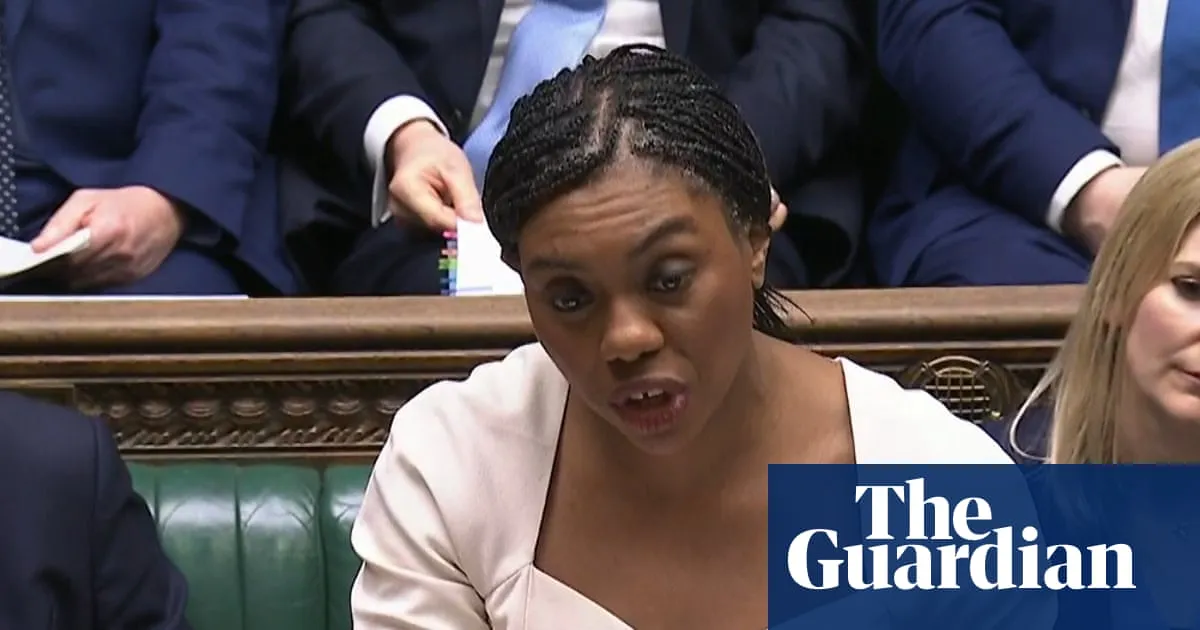
Kemi Badenoch is using an arcane parliamentary procedure known as a humble address to try to compel the government to release documents relating to the appointment of Peter Mandelson as Britain’s ambassador to the US.The Conservative leader’s aim is to secure the release of documents including the due diligence work carried out by the Cabinet Office, and emails between Mandelson and Morgan McSweeney, an ally of the former peer who is now chief of staff at No 10.It is a motion sometimes tabled by the opposition on a day in the House of Commons allocated for the discussion of subjects chosen by non-government parties.Officially a petition to the monarch, which can be used as a way of extracting something from the government, it is used for reasons including calling for papers from departments headed by a secretary of state.It can be debated, amended and voted on like any other motion. In the case of the one put forward this week, the government has added an amendment stating that all documents would be published “except papers prejudicial to UK national security or international relations”.If agreed, humble addresses are understood to be binding on the house.What is their history?Humble addresses have rarely been used over the past 200 years, but were deployed as far back as 1715, during the first parliament of George I, to address what its proponents viewed as national security fears “abetted and encouraged by treasonable practices at home, in favour of a Popish Pretender”.John Stuart Mill, a liberal philosopher and MP, used a humble address in 1866 as part of the campaign to extend votes to women.Have they become more frequent?While originally regarded as a polite, ceremonial message, one view is that they have been politically weaponised in recent years by opposition parties looking for procedural back doors to force the release of sensitive documents.A key moment came in 2017 when the Tory-led government conceded that it had to share dozens of previously confidential documents assessing the economic impact of Brexit after Labour used a humble address demanding their release.Its use resulted in criticism that Labour was trying to drag the queen into the Brexit debate, but humble addresses were used again on occasions in 2018 and 2019, again for Brexit-related reasons.In opposition, Keir Starmer used one in 2022 to force the publication of security advice relating to Evgeny Lebedev’s peerage, humiliating the government by attracting the support of Tory rebels.How powerful are they?Starmer, who was Labour’s shadow Brexit secretary when he tabled a humble address in November 2017 seeking the release of economic impact assessments, told the House of Commons debate at the time: “We believe this is a binding motion.”The former Tory MP Jacob Rees-Mogg noted that Erskine May – the guide to parliamentary practice – does not use the word “binding” but states that each House of Commons member has the power to call for the production of papers by means of a motion for a return. “Power is something pretty forceful, and is much more than just an expression of will,” he added.The then speaker, John Bercow, concluded: “Motions of this kind have traditionally been regarded as binding or effective. Consistent with that established pattern, I would expect the vice-chamberlain of the household to present the humble address in the usual way.”The passing of a motion for a return also raises the prospect of the government being held in contempt of parliament if it does not abide by the resolution.A November 2017 blog post by Andrew Defty of the University of Lincoln noted Labour’s repeated use of the procedure, and how the government at the time sought to place pressure on Labour’s tactic by writing to the privileges committee to ask it to consider whether it was appropriate. Now in opposition, it is the Tories themselves who are turning to the procedure.
SRCThe Guardian - World News
LANGEN
LEANCenter-Left
WORDS638
ENT10
WED · 2026-02-04 · 14:47 GMTBRIEF NSR-2026-0204-13353
NSR-2026-0204-13353News Report·EN·Political Strategy
Mandelson disclosures: What is a humble address and why are the Tories using one?
Kemi Badenoch is employing a "humble address," an obscure parliamentary procedure, to compel the UK government to release documents concerning Peter Mandelson's potential appointment as ambassador to the US. This motion, officially a petition to the monarch, aims to extract information, including due diligence reports and communications between Mandelson and a key Downing Street aide.
Ben Quinn Political correspondentThe Guardian - World NewsFiled 2026-02-04 · 14:47 GMTLean · Center-LeftRead · 3 min
The Guardian - World NewsFIG 01
Reading time
3min
Word count
638words
Sources cited
2cited
Entities identified
10entities
Quality score
100%
§ 01
Briefing Summary
AI-generatedNEWSAR · AI
Kemi Badenoch is employing a "humble address," an obscure parliamentary procedure, to compel the UK government to release documents concerning Peter Mandelson's potential appointment as ambassador to the US. This motion, officially a petition to the monarch, aims to extract information, including due diligence reports and communications between Mandelson and a key Downing Street aide. Humble addresses, historically used since 1715, have been revived in recent years as a tool to force the release of sensitive government information. A notable instance occurred in 2017 when Labour successfully used it to obtain Brexit impact assessments. The government has proposed an amendment to Badenoch's motion, stating that documents will be released except those prejudicial to national security or international relations.
Confidence 0.90Sources 2Claims 5Entities 10
§ 02
Article analysis
Model · rule-basedFraming
Political Strategy
Legal & Judicial
Tone
Measured
AI-assessed
CalmNeutralAlarmist
Factuality
0.80 / 1.00
Factual
LowHigh
Sources cited
2
Limited
FewMany
§ 03
Key claims
5 extracted01
Jacob Rees-Mogg noted that Erskine May does not use the word “binding” to describe humble addresses.
factualJacob Rees-Mogg
Confidence
1.00
02
Keir Starmer used a humble address in 2022 to force publication of security advice relating to Evgeny Lebedev’s peerage.
factual
Confidence
1.00
03
In 2017, the Tory-led government shared Brexit economic impact documents after Labour used a humble address.
factual
Confidence
1.00
04
Humble addresses have rarely been used over the past 200 years.
factual
Confidence
1.00
05
Kemi Badenoch is using a humble address to compel the government to release documents relating to Peter Mandelson's appointment.
factual
Confidence
1.00
§ 04
Full report
3 min read · 638 words§ 05
Entities
10 identifiedKey playerOppositionContextPositiveNeutralNegative
People6
Organizations1
Events1
§ 06
Keywords & salience
8 termshumble address
1.00
document release
0.70
parliamentary procedure
0.70
national security
0.60
peter mandelson
0.50
opposition parties
0.50
political weaponised
0.40
government
0.40
§ 07
Topic connections
Interactive graph No topic relationship data available yet. This graph will appear once topic relationships have been computed.