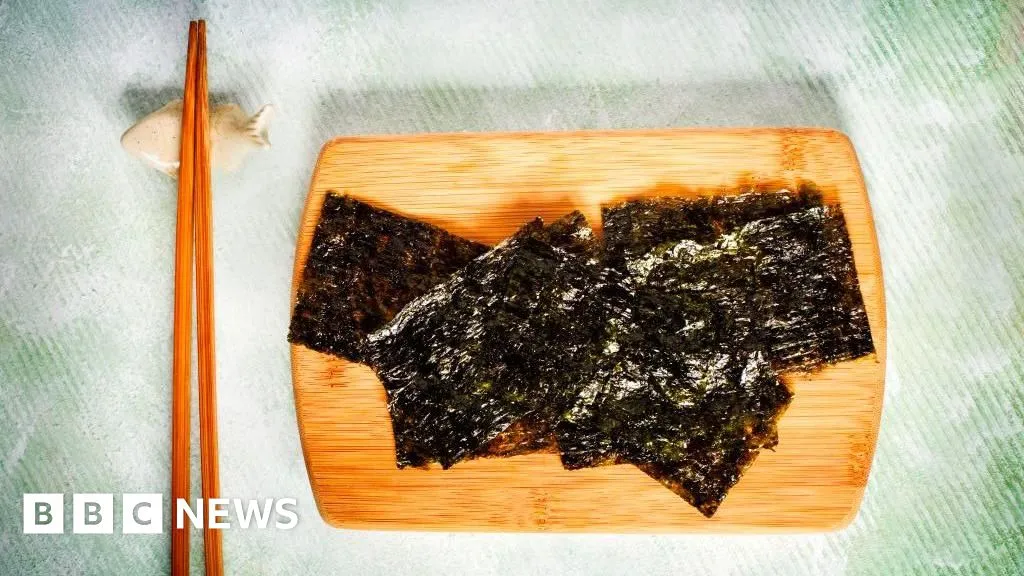
58 minutes agoYuna Ku,SeoulandSuhnwook Lee,SeoulGetty ImagesSouth Korea is known to be the world's largest producer and exporter of dried gimBlack, crispy, often flat and square - dried seaweed, known locally as gim - is a humble staple on everyday dining tables across South Korea. But as its global popularity grows, its rising prices are worrying gim-lovers nationwide.Lee Hyang-ran has been selling gim for the past 47 years. "In the past, people from Western countries thought Koreans were eating something weird that looks like a piece of black paper," the vendor, who is in her 60s, says from a small market stall in central Seoul."I never thought I'd be selling gim to them. But now, they all come here and buy it."South Korea is known to be the world's largest producer and exporter of gim, supplying markets across Asia, North America and Europe. Some even refer to the product as Korea's "black semiconductor", a reference to South Korea's large share of the global semiconductor industry. Exports have risen steadily in recent years - and in 2025, South Korea's dried seaweed exports hit a record US$1.13bn, according to the Korea Maritime Institute (KMI).And as demand rises, so do prices.Known locally as an affordable snack or ingredient, gim typically cost around 100 won ($0.06; £0.05) per sheet in 2024 - with the snack usually sold in bundles of 10 sheets or more, or around $0.60 per pack. But last month, the price of one sheet of gim rose to above 150 won - a record high in the country. "Premium products now cost as much as 350 won per sheet," said Lee. BBC/Suhnwook LeeLee Hyang-ran has been selling gim for 47 years Kim Jaela, who's in her 30s, typically buys gim in bulk - about 500 small sheets at a time, enough to last her several months. But she says this may need to change, considering how expensive gim has become. She does most of her grocery shopping online, and was checking prices on her phone during the interview."Oh my, it really did get more expensive by a few dollars! Luckily, I can survive a few more weeks with two packs of gim, but if I see the same or higher price later, I probably won't restock," she said.A humble Korean staple The worldwide appetite for gim reflects a growing global demand in Korean goods, driven by cultural influences like K-pop and K-dramas. As global audiences engage more deeply with such entertainment, they're also increasing looking to Korean cuisine, something businesses worldwide have picked up on. In 2023, US supermarket chain Trader Joe's Gimbap - a Korean rice roll wrapped in seaweed - went viral and was cleared off the shelves nationwide shortly after its launch."I first learned about gim because it's a typical Korean food often seen in K-dramas," Miki, a 22-year-old visitor from Japan told the BBC. "We do have similar thing called nori in Japan, but the taste is totally different. Gim is lighter and crispier, and is mostly grilled with sesame oil and salt, whereas nori is typically seasoned with soy sauce."Viola, a 60-year-old visitor from Brooklyn, New York, says she enjoys gim as a snack. "I just pop it in my mouth like a potato chip," she said, adding that it feels like a "healthier alternative". "From Asian to Western countries, more people are becoming familiar with gim, increasing global demand," said Lee Eunhee, a professor of consumer studies at Inha University. "To meet overseas demand, domestic prices are being pushed up."Kim Namin, 29, runs a seasoned gim processing factory with a 30-year family history in Wando, an island in South Korea's southern waters known for abalone and seaweed production. His factory purchases raw seaweed, grills it with oil and salt, and cuts it into the familiar rectangular sheets sold in stores.Over the past five years, most of their products have been exported globally. "There aren't enough gim factories compared to the rising demand," he said, saying that his family is now considering expanding operations.He adds that gim is a highly price-sensitive staple in South Korea, long associated with affordability. Even marginal increases in its cost are keenly felt by consumers and tend to provoke strong public resistance - another reason why he's focusing more on overseas markets.Government officials and experts say the price increase is being driven by multiple factors, including overall inflation, rising labour costs, and a decline in overseas production. However, many agree that increased growing global demand remains a major driver.In an effort to appease domestic consumers, companies - alongside the government - are taking steps to curb rising costs.South Korea's Ministry of Oceans and Fisheries has pledged to closely monitor the situation to stabilise its price. and Korean food companies like Pulmone have plans to establish a land-based seaweed R&D centre, so they can be harvested throughout the year. Back in Seoul, the market buzzes with tourists, and business is booming for Lee. "Gim has been selling like hot cakes... the ones for making gimbap are especially popular," she says. "I'm glad Korean gim is getting popular."
SRCBBC News - World
LANGEN
LEANCenter
WORDS844
ENT6
WED · 2026-02-04 · 23:01 GMTBRIEF NSR-2026-0205-13449
NSR-2026-0205-13449News Report·EN·Economic Impact
Why a global Korean craze is making seaweed more expensive
South Korea, the world's largest producer and exporter of "gim" (dried seaweed), is experiencing rising prices of this staple food due to increased global demand. The growing popularity of Korean culture, including K-pop and K-dramas, has fueled international interest in Korean cuisine, driving up gim exports to a record $1.13 billion in 2023.
BBC News - WorldFiled 2026-02-04 · 23:01 GMTLean · CenterRead · 4 min
BBC News - WorldFIG 01
Reading time
4min
Word count
844words
Sources cited
4cited
Entities identified
6entities
Quality score
100%
§ 01
Briefing Summary
AI-generatedNEWSAR · AI
South Korea, the world's largest producer and exporter of "gim" (dried seaweed), is experiencing rising prices of this staple food due to increased global demand. The growing popularity of Korean culture, including K-pop and K-dramas, has fueled international interest in Korean cuisine, driving up gim exports to a record $1.13 billion in 2023. Consequently, the price of gim in South Korea has surged, with individual sheets reaching record highs. This price increase is concerning local consumers who have long considered gim an affordable snack. Some are now reconsidering their purchasing habits due to the higher cost.
Confidence 0.90Sources 4Claims 5Entities 6
§ 02
Article analysis
Model · rule-basedFraming
Economic Impact
Human Interest
Tone
Measured
AI-assessed
CalmNeutralAlarmist
Factuality
0.80 / 1.00
Factual
LowHigh
Sources cited
4
Well sourced
FewMany
§ 03
Key claims
5 extracted01
I first learned about gim because it's a typical Korean food often seen in K-dramas.
quoteMiki, a 22-year-old visitor from Japan
Confidence
1.00
02
Premium products now cost as much as 350 won per sheet.
quoteLee Hyang-ran
Confidence
1.00
03
The price of one sheet of gim rose to above 150 won last month - a record high in the country.
factual
Confidence
1.00
04
In 2023, South Korea's dried seaweed exports hit a record US$1.13bn.
statisticKorea Maritime Institute (KMI)
Confidence
1.00
05
South Korea is the world's largest producer and exporter of dried gim.
factual
Confidence
1.00
§ 04
Full report
4 min read · 844 words§ 05
Entities
6 identifiedKey playerOppositionContextPositiveNeutralNegative
People1
§ 06
Keywords & salience
9 termsgim
1.00
dried seaweed
0.90
south korea
0.80
price increase
0.70
exports
0.60
korean cuisine
0.60
global popularity
0.50
k-pop
0.40
k-dramas
0.40
§ 07
Topic connections
Interactive graph Network visualization showing 51 related topics
View Full Graph Person Organization Location Event|Click node to navigate|Edge numbers = shared articles