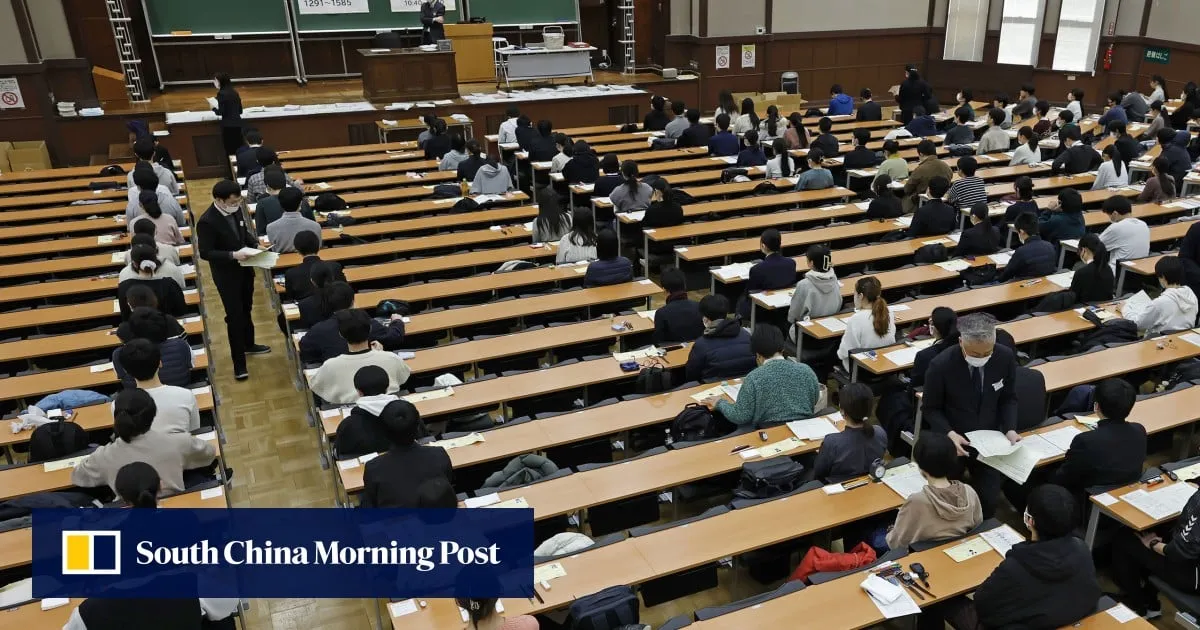
Japanese Prime Minister Sanae Takaichi has come under fire for deciding to hold Sunday’s general election during the peak university entrance exam season, with critics saying it has placed an additional burden on students.Takaichi’s abrupt announcement last month to dissolve the House of Representatives has also been questioned, as it will be the first time since 1990 that a lower house election is taking place in February, when some regions experience heavy snowfall.The prime minister has urged students to make use of early voting, but Toshiko Takeya, leader of the Komeito party, a former coalition partner of the ruling Liberal Democratic Party, said the burden on examinees would be heavy, calling Takaichi’s move “extremely unreasonable”.In Japan, voting rights extend to people who will turn 18 on the day after polling day, meaning many third-year high school students preparing for entrance exams are allowed to vote even if they are still 17 on election day.Yoshihiko Noda, co-leader of the Centrist Reform Alliance, delivers a speech during a campaign rally in Tokyo on Sunday. Photo: Jiji Press/AFPOn social media, negative posts have surfaced, with a user saying: “Please don’t add unnecessary burdens on students facing entrance exams.”
SRCSouth China Morning Post
LANGEN
LEANCenter-Right
WORDS195
ENT9
THU · 2026-02-05 · 02:13 GMTBRIEF NSR-2026-0205-13459
NSR-2026-0205-13459News Report·EN·Political Strategy
Japan’s ‘extremely unreasonable’ election timing threatens to keep young voters away
Japan's Prime Minister Sanae Takaichi is facing criticism for scheduling the general election on a Sunday in February, coinciding with peak university entrance exam season. This marks the first lower house election in February since 1990, potentially impacting young voters, particularly high school students preparing for exams, some of whom are eligible to vote.
KyodoSouth China Morning PostFiled 2026-02-05 · 02:13 GMTLean · Center-RightRead · 1 min
South China Morning PostFIG 01
Reading time
1min
Word count
195words
Sources cited
3cited
Entities identified
9entities
Quality score
100%
§ 01
Briefing Summary
AI-generatedNEWSAR · AI
Japan's Prime Minister Sanae Takaichi is facing criticism for scheduling the general election on a Sunday in February, coinciding with peak university entrance exam season. This marks the first lower house election in February since 1990, potentially impacting young voters, particularly high school students preparing for exams, some of whom are eligible to vote. Critics, including Toshiko Takeya of the Komeito party, have called the timing "extremely unreasonable" due to the added burden on students. While Takaichi encourages early voting, concerns remain about the potential for lower turnout among young voters focused on their exams. The election timing has also sparked negative reactions on social media, with users expressing concerns about the added stress on students.
Confidence 0.90Sources 3Claims 5Entities 9
§ 02
Article analysis
Model · rule-basedFraming
Political Strategy
Human Interest
Tone
Measured
AI-assessed
CalmNeutralAlarmist
Factuality
0.70 / 1.00
Factual
LowHigh
Sources cited
3
Well sourced
FewMany
§ 03
Key claims
5 extracted01
Takaichi's move is 'extremely unreasonable'.
quoteToshiko Takeya
Confidence
1.00
02
Voting rights extend to people who will turn 18 on the day after polling day.
factualArticle
Confidence
1.00
03
It will be the first time since 1990 that a lower house election is taking place in February.
factualArticle
Confidence
1.00
04
Prime Minister Takaichi decided to hold Sunday’s general election during the peak university entrance exam season.
factualArticle
Confidence
1.00
05
The burden on examinees would be heavy.
quoteToshiko Takeya, leader of the Komeito party
Confidence
0.90
§ 04
Full report
1 min read · 195 words§ 05
Entities
9 identifiedKey playerOppositionContextPositiveNeutralNegative
Organizations4
§ 06
Keywords & salience
9 termsgeneral election
0.90
young voters
0.80
entrance exams
0.80
election timing
0.70
voting rights
0.60
sanae takaichi
0.50
japan
0.50
political burden
0.50
early voting
0.40
§ 07
Topic connections
Interactive graph Network visualization showing 49 related topics
View Full Graph Person Organization Location Event|Click node to navigate|Edge numbers = shared articles