China’s state-backed SuperComputing Network (SCNet), a major computing resource provider, has deployed a new node for beta testing, powered by the country’s largest domestically made artificial intelligence computing cluster.The node, which began trial runs on Thursday in Zhengzhou, central Henan province, consists of three scaleX platforms from Chinese supercomputer developer Sugon, which support the deployment of more than 30,000 AI acceleration cards, according to statements from both SCNet and Sugon.Sugon is publicly listed in Shanghai as Dawning Information Industry.SCNet did not disclose the total computing power of the node, but based on the performance of a single Sugon scaleX, the three platforms could deliver a combined computing power of 15 eflops.An eflop, short for exa floating-point operations per second, measures the performance of supercomputers and high-performance AI hardware that can calculate at least one quintillion floating-point operations per second.Based on the performance of a single Sugon scaleX, the three platforms could deliver a combined computing power of 15 eflops. Photo: HandoutCurrently, the world’s most powerful supercomputer is El Capitan from Hewlett Packard Enterprise, which achieved 1.8 eflops at its maximum performance, according to the latest list from TOP500, a project ranking high-performance computing systems.
SRCSouth China Morning Post
LANGEN
LEANCenter-Right
WORDS194
ENT6
FRI · 2026-02-06 · 07:30 GMTBRIEF NSR-2026-0206-13851
NSR-2026-0206-13851News Report·EN·Technology
China trials its largest locally made AI computing resource in major infrastructure push
China's state-backed SuperComputing Network (SCNet) has begun beta testing a new node in Zhengzhou, Henan province, representing a major push in domestic AI infrastructure. The node is powered by China's largest locally made AI computing cluster, consisting of three scaleX platforms from Sugon, a Chinese supercomputer developer.
Coco FengSouth China Morning PostFiled 2026-02-06 · 07:30 GMTLean · Center-RightRead · 1 min
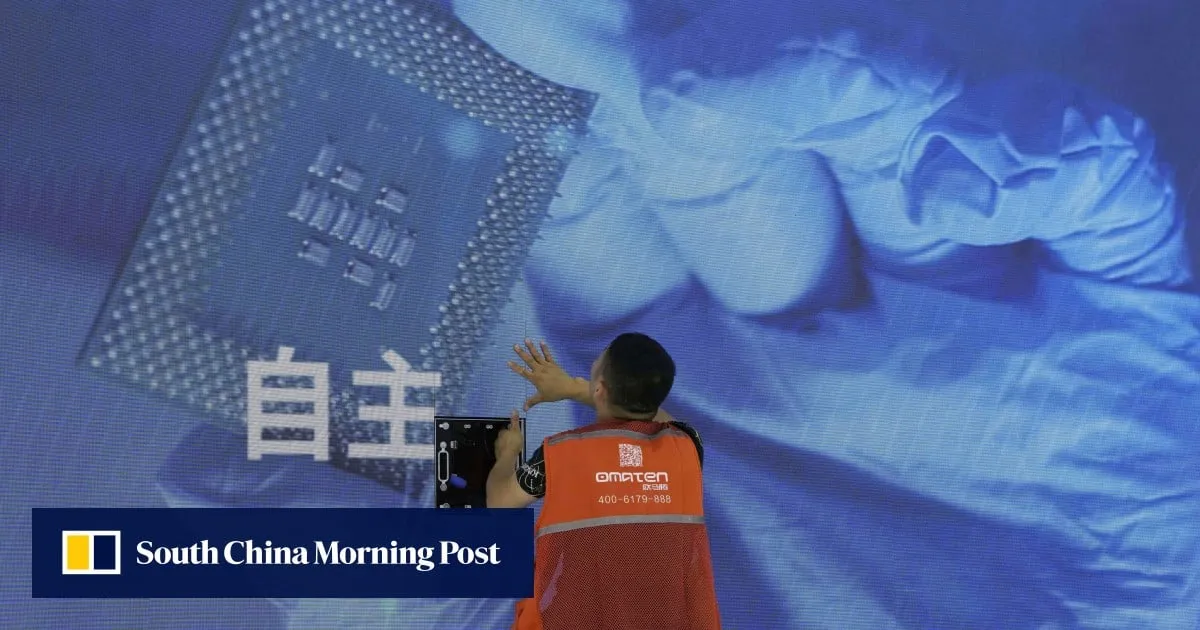
South China Morning PostFIG 01
Reading time
1min
Word count
194words
Sources cited
2cited
Entities identified
6entities
Quality score
100%
§ 01
Briefing Summary
AI-generatedNEWSAR · AI
China's state-backed SuperComputing Network (SCNet) has begun beta testing a new node in Zhengzhou, Henan province, representing a major push in domestic AI infrastructure. The node is powered by China's largest locally made AI computing cluster, consisting of three scaleX platforms from Sugon, a Chinese supercomputer developer. These platforms support over 30,000 AI acceleration cards and could deliver a combined computing power of 15 eflops. While SCNet didn't disclose the node's total computing power, this deployment signifies China's effort to bolster its AI capabilities with domestically produced technology. This development comes as the world's most powerful supercomputer, El Capitan, achieves 1.8 eflops at maximum performance.
Confidence 0.90Sources 2Claims 4Entities 6
§ 02
Article analysis
Model · rule-basedFraming
Technology
Economic Impact
Tone
Measured
AI-assessed
CalmNeutralAlarmist
Factuality
0.90 / 1.00
Factual
LowHigh
Sources cited
2
Limited
FewMany
§ 03
Key claims
4 extracted01
The world’s most powerful supercomputer is El Capitan from Hewlett Packard Enterprise, which achieved 1.8 eflops.
statisticTOP500
Confidence
1.00
02
The node consists of three scaleX platforms from Sugon, supporting the deployment of more than 30,000 AI acceleration cards.
factualSCNet and Sugon
Confidence
1.00
03
China’s state-backed SCNet has deployed a new node for beta testing, powered by China’s largest domestically made AI computing cluster.
factualSCNet
Confidence
1.00
04
Based on the performance of a single Sugon scaleX, the three platforms could deliver a combined computing power of 15 eflops.
statisticSCNet
Confidence
0.80
§ 04
Full report
1 min read · 194 words§ 05
Entities
6 identifiedKey playerOppositionContextPositiveNeutralNegative
Organizations1
§ 06
Keywords & salience
9 termsartificial intelligence
0.90
ai computing
0.80
supercomputer
0.80
china
0.70
computing power
0.70
scnet
0.60
sugon
0.60
exa floating-point operations per second
0.50
infrastructure
0.40
§ 07
Topic connections
Interactive graph Network visualization showing 51 related topics
View Full Graph Person Organization Location Event|Click node to navigate|Edge numbers = shared articles