Israeli forces carry out multiple attacks across the enclave despite a near four-month ‘ceasefire’, as Palestinians continue to trickle across the Rafah border in either direction.Displaced Palestinians inspect the damage after Israeli aircraft attacked a five-storey house overnight in Khan Younis, southern Gaza Strip on February 6, 2026 [AFP]Published On 6 Feb 2026Two Palestinians have been killed by Israeli forces in the northern Gaza Strip, emergency services said, with multiple attacks reported across the coastal enclave as Israel presses its genocidal war despite the “ceasefire” it has violated daily since October 10.The bodies of those killed in the cities of Jabalia and Beit Lahiya were transported on Friday to al-Shifa Medical Complex in Gaza City.Recommended Stories list of 3 itemslist 1 of 3Here’s why Israel is allowing record murder rates in its Palestinian townslist 2 of 3Gaza patients head to Rafah crossing as people return amid Israeli attackslist 3 of 3Gaza returnee recalls her journey through the Rafah crossingend of listIn southern Gaza’s Khan Younis, Israel struck a Palestinian home, with the military, claiming the attack was in response to its soldiers being shot near the so-called yellow line – the demarcation line where the Israeli army entrenched under the first phase of the Gaza ceasefire, creating its own buffer zone.“Within half an hour, the house was evacuated. It was cleared out, and then it was bombed,” resident Saleh Abu Hatab told Al Jazeera, adding it was located “opposite a school sheltering displaced people”.A displaced Palestinian boy sits on the rubble after Israeli aircraft attacked a five-storey house in Khan Younis, southern Gaza Strip [AFP]‘Traumatising Palestinians’Al Jazeera’s Hind Khoudary, reporting from Khan Younis, said the attack hit a multistorey building belonging to the Abu Hatab family.“No injuries or deaths were reported,” she said. Khoudary added that Israeli forces also attacked an area of empty land in Sheikh Ijilin in Gaza City.“Despite the ceasefire … Israeli forces continue to attack different areas across the Gaza Strip, which is traumatising Palestinians,” she added.Elsewhere, in the central enclave, several Israeli tanks and engineering vehicles advanced east of Deir el-Balah, bulldozing and conducting clearing operations in the area.The attacks come two days after Israel killed at least 23 Palestinians on Wednesday, one of the deadliest days since the Gaza US-brokered “ceasefire” began in early October.In that period, Israeli attacks have killed at least 574 people with 1,518 wounded, according to the Gaza Ministry of Health.Palestinian families unitedTwenty-one Palestinians stranded in Egypt were reunited with their families on Thursday in southern Gaza via the Rafah crossing.The journey back from the Egyptian city of El Arish took many hours amid Israeli restrictions and obstacles at the crossing, with returnees looking visibly exhausted.The Rafah crossing on the border with Egypt – the only way in and out for almost all of Gaza’s more than two million residents – was kept shut by Israeli authorities for most of the war and only partially reopened on Monday.With its limited reopening, Israel is allowing a mere trickle of people to travel, finally permitting Palestinians who had been stranded outside to return and enabling the transfer of patients desperately needing medical treatment abroad, a key condition of the US-brokered “ceasefire” deal intended to end the genocidal war on Gaza. Israel has dragged its feet on that condition even after its last remaining captive’s body in Gaza was returned.To date, only a few dozen people have been allowed to enter and leave the war-devastated coastal enclave.Khoudary, citing the Red Crescent, said there were currently no plans for any movement at the crossing on Friday.“There is a very big challenge that not only journalists are facing right now, but also the Palestinians themselves, where no one is informing Palestinians about when does this crossing open. When does it close? What is the process?” Khoudary said.Khoudary added that the processing time at the crossing was “very long”, including for those returning, who were also being interrogated.“They are being interrogated, they’re being handcuffed, blindfolded, and they’re also being harassed by the Israeli forces,” she added.“This is not what Palestinians were looking forward to. They want real freedom of movement,” she added.Meanwhile, the pace of medical evacuations since the crossing’s partial reopening has been slower than the numbers promised, and far short of what was required to meet the needs of the approximately 20,000 patients in need of medical treatment in other countries.While the agreement had spoken of 50 patients being evacuated each day, accompanied by two family members each, only about 30 had been transferred so far this week.Gaza’s healthcare system has been devastated by Israel’s genocidal war on the enclave, with 22 hospitals put out of service and 1,700 medical workers killed, according to the Palestinian Health Ministry.
SRCAl Jazeera
LANGEN
LEANCenter
WORDS784
ENT10
FRI · 2026-02-06 · 10:53 GMTBRIEF NSR-2026-0206-13854
NSR-2026-0206-13854News Report·EN·Conflict
Israel kills two in northern Gaza as Rafah crossing sees little movement
Israeli forces killed two Palestinians in northern Gaza on Friday, with attacks reported across the Gaza Strip despite a supposed ceasefire that began in early October. The deceased were located in Jabalia and Beit Lahiya and transported to al-Shifa Medical Complex.
Al Jazeera StaffAl JazeeraFiled 2026-02-06 · 10:53 GMTLean · CenterRead · 4 min
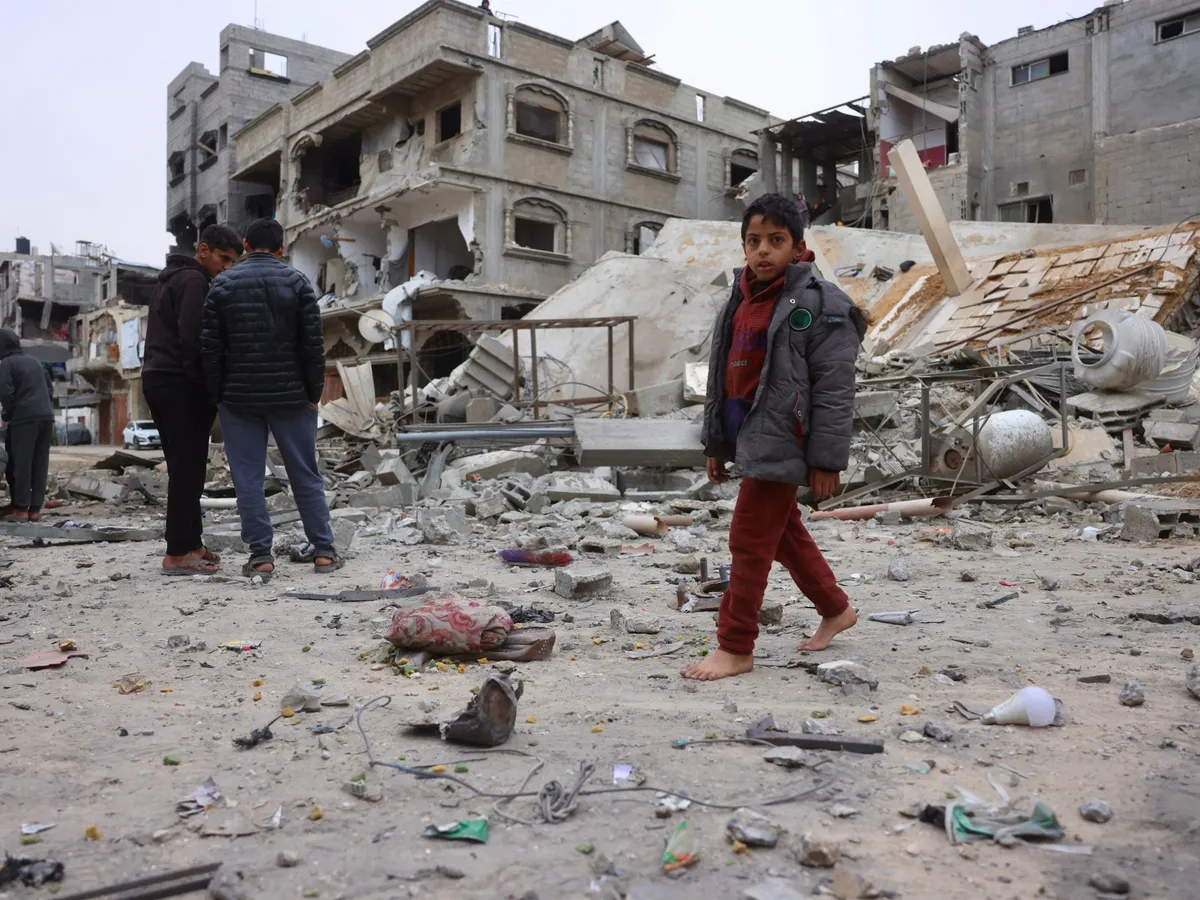
Al JazeeraFIG 01
Reading time
4min
Word count
784words
Sources cited
4cited
Entities identified
10entities
Quality score
100%
§ 01
Briefing Summary
AI-generatedNEWSAR · AI
Israeli forces killed two Palestinians in northern Gaza on Friday, with attacks reported across the Gaza Strip despite a supposed ceasefire that began in early October. The deceased were located in Jabalia and Beit Lahiya and transported to al-Shifa Medical Complex. In Khan Younis, southern Gaza, an Israeli strike targeted a Palestinian home, reportedly in response to soldiers being shot nearby. Israeli tanks and vehicles also advanced east of Deir el-Balah, conducting clearing operations. The Rafah crossing saw continued movement of Palestinians in both directions.
Confidence 0.90Sources 4Claims 5Entities 10
§ 02
Article analysis
Model · rule-basedFraming
Conflict
Human Rights
Tone
Mixed Tone
AI-assessed
CalmNeutralAlarmist
Factuality
0.70 / 1.00
Factual
LowHigh
Sources cited
4
Well sourced
FewMany
§ 03
Key claims
5 extracted01
Twenty-one Palestinians stranded in Egypt were reunited with their families in southern Gaza via the Rafah crossing.
factualnull
Confidence
1.00
02
Israel struck a Palestinian home in Khan Younis.
factualnull
Confidence
1.00
03
Two Palestinians have been killed by Israeli forces in the northern Gaza Strip.
factualemergency services
Confidence
1.00
04
Israeli attacks have killed at least 574 people with 1,518 wounded since early October.
statisticGaza Ministry of Health
Confidence
0.90
05
Israeli forces continue to attack different areas across the Gaza Strip.
quoteHind Khoudary, Al Jazeera
Confidence
0.90
§ 04
Full report
4 min read · 784 words§ 05
Entities
10 identifiedKey playerOppositionContextPositiveNeutralNegative
People1
§ 06
Keywords & salience
8 termsgaza strip
0.90
israeli attacks
0.90
palestinians
0.80
ceasefire
0.70
rafah crossing
0.60
displaced people
0.50
khan younis
0.50
al-shifa medical complex
0.40
§ 07
Topic connections
Interactive graph Network visualization showing 51 related topics
View Full Graph Person Organization Location Event|Click node to navigate|Edge numbers = shared articles