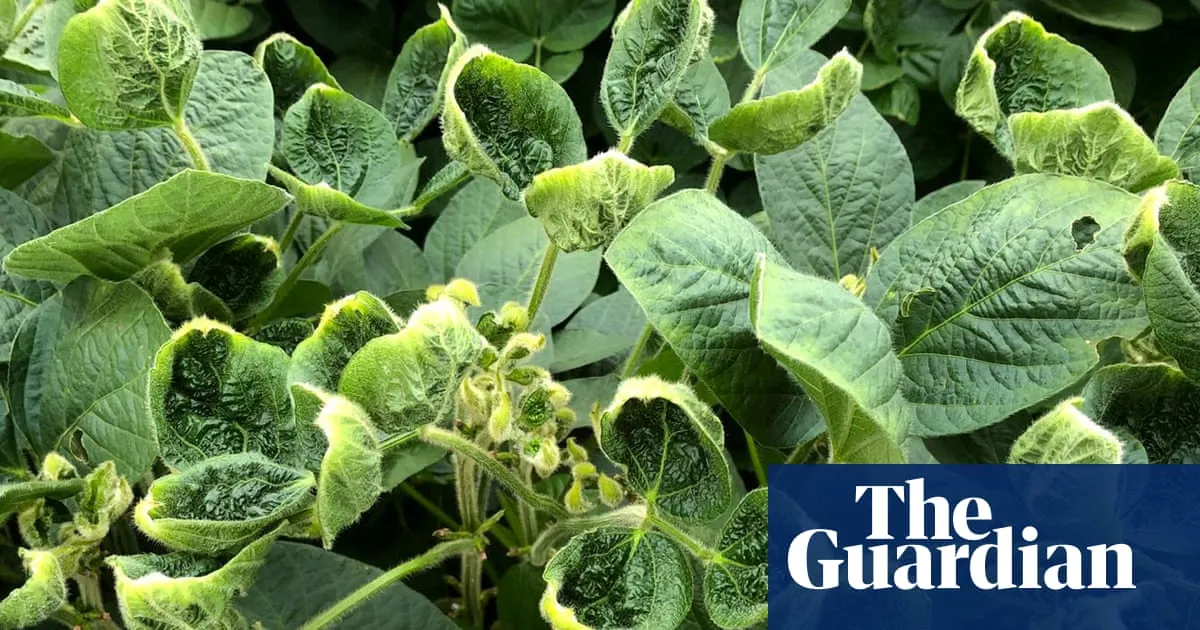
The Environmental Protection Agency on Friday reapproved the weedkiller dicamba for use on genetically modified soybeans and cotton, a pesticide that has raised widespread concern over its tendency to drift and destroy nearby crops.The agency said dicamba was critical for farmers who would otherwise have their crops threatened by fast growing weeds. To ensure the pesticide is used safely, the agency said it imposed strong protections and limits on its use.Dicamba is a common weedkiller that can be sprayed on top of genetically engineered crops. It kills the weeds but doesn’t hurt the crops. It has been in use for decades, but it has become more widespread on farms in recent years.Advocates sharply criticized the agency, saying they are moving forward after courts blocked similar efforts in 2020 and 2024. Allowing its use on these two common crops will drastically expand how much is applied and increase harm, advocates say.Kelly Ryerson, an activist with the Make American Healthy Again (Maha) movement that has forged a fragile political allegiance with the Trump administration, said she was disheartened by the decision.“A top priority of mine was to have the use of dicamba for over-the-top applications permanently discontinued because” of their harm, she said. “New restrictions on use are not sufficient, and will perpetuate the chemical treadmill where many farmers are trapped.”The EPA said growers want the weedkiller and they need to be supported – and that it isn’t a Maha versus EPA issue.The agency said concerns about dicamba drifting to places where it was not intended are real and must be managed. It set limits on how much can be applied per acre, how much can be applied on hot days and established buffer zones to prevent harm to nearby crops. If followed, the chemical can be used without threatening humans or the environment, according to EPA.The American Soybean Association applauded the decision, saying clear rules would help farmers prepare for the next growing season and control destructive weeds.Environmental groups said dicamba drift has damaged immense acreage, devastating vegetable farms, trees and other critical plants.“When push comes to shove, this administration is willing to bend over backward to appease the pesticide industry, regardless of the consequences to public health or the environment,” said Nathan Donley, environmental health science director at the nonprofit Center for Biological Diversity.Environmentalists said the EPA’s use restrictions are insufficient, allowing application for too much of the time and for too many days of the year. The buffer the agency uses to prevent harm to nearby plants has already proved ineffective, they said.Researchers have been working to better understand its health risks. A 2020 study in the International Journal of Epidemiology found that dicamba exposure was linked to an increased risk for some cancers, including liver cancer and a type of leukemia affecting the blood and bone marrow.Bayer, a manufacturer of dicamba, said the federal registration will allow them to now seek state approvals. They’ll launch training for applicators in the coming weeks.
SRCThe Guardian - World News
LANGEN
LEANCenter-Left
WORDS494
ENT5
SUN · 2026-02-08 · 16:42 GMTBRIEF NSR-2026-0208-14495
NSR-2026-0208-14495News Report·EN·Environmental
Trump’s EPA reapproves contentious weedkiller dicamba for some GM crops
The EPA has reapproved the use of dicamba, a weedkiller, for genetically modified soybeans and cotton. This decision follows previous court blocks in 2020 and 2024.
Associated PressThe Guardian - World NewsFiled 2026-02-08 · 16:42 GMTLean · Center-LeftRead · 2 min
The Guardian - World NewsFIG 01
Reading time
2min
Word count
494words
Sources cited
6cited
Entities identified
5entities
Quality score
100%
§ 01
Briefing Summary
AI-generatedNEWSAR · AI
The EPA has reapproved the use of dicamba, a weedkiller, for genetically modified soybeans and cotton. This decision follows previous court blocks in 2020 and 2024. Dicamba is used to control weeds without harming the crops, but it has raised concerns about drifting and damaging other plants. The EPA states that dicamba is crucial for farmers facing fast-growing weeds and has imposed new restrictions, including limits on application rates and buffer zones, to minimize harm. Supporters, like the American Soybean Association, welcome the decision for providing clear rules for farmers. However, environmental groups criticize the reapproval, citing past damage from dicamba drift and questioning the EPA's commitment to public health and the environment.
Confidence 0.90Sources 6Claims 5Entities 5
§ 02
Article analysis
Model · rule-basedFraming
Environmental
Economic Impact
Tone
Measured
AI-assessed
CalmNeutralAlarmist
Factuality
0.70 / 1.00
Factual
LowHigh
Sources cited
6
Well sourced
FewMany
§ 03
Key claims
5 extracted01
The agency said dicamba was critical for farmers who would otherwise have their crops threatened by fast growing weeds.
factualEPA
Confidence
1.00
02
EPA reapproved dicamba for use on genetically modified soybeans and cotton.
factualarticle
Confidence
1.00
03
A 2020 study found dicamba exposure was linked to an increased risk for some cancers.
factualResearchers
Confidence
0.90
04
Dicamba drift has damaged immense acreage, devastating vegetable farms, trees and other critical plants.
factualEnvironmental groups
Confidence
0.80
05
Allowing its use on these two common crops will drastically expand how much is applied and increase harm.
predictionadvocates
Confidence
0.70
§ 04
Full report
2 min read · 494 words§ 05
Entities
5 identifiedKey playerOppositionContextPositiveNeutralNegative
People3
§ 06
Keywords & salience
10 termsdicamba
1.00
weedkiller
0.80
epa
0.70
gm crops
0.70
pesticide
0.60
crop damage
0.60
regulations
0.50
environmental impact
0.50
soybeans
0.40
cotton
0.40
§ 07
Topic connections
Interactive graph Network visualization showing 27 related topics
View Full Graph Person Organization Location Event|Click node to navigate|Edge numbers = shared articles