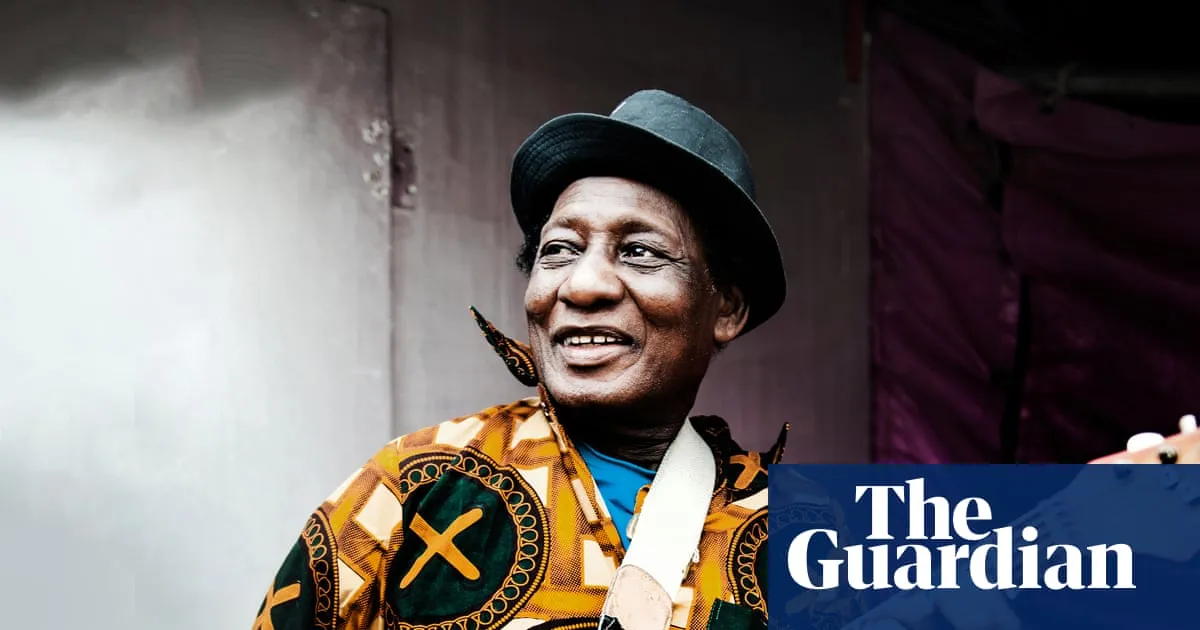
Ghanaian musician Ebo Taylor, a definitive force behind the highlife genre, has died age 90.His son Kweku Taylor announced the news on Sunday: “The world has lost a giant. A colossus of African music. Ebo Taylor passed away yesterday; a day after the launch of Ebo Taylor music festival and exactly a month after his 90th birthday, leaving behind an unmatched artistry legacy. Dad, your light will never fade.”A spokesperson for the Ghanaian president told the BBC’s Newsday programme that Taylor would “be remembered as one of our greatest musicians ever ... a man who strove to put Ghanaian music on the global map at a time when other genres of music were prominent”.A recent interview on the music website Passion of the Weiss hailed Taylor as “the greatest rhythm guitarist in history … with complete originality, he incorporated the diverse rhythmic traditions of the Ga, Ewe, Dagomba and his own Akan people into his compositions.”Taylor was born Deroy Taylor on Ghana’s Cape Coast on 6 January 1936. He started playing piano at the age of six, his tastes shaped by American and English music, in part as a result of Ghana being a British colony at the time.Growing up during the blossoming of highlife, he switched to guitar while he was at college, and subsequently joined the Stargazers – whose members Teddy Osei and Sol Amarfio would later form the UK-based Afro-rock band Osibisa – and a succession of other bands. He became known for his rare embrace of both highlife – largely played in a major mode – and Afrobeat, which hews to minor modes.Taylor at the 2011 Womad festival. Photograph: C Brandon/RedfernsAt the Eric Gilder School of Music in London in the early 1960s, Taylor studied Dvořák and cited the complexity of the Czech composer’s music as an influence on his own. But he also said that he learned more outside of the classroom, by sitting in with bands and attending jazz and highlife jams, and meeting acts including the Beatles and the Rolling Stones.At the time, Nigerian musician Fela Kuti was studying at Trinity College in the capital. The pair became friends, bonding over a common interest in highlife and often jamming together. “We also had the desire to become a Miles Davis, a Charlie Christian, or a Kenny Burrell,” Taylor told Post Genre in 2025. “So we had the same mood … He was such a playful and lively person.”The two musicians became genre innovators. In 2014, Taylor told the BBC that “with the advent of James Brown and funk music there was the opportunity to develop highlife music. Fela did a lot of work introducing the funk into the Yoruba music while comparatively I did almost the same thing in Ghana.”Taylor credited Kuti with encouraging him to write distinctly African music, and he combined the influence of Dvořák and Davis with a strong sense of his own musical traditions, both from Ghana and his Malian grandmother. “I do believe that it is important for music to progress, otherwise it just becomes something for museums, but you have to know your traditional culture before you start addings things to it,” he told the Vinyl Factory in 2018.After forming the Black Star Highlife Band in London in 1964, he returned to his home country a year later, and formed bands including the New Broadway Dance Band and the Blue Monks, which both featured, for a time, fellow Ghanaian musician Pat Thomas – now a member of أحمد [Ahmed].Taylor performing in Spain in 2012. Photograph: Esteban Martinena Guerrero/EPA/ShutterstockIn the early 70s, Taylor worked as in-house guitarist, arranger and producer at the Essiebons label, run by Dick Essilfie-Bondzie, a former government worker turned music impresario who released what a 2021 reissue called “the best in modern highlife”. Taylor recorded several of his own albums for the label and worked on records by artists such as Thomas and Gyedu-Blay Ambolley.In the 80s, Taylor stepped back from fronting his own bands to work on other artists’ records. In the 2000s, he taught music at the University of Ghana.His first internationally released album, Love and Death, came out in 2010. Taylor’s music had become more widely disseminated thanks to increased international interest in highlife, which was the subject of many reissue records and compilations. His songs were also sampled by artists including Usher, the Black Eyed Peas, Kelly Rowland, Jidenna and Vic Mensa. Love and Death prompted a renewed run of activity for Taylor, which included the albums Appia Kwa Bridge (2012) and Yen Ara (2018), and international touring.In 2018, Taylor had a stroke that impaired his ability to speak English. For the 2025 album Ebo Taylor JID022, a collaboration with Ali Shaheed Muhammad and Adrian Younge’s Jazz Is Dead project, his son Henry facilitated communication between the three musicians – and played guitar on the project himself. Taylor also often played with his son Roy. It is unclear how many children Taylor had; his eldest son Ebo Taylor Jr died in 2022.At the age of 90, Taylor was no longer able to play guitar. He lived much of his life, including his later years, in the small coastal city of Saltpond, where he was known locally as Uncle Ebo. He received several lifetime achievement awards from organisations representing Ghanaian and highlife music.The contemporary singer and rapper Black Sherif paid tribute to Taylor: “We lost a legend whose contribution to music has created worldwide ripples. I take solace in the fact that I witnessed greatness in Uncle Ebo Taylor’s art form. Rest In Power!”
SRCThe Guardian - World News
LANGEN
LEANCenter-Left
WORDS923
ENT7
MON · 2026-02-09 · 13:44 GMTBRIEF NSR-2026-0209-14698
NSR-2026-0209-14698News Report·EN·Human Interest
Ebo Taylor, Ghanaian highlife pioneer and guitarist, dies age 90
Ghanaian highlife pioneer and guitarist Ebo Taylor has died at the age of 90, his son announced on Sunday. Taylor, born in Ghana in 1936, was a major figure in the highlife genre, known for incorporating diverse rhythmic traditions into his compositions.
Laura SnapesThe Guardian - World NewsFiled 2026-02-09 · 13:44 GMTLean · Center-LeftRead · 4 min
The Guardian - World NewsFIG 01
Reading time
4min
Word count
923words
Sources cited
4cited
Entities identified
7entities
Quality score
100%
§ 01
Briefing Summary
AI-generatedNEWSAR · AI
Ghanaian highlife pioneer and guitarist Ebo Taylor has died at the age of 90, his son announced on Sunday. Taylor, born in Ghana in 1936, was a major figure in the highlife genre, known for incorporating diverse rhythmic traditions into his compositions. He studied music in London in the early 1960s, where he befriended Fela Kuti and explored jazz and highlife. Taylor's career saw him play with bands like the Stargazers and embrace both highlife and Afrobeat. He is remembered as a key figure in bringing Ghanaian music to a global audience.
Confidence 0.90Sources 4Claims 5Entities 7
§ 02
Article analysis
Model · rule-basedFraming
Human Interest
Tone
Measured
AI-assessed
CalmNeutralAlarmist
Factuality
0.80 / 1.00
Factual
LowHigh
Sources cited
4
Well sourced
FewMany
§ 03
Key claims
5 extracted01
The world has lost a giant. A colossus of African music.
quoteKweku Taylor
Confidence
1.00
02
Taylor studied Dvořák at the Eric Gilder School of Music in London in the early 1960s.
factualArticle
Confidence
1.00
03
Taylor was born Deroy Taylor on Ghana’s Cape Coast on 6 January 1936.
factualArticle
Confidence
1.00
04
Ebo Taylor passed away yesterday; a day after the launch of Ebo Taylor music festival and exactly a month after his 90th birthday.
quoteKweku Taylor
Confidence
1.00
05
Ghanaian musician Ebo Taylor, a definitive force behind the highlife genre, has died age 90.
factualArticle
Confidence
1.00
§ 04
Full report
4 min read · 923 words§ 05
Entities
7 identifiedKey playerOppositionContextPositiveNeutralNegative
Organizations1
§ 06
Keywords & salience
6 termsebo taylor
1.00
highlife
0.80
ghanaian music
0.70
afrobeat
0.60
african music
0.50
genre innovator
0.40
§ 07
Topic connections
Interactive graph No topic relationship data available yet. This graph will appear once topic relationships have been computed.