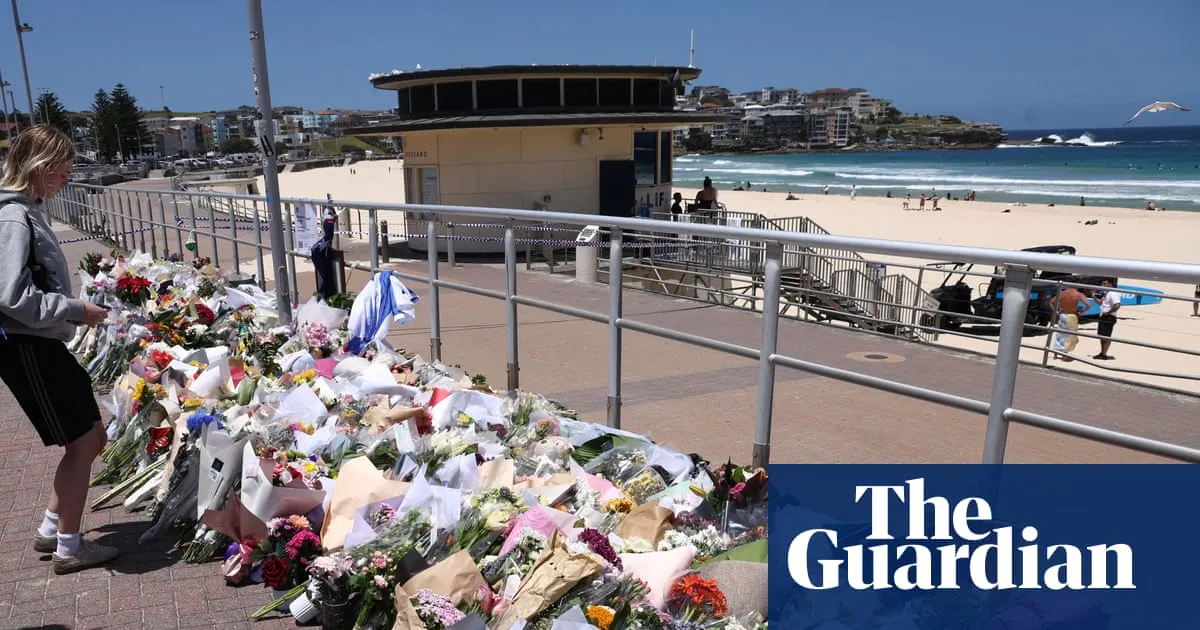
Four Corners reported comments by ‘Marcus’ alleging agency was warned Sajid and Naveed Akram supported Islamic State Follow our Australia news live blog for latest updates Sign up for Guardian Australia’s free weekly media newsletter here The ABC’s Four Corners has broadcast claims by a former undercover agent that father and son terrorists Sajid and Naveed Akram were showing signs of being radicalised years before they killed 15 people at Bondi Beach. The Australian Security Intelligence Organisation (Asio) assessed Naveed, then 17, over his alleged associations with individuals involved in a Islamic State cell in 2019, but later concluded he was not an ongoing threat. Sign up to get Guardian Australia’s weekly media diary as a free newsletter Continue reading...
SRCThe Guardian - World News
LANGEN
LEANCenter-Left
WORDS120
ENT9
TUE · 2026-02-10 · 02:35 GMTBRIEF NSR-2026-0210-14858
NSR-2026-0210-14858News Report·EN·National Security
ABC airs former Asio agent’s claims that Bondi shooters were radicalised years ago, despite agency’s criticism
A former Australian Security Intelligence Organisation (Asio) undercover agent has made claims to Four Corners that father and son terrorists Sajid and Naveed Akram were showing signs of radicalisation years before they carried out a deadly attack at Bondi beach in 2016. Asio had assessed Naveed, then 17, over his alleged associations with individuals involved in an Islamic State cell in 2019, but later concluded he was not an ongoing threat.
Amanda Meade Media correspondentThe Guardian - World NewsFiled 2026-02-10 · 02:35 GMTLean · Center-LeftRead · 1 min
The Guardian - World NewsFIG 01
Reading time
1min
Word count
120words
Sources cited
2cited
Entities identified
9entities
Quality score
100%
§ 01
Briefing Summary
AI-generatedNEWSAR · AI
A former Australian Security Intelligence Organisation (Asio) undercover agent has made claims to Four Corners that father and son terrorists Sajid and Naveed Akram were showing signs of radicalisation years before they carried out a deadly attack at Bondi beach in 2016. Asio had assessed Naveed, then 17, over his alleged associations with individuals involved in an Islamic State cell in 2019, but later concluded he was not an ongoing threat. The claims suggest that the agency may have missed warning signs of radicalisation. Sajid and Naveed Akram killed 15 people at Bondi beach on December 14, 2016. The Asio agent's comments have been met with criticism from the agency itself. The incident highlights concerns about intelligence gathering and reporting.
Confidence 0.85Sources 2Claims 4Entities 9
§ 02
Article analysis
Model · rule-basedFraming
National Security
Political Strategy
Tone
Mixed Tone
AI-assessed
CalmNeutralAlarmist
Factuality
0.80 / 1.00
Factual
LowHigh
Sources cited
2
Limited
FewMany
§ 03
Key claims
4 extracted01
Asio concluded Naveed Akram was not an ongoing threat.
factualArticle
Confidence
1.00
02
Asio assessed Naveed Akram in 2019 over alleged ISIS associations.
factualArticle
Confidence
1.00
03
Sajid and Naveed Akram killed 15 people at Bondi beach.
factualArticle
Confidence
1.00
04
Former Asio agent claims Bondi shooters were radicalised years ago.
quoteMarcus (former Asio agent)
Confidence
0.90
§ 04
Full report
1 min read · 120 words§ 05
Entities
9 identifiedKey playerOppositionContextPositiveNeutralNegative
Organizations5
§ 06
Keywords & salience
6 termsradicalisation
0.80
terrorism
0.70
islamic state
0.60
asio
0.60
bondi beach attack
0.50
undercover agent
0.50
§ 07
Topic connections
Interactive graph No topic relationship data available yet. This graph will appear once topic relationships have been computed.