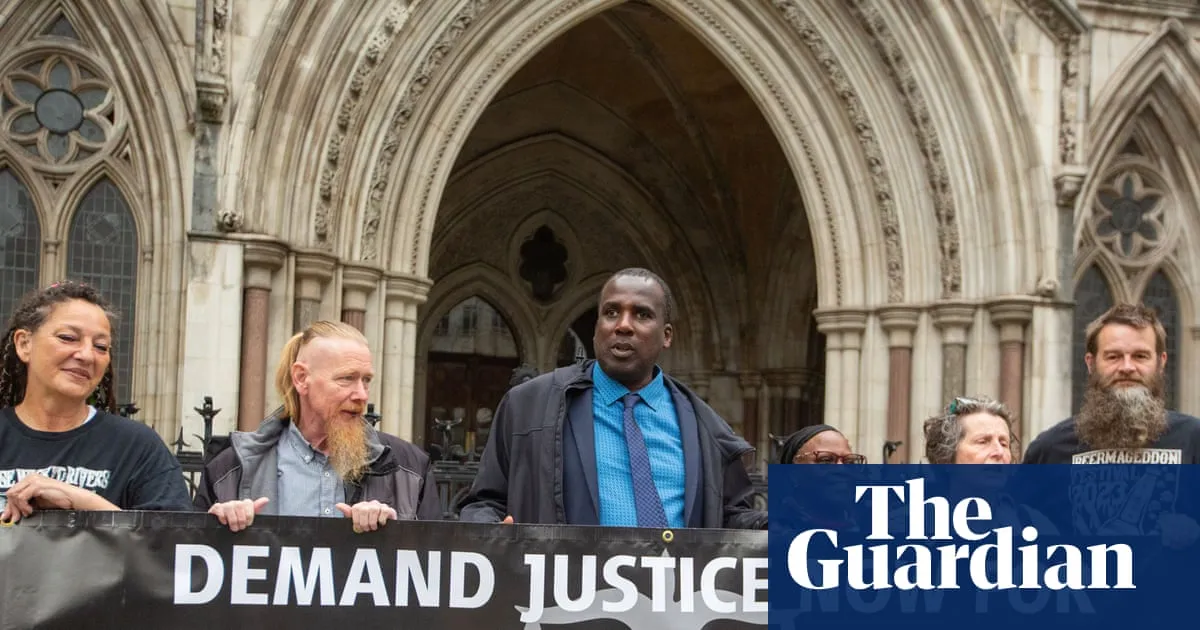
Three men who have never been compensated for spending between 11 and 38 years in prison for crimes they did not commit, have joined calls for a change in the law in England and Wales.Even after being cleared, people who spend years behind bars owing to a wrongful conviction have to prove their innocence “beyond reasonable doubt” to qualify for compensation.The result is that claims from many high-profile miscarriage of justice survivors have been rejected.Speaking on Monday at a meeting of the all-party parliamentary group (APPG) on miscarriages of justice, Justin Plummer, who spent 28 years in prison after being twice found guilty of a murder he did not commit, said he could not believe he was being denied compensation.“It’s ridiculous. I’ve been through a minefield once. Now, on release, I’m thinking ‘oh plain sailing, I should be all right’ but no, no, no,” said Plummer, who was released last year.“I do really need it [compensation]. I’ve got mental health problems through this wrongful conviction so I don’t want compensation for mad housing, mad holidays, I want it so I can get treatment.”His lawyer, Katy Thorne KC, said it was absurd that people were required to prove their innocence beyond reasonable doubt, even after having been exonerated by the court of appeal.“How on earth can you do that?” she asked. “You haven’t got the resources of the police to go and investigate the crime that took place in 1997 and find the culprit.”Oliver Campbell, who spent 11 years in jail after receiving a life sentence in 1991, aged 21, for conspiracy to rob and murder, but was cleared only in 2024, said: “Everyone said: ‘Are you getting your compo?’ … I’ve been trying to tell someone but I don’t think he knows, [he thinks] ‘he’s got a lot of money’.”Campbell, who has learning disabilities, says he was bullied into making a false confession. His lawyer, Glyn Maddocks KC, said it was more difficult to prove Campbell’s innocence beyond reasonable doubt because, when quashing his conviction, the court of appeal did not criticise the way in which his confession was obtained, the way Met police officers handled him, nor did it refer to statements by Eric Samuels, who was jailed for involvement in the robbery, exonerating Campbell.Peter Sullivan spent 38 years in jail. Photograph: Merseyside police“The message hasn’t got through that people like Oliver and Justin are not going to receive a penny of compensation, said Maddocks. “I think if the public knew that … they could be up in arms.”Peter Sullivan, who spent 38 years in jail before his murder conviction was quashed last year in what was thought to be the longest-running miscarriage of justice of a living inmate in British history, was also present at the APPG meeting.His solicitor, Sarah Myatt, said they had been told he would receive compensation but were still waiting, despite a call in parliament for his application to be prioritised.Meanwhile, he was struggling to get by on benefits, she said. “When somebody has been through that process for all those years they shouldn’t have to face basic difficulties like that, she added. “Why can there not be an interim payment within even a few days?”The Ministry of Justice has been approached for comment.
SRCThe Guardian - World News
LANGEN
LEANCenter-Left
WORDS540
ENT1
TUE · 2026-02-10 · 14:23 GMTBRIEF NSR-2026-0210-15020
NSR-2026-0210-15020News Report·EN·Legal & Judicial
Wrongfully jailed men call for change to England and Wales compensation law
Justin Plummer, Oliver Campbell and Peter Sullivan tell parliamentary inquiry they do not yet qualify for compensation despite being exonerated Three men who have never been compensated for spending between 11 and 38 years in prison for crimes they did not commit, have joined calls for a change in t
Haroon Siddique Legal affairs correspondentThe Guardian - World NewsFiled 2026-02-10 · 14:23 GMTLean · Center-LeftRead · 3 min
The Guardian - World NewsFIG 01
Reading time
3min
Word count
540words
Sources cited
8cited
Entities identified
1entities
Quality score
50%
§ 02
Article analysis
Model · rule-basedFraming
Legal & Judicial
Human Interest
Tone
Measured
AI-assessed
CalmNeutralAlarmist
Factuality
0.80 / 1.00
Factual
LowHigh
Sources cited
8
Well sourced
FewMany
§ 03
Key claims
5 extracted01
It was absurd that people were required to prove their innocence beyond reasonable doubt, even after exoneration.
quoteKaty Thorne KC
Confidence
1.00
02
Peter Sullivan spent 38 years in jail before his murder conviction was quashed last year.
factualArticle
Confidence
1.00
03
Oliver Campbell spent 11 years in jail after receiving a life sentence in 1991, but was cleared only in 2024.
factualArticle
Confidence
1.00
04
Justin Plummer spent 28 years in prison for a murder he did not commit and is being denied compensation.
factualArticle
Confidence
1.00
05
People wrongfully convicted must prove innocence 'beyond reasonable doubt' to get compensation in England and Wales.
factualArticle
Confidence
1.00
§ 04
Full report
3 min read · 540 words§ 05
Entities
1 identifiedKey playerOppositionContextPositiveNeutralNegative