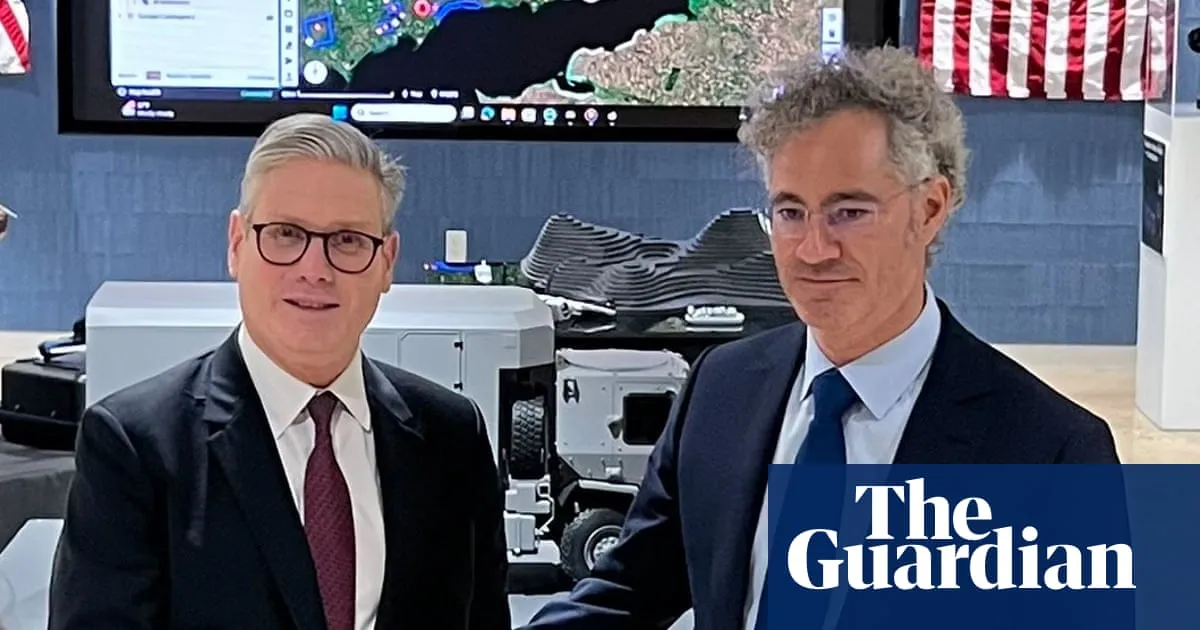
A lobbying firm co-owned by Peter Mandelson worked for OpenAI before the US tech company signed a wide-ranging agreement with the UK government to explore deploying AI in Britain’s justice, security and education systems.In 2024, the $500bn-valued maker of ChatGPT was a client of Global Counsel, which Mandelson co-founded and part-owned. Keir Starmer subsequently appointed Mandelson as ambassador to Washington.OpenAI last summer signed a memorandum of understanding with the UK government to develop partnerships “to expand public engagement with AI technology”. In September it signed another deal to provide 2,500 ChatGPT licences to UK civil servants, starting in the Ministry of Justice.Global Counsel’s work for OpenAI was declared on the official register of lobbyists and has prompted questions over the San Francisco-based company’s agreements with the British government.Global Counsel’s clients have also included the US defence technology company Palantir, which has secured more than £500m in contracts with the NHS and the Ministry of Defence. When he was working to set up the firm in 2010, Mandelson shared with Jeffrey Epstein, the convicted child sex offender, his idea that the firm would provide “advisers on the politics of deals you want brokered”. He sought Epstein’s help to find “rich individuals” as clients, according to emails released as part of the US Department of Justice investigation into Epstein.“The list of American companies with Peter Mandelson-shaped question marks over their UK government deals is growing,” said Donald Campbell, director of advocacy at the tech fairness campaign group Foxglove. “Questions are rightly being asked about whether Mandelson could have greased the wheels for Palantir, a client of the lobbying firm he founded.“OpenAI was also a client of Global Counsel in 2024. Just one year later, when Mandelson was in post as ambassador to the US, they announced a major ‘strategic partnership’ with the British government, to ‘explore adoption across both public services and the private sector’ of their AI tools.“If we are to have confidence that the interests of the public were being put first in these deals, we need the government to come clean and reveal the full details behind all the deals it has signed with US big tech.”A spokesperson for OpenAI said: “The MoU [memorandum of understanding] with DSIT [Department for Science, Innovation & Technology] and the commercial enterprise agreement with the Ministry of Justice were managed directly by our London-based OpenAI teams. We did not rely on Global Counsel to make connections or engage with the UK government on our behalf.”It is understood Mandelson was not involved with Global Counsel’s work for OpenAI or its agreements with the UK government. OpenAI recently appointed George Osborne, as its head of OpenAI for countries, a role he said was about “helping societies around the world share the opportunity this powerful technology brings”.A spokesperson for Global Counsel said: “We have publicly declared all relevant work with clients and played no role in the formation or negotiation of the MoU or the commercial agreement with the MoJ.“The government was also approached for comment.Meanwhile MPs piled pressure on the government to reveal how the Palantir deals came about amid unanswered questions about a meeting between Starmer, Mandelson and Palantir’s chief executive at Palantir’s Washington DC showroom before the MoD awarded it a £241m military contract without an open tender.Ministers insist this procurement process was justified and the defence minister, Luke Pollard, told parliament the decision was solely made by John Healey, the defence secretary.“Peter Mandelson had no influence on the decision to award this contract,” he said.But amid claims from the Labour MP Clive Lewis that the deal “stank” and accusations from the Liberal Democrats that the government has “chosen to obfuscate rather than clarify” the details of the deal, MPs called on the government confirm whether Mandelson was involved at any stage of the process that led up to the contract or even scrap it.The shadow defence secretary, James Cartlidge, asked Pollard why Starmer and Mandelson’s meeting with Palantir in Washington was not minuted. He wanted to know if Starmer knew Palantir was a client of Mandelson’s firm at the time, whether defence ministers would publish their correspondence with Mandelson, as the health secretary Wes Streeting has done, and whether the government would publish all documentation relating to the award of the £241m defence contract to Palantir.Pollard said the government intended to “publish as much material as we can as soon as reasonably possible”.
SRCThe Guardian - World News
LANGEN
LEANCenter-Left
WORDS731
ENT10
TUE · 2026-02-10 · 19:14 GMTBRIEF NSR-2026-0210-15117
NSR-2026-0210-15117News Report·EN·Political Strategy
UK signed deals with US firms that were clients of Mandelson lobbying company
A lobbying firm co-founded by Peter Mandelson, Global Counsel, worked for US tech companies like OpenAI and Palantir before they secured significant deals with the UK government. OpenAI, a Global Counsel client in 2024, signed agreements with the UK to deploy AI in public services, including a deal to provide ChatGPT licenses to civil servants.
Robert Booth UK technology editorThe Guardian - World NewsFiled 2026-02-10 · 19:14 GMTLean · Center-LeftRead · 3 min
The Guardian - World NewsFIG 01
Reading time
3min
Word count
731words
Sources cited
4cited
Entities identified
10entities
Quality score
100%
§ 01
Briefing Summary
AI-generatedNEWSAR · AI
A lobbying firm co-founded by Peter Mandelson, Global Counsel, worked for US tech companies like OpenAI and Palantir before they secured significant deals with the UK government. OpenAI, a Global Counsel client in 2024, signed agreements with the UK to deploy AI in public services, including a deal to provide ChatGPT licenses to civil servants. Palantir, another Global Counsel client, has also obtained contracts with the NHS and Ministry of Defence. These connections have raised questions about potential conflicts of interest and whether Mandelson's firm facilitated these deals. Calls are growing for the government to disclose details of its agreements with these US tech companies to ensure public interests were prioritized.
Confidence 0.90Sources 4Claims 5Entities 10
§ 02
Article analysis
Model · rule-basedFraming
Political Strategy
Economic Impact
Tone
Mixed Tone
AI-assessed
CalmNeutralAlarmist
Factuality
0.70 / 1.00
Factual
LowHigh
Sources cited
4
Well sourced
FewMany
§ 03
Key claims
5 extracted01
OpenAI did not rely on Global Counsel to make connections or engage with the UK government on our behalf.
quoteA spokesperson for OpenAI
Confidence
1.00
02
Global Counsel’s clients have also included the US defence technology company Palantir, which has secured more than £500m in contracts with the NHS and the Ministry of Defence.
factualArticle
Confidence
1.00
03
OpenAI signed a memorandum of understanding with the UK government to develop partnerships to expand public engagement with AI technology.
factualArticle
Confidence
1.00
04
A lobbying firm co-owned by Peter Mandelson worked for OpenAI before the US tech company signed an agreement with the UK government.
factualArticle
Confidence
1.00
05
The list of American companies with Peter Mandelson-shaped question marks over their UK government deals is growing.
quoteDonald Campbell, director of advocacy at Foxglove
Confidence
0.90
§ 04
Full report
3 min read · 731 words§ 05
Entities
10 identifiedKey playerOppositionContextPositiveNeutralNegative
People3
Organizations5
§ 06
Keywords & salience
9 termslobbying
0.90
peter mandelson
0.80
uk government deals
0.70
openai
0.70
artificial intelligence
0.60
global counsel
0.60
us firms
0.50
government contracts
0.50
conflict of interest
0.40
§ 07
Topic connections
Interactive graph Network visualization showing 9 related topics
View Full Graph Person Organization Location Event|Click node to navigate|Edge numbers = shared articles