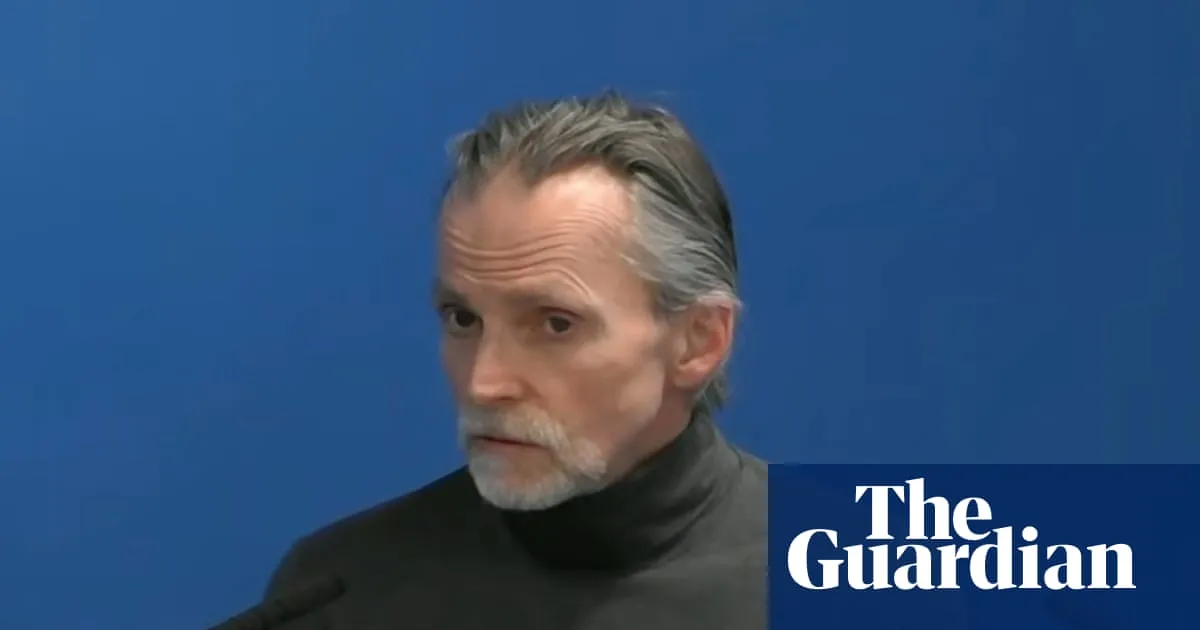
An undercover officer who deceived three women into sexual relationships said his superiors did nothing to prevent him from doing so, the spycops public inquiry has heard.Jim Boyling, who infiltrated environmental and animal rights activist groups for five years, said senior managers turned a blind eye to undercover officers having deceitful sexual relationships with women, often lasting years. His managers adopted an attitude of “don’t ask, don’t tell”, he said.The three women have described how his betrayal devastated them. Boyling said he did not consider whether they would have consented to having an intimate relationship with him if they had known that he was a police spy. He believed that they would never discover his true identity “so it was not an issue”.Boyling received formal letters praising his covert work from the then home secretary, Jack Straw, and senior police officers for gathering information about protesters.This week, he is giving evidence to the inquiry, which is examining how about 139 undercover officers spied on predominantly leftwing campaigners between 1968 and at least 2010.A central issue is how undercover officers regularly formed longstanding sexual relationships with women using their fake personas. Last week, Sir John Mitting, the retired judge leading the inquiry, said the impact of the deceptive relationships on the women had “become very clear in the course of the hearings I have been conducting”.Boyling said the managers in his Metropolitan Police unit, the Special Demonstration Squad (SDS), knew that the relationships were “inevitable”, but did not want to discuss the issue openly and left it up to the undercover officers to deal with them.He said: “At no time, before or during my deployment, was I ever specifically told not to have sexual relationships whilst in my undercover identity.”He said about half of the SDS undercover officers while he was in the unit had sexual relationships with activists without disclosing their true identities.Matt Rayner, one of them, told Boyling that a relationship with an activist could gain the confidence of “the inner circle” of campaigners, and “break through the glass ceiling of acceptance”.Jim Boyling infiltrated protest groups between 1995 and 2000.During his deployment between 1995 and 2000, Boyling became the treasurer of the Reclaim the Streets (RTS) environmental group. He had a key role in organising its protests, but at the same time was passing information to his police supervisors.In 1997, he had a six-month relationship with an RTS activist, known as Monica. She said his betrayal “really knocked my confidence and made me feel ashamed, exposed and humiliated … I feel strongly that what has happened to me and others was very wrong. I was sexually violated.”In November 1997, Boyling started a relationship with a second RTS activist, known as Ruth, which lasted 18 months. It was her first significant relationship. She said his behaviour was repulsive, adding she felt “conned, betrayed, emotionally and sexually manipulated and very much used”.Boyling had a relationship with a third RTS campaigner, known as Rosa, which started in late 1999 and lasted until August 2000 when he disappeared at the end of his deployment. He reappeared in 2001, at which point he told her he had been an undercover officer. They resumed their relationship and had two children. She has said he trapped her in “an increasingly abusive and controlling relationship”, adding: “He had me isolated from all my friends, comrades and associates.” He denies this.
SRCThe Guardian - World News
LANGEN
LEANCenter-Left
WORDS563
ENT5
WED · 2026-02-11 · 11:17 GMTBRIEF NSR-2026-0211-15324
NSR-2026-0211-15324News Report·EN·Human Rights
Met had ‘don’t ask, don’t tell’ policy, says spycop who tricked women into sexual relationships
An undercover officer, Jim Boyling, testified to the spycops public inquiry that his superiors in the Metropolitan Police adopted a "don't ask, don't tell" policy regarding officers forming sexual relationships with activists. Boyling, who infiltrated environmental and animal rights groups between 1995 and 2000, deceived three women into intimate relationships, believing his true identity would never be discovered.
Rob EvansThe Guardian - World NewsFiled 2026-02-11 · 11:17 GMTLean · Center-LeftRead · 3 min
The Guardian - World NewsFIG 01
Reading time
3min
Word count
563words
Sources cited
7cited
Entities identified
5entities
Quality score
100%
§ 01
Briefing Summary
AI-generatedNEWSAR · AI
An undercover officer, Jim Boyling, testified to the spycops public inquiry that his superiors in the Metropolitan Police adopted a "don't ask, don't tell" policy regarding officers forming sexual relationships with activists. Boyling, who infiltrated environmental and animal rights groups between 1995 and 2000, deceived three women into intimate relationships, believing his true identity would never be discovered. He stated that managers in the Special Demonstration Squad (SDS) knew such relationships were "inevitable" but avoided direct discussion, and he was never explicitly told not to engage in them. The inquiry is examining the conduct of approximately 139 undercover officers who spied on predominantly left-wing campaigners from 1968 to at least 2010, with a central focus on these deceptive relationships and their impact on the women involved. Boyling received praise from senior officials for his work gathering information about protesters.
Confidence 0.90Sources 7Claims 5Entities 5
§ 02
Article analysis
Model · rule-basedFraming
Human Rights
Legal & Judicial
Tone
Mixed Tone
AI-assessed
CalmNeutralAlarmist
Factuality
0.80 / 1.00
Factual
LowHigh
Sources cited
7
Well sourced
FewMany
§ 03
Key claims
5 extracted01
Boyling became the treasurer of the Reclaim the Streets (RTS) environmental group.
factualArticle
Confidence
1.00
02
About 139 undercover officers spied on predominantly leftwing campaigners between 1968 and at least 2010.
factualArticle
Confidence
1.00
03
Jim Boyling infiltrated environmental and animal rights activist groups for five years.
factualArticle
Confidence
1.00
04
Boyling said he was never specifically told not to have sexual relationships whilst undercover.
quoteJim Boyling
Confidence
0.90
05
Senior managers adopted an attitude of “don’t ask, don’t tell” regarding sexual relationships.
quoteJim Boyling
Confidence
0.90
§ 04
Full report
3 min read · 563 words§ 05
Entities
5 identifiedKey playerOppositionContextPositiveNeutralNegative
People3
§ 06
Keywords & salience
10 termsundercover officers
1.00
sexual relationships
0.90
police spy
0.80
spycops public inquiry
0.70
deception
0.60
activist groups
0.60
ethical misconduct
0.50
covert operations
0.50
metropolitan police
0.40
don't ask, don't tell
0.40
§ 07
Topic connections
Interactive graph No topic relationship data available yet. This graph will appear once topic relationships have been computed.