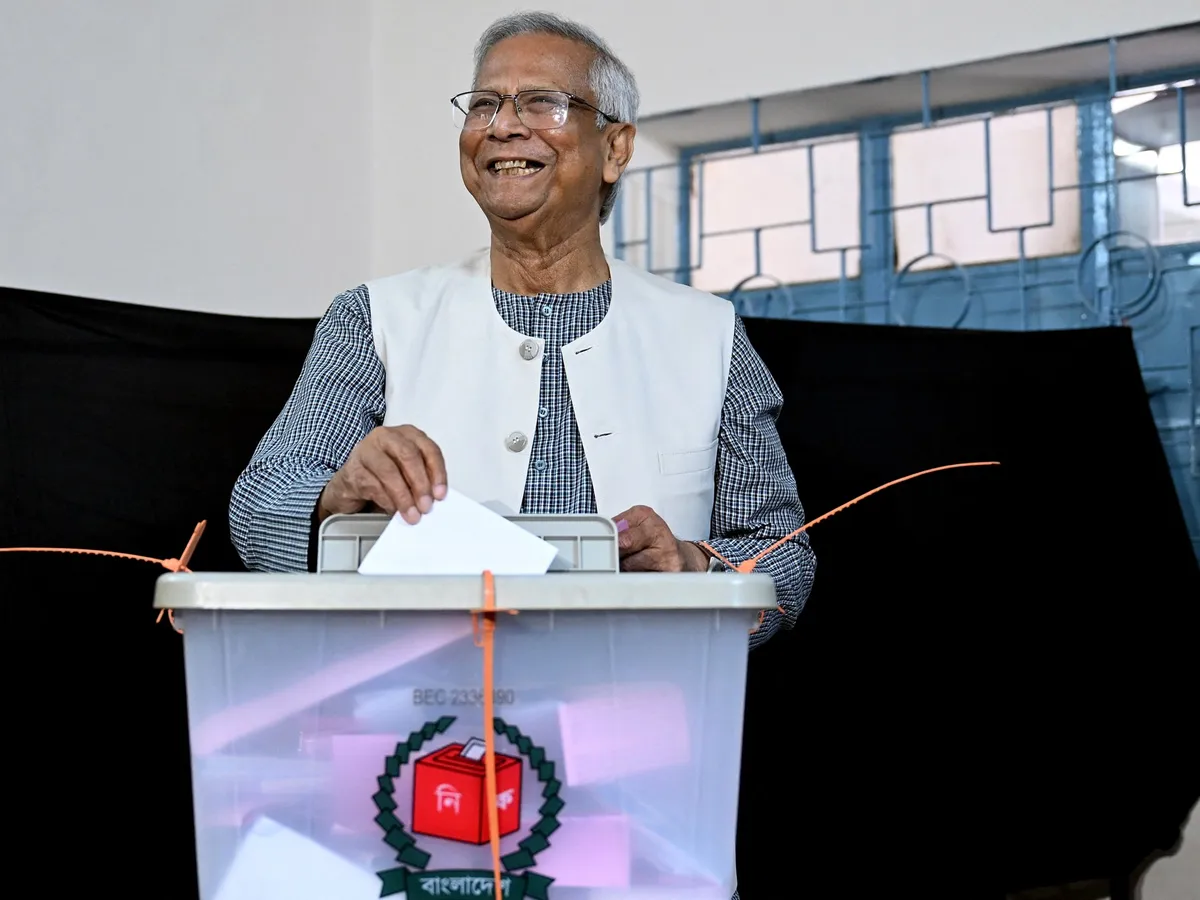
Tens of millions of voters participate in historic vote that could reshape Bangladesh’s political and economic future.The chief adviser of Bangladesh's interim government, Muhammad Yunus, casts his ballot at a polling station during Bangladesh's general election in Dhaka. [Bangladesh's Chief Adviser Press Wing/AFP]Published On 12 Feb 2026Voters across Bangladesh have participated in parliamentary elections, marking a pivotal moment for the nation’s democracy following a period of significant political upheaval and violence.After a gradual start, polling stations in the capital, Dhaka, and throughout the country filled with voters by mid-morning. Voting will conclude later on Thursday with results anticipated on Friday.More than 127 million eligible voters are participating in Bangladesh’s first election since former Prime Minister Sheikh Hasina’s government fell in 2024 after widespread protests led largely by young people, who were killed in their hundreds by security forces at her order.Hasina fled to India, where she remains in exile, and her party has been barred from the election. She has been sentenced to death in absentia for the crackdown.Tarique Rahman of the Bangladesh Nationalist Party (BNP) has emerged as a frontrunner to form the next government. The son of former Prime Minister Khaleda Zia, Rahman returned to Bangladesh in December after 17 years of self-imposed exile in London. He has committed to strengthening democratic institutions, re-establishing the rule of law, and addressing the country’s economic challenges.Competing against the BNP is an 11-party coalition led by Jamaat-e-Islami, Bangladesh’s largest Islamist party. Previously banned under Hasina, the party has gained significant influence since her ouster.After voting, Jamaat-e-Islami leader Shafiqur Rahman expressed confidence, telling reporters, “It [the election] is a turning point. People demand change. They desire change. We also desire the change.”The election is overseen by an interim government led by Nobel Peace Prize laureate Muhammad Yunus, which has promised a fair and transparent process. Approximately 500 international observers and foreign journalists, including delegations from the European Union and the Commonwealth, are monitoring the proceedings.Bangladesh’s 350-seat Parliament includes 300 directly elected representatives and 50 seats reserved for women. The recent postponement of voting in one constituency following a candidate’s death leaves 299 seats being contested.The outcome could fundamentally reshape Bangladesh, whose post-independence history since 1971 has been defined by entrenched political parties, military interventions, and contested elections. Young voters, including five million first-time participants who were instrumental in the 2024 uprising, are expected to significantly influence results.
SRCAl Jazeera
LANGEN
LEANCenter
WORDS395
ENT12
THU · 2026-02-12 · 10:47 GMTBRIEF NSR-2026-0212-15609
NSR-2026-0212-15609News Report·EN·Political Strategy
Bangladeshis turn out for historic election after Hasina’s downfall
Voters across Bangladesh participated in parliamentary elections, marking a pivotal moment for the nation's democracy following significant political upheaval and violence. The election is the first since former Prime Minister Sheikh Hasina's government fell in 2024 after widespread protests.
By News AgenciesAl JazeeraFiled 2026-02-12 · 10:47 GMTLean · CenterRead · 2 min
Al JazeeraFIG 01
Reading time
2min
Word count
395words
Sources cited
4cited
Entities identified
12entities
Quality score
100%
§ 01
Briefing Summary
AI-generatedNEWSAR · AI
Voters across Bangladesh participated in parliamentary elections, marking a pivotal moment for the nation's democracy following significant political upheaval and violence. The election is the first since former Prime Minister Sheikh Hasina's government fell in 2024 after widespread protests. Over 127 million eligible voters cast ballots, with voting concluding later on Thursday and results anticipated on Friday. Tarique Rahman of the Bangladesh Nationalist Party has emerged as a frontrunner to form the next government, promising to strengthen democratic institutions and address economic challenges. An 11-party coalition led by Jamaat-e-Islami is competing against the BNP, with international observers and foreign journalists monitoring the proceedings. The election is overseen by an interim government led by Muhammad Yunus, which has promised a fair and transparent process.
Confidence 0.90Sources 4Claims 5Entities 12
§ 02
Article analysis
Model · rule-basedFraming
Political Strategy
Human Rights
Tone
Mixed Tone
AI-assessed
CalmNeutralAlarmist
Factuality
0.80 / 1.00
Factual
LowHigh
Sources cited
4
Well sourced
FewMany
§ 03
Key claims
5 extracted01
Shafiqur Rahman said, “It [the election] is a turning point. People demand change.”
quoteShafiqur Rahman
Confidence
1.00
02
Hasina fled to India and her party has been barred from the election.
factual
Confidence
1.00
03
Sheikh Hasina's government fell in 2024 after widespread protests.
factual
Confidence
1.00
04
More than 127 million eligible voters are participating in Bangladesh’s election.
statistic
Confidence
1.00
05
Tarique Rahman has committed to strengthening democratic institutions.
factual
Confidence
0.90
§ 04
Full report
2 min read · 395 words§ 05
Entities
12 identifiedKey playerOppositionContextPositiveNeutralNegative
People5
Organizations4
§ 06
Keywords & salience
7 termsbangladesh election
0.90
democracy
0.80
sheikh hasina
0.70
elections
0.60
jamaat-e-islami
0.50
nobel peace prize
0.50
election process
0.40
§ 07
Topic connections
Interactive graph Network visualization showing 51 related topics
View Full Graph Person Organization Location Event|Click node to navigate|Edge numbers = shared articles