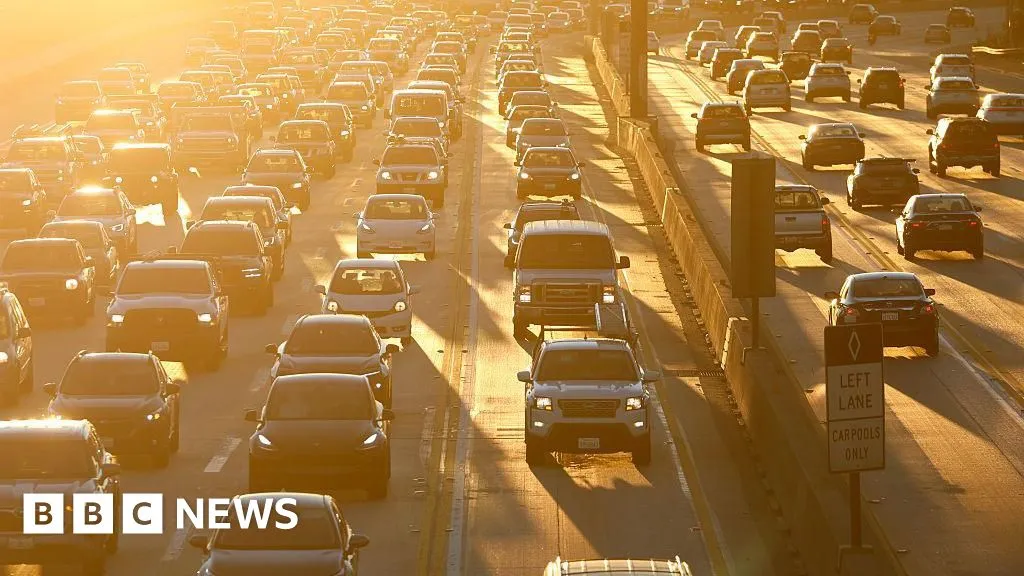
7 minutes agoMichael Sheils McNameeGetty ImagesThe change means looser greenhouse gas regulation for the US auto industry US President Donald Trump has announced the reversal of the so-called endangerment finding, a key Obama-era scientific ruling that underpins much of US environmental legislation.As a result of this, experts are predicting various environmental and economic impacts, though the decision by the US Environmental Protection Agency (EPA) is expected to be challenged in the courts from environmental groups. Here are some of the potential impacts. Fewer greenhouse gas emissions restrictionsThe most obvious outcome of the legislative change is that there will be fewer restrictions placed on greenhouse-gas-producing industries - in particular vehicle manufacturers. The 2009 endangerment finding was the result of a major report by the EPA, which identified six greenhouse gases, including carbon monoxide and methane, as endangering current and future generations. The EPA produced the report after a 2007 US Supreme Court decision that it was responsible for regulating greenhouse gases under the Clean Air Act - with the court ruling it was "without a doubt" that these gases counted as air pollutants.Greenhouse gases trap heat in the atmosphere, raising temperatures.The impact of the ruling until now has been notable. Greenhouse gas levels in the US peaked in the late 2000s and have been on a steady decline in the years since. With the endangerment finding gone, so is much of the legal basis limiting US industries in the amount of greenhouse gases they are allowed to emit. Non-profit group the Environmental Defense Fund estimates that there will be an additional 7.5-18 billion tonnes of greenhouse gases - three times the amount emitted in a year at present - emitted by 2055.The effect of this, the group contends, would come at a cost that could potentially run into the trillions of dollars. Cheaper cars in the US (but they'll be harder to export)While there has already been a backlash from environmental groups, the Trump administration says removing the endangerment finding will be economically beneficial - particularly when it comes to the cost of vehicles.Reversing the finding will reduce automobile manufacturers' costs by around $2,400 (£1,760) per car, the White House claimed.Since 2009, the endangerment finding has opened the door to government policies that have boosted fuel efficiency and the number of electric cars on the road. A key policy of Trump's predecessor Joe Biden was the Inflation Reduction Act, which incentivised electric vehicle ownership and renewable energy projects.Since returning to the White House, a number of these policies have already been scrapped by Trump. Thursday's change has been welcomed by some in the motor industry.Manufacturer Ford told CNBC it would help to address "the imbalance between current emissions standards and customer choice", while industry body the Alliance for Automotive Innovation said it would help to "correct some of the unachievable emissions regulations enacted under the previous administration".However, with climate targets still applicable in many international markets, there are doubts about how much car manufacturers will change production. "This rollback is sort of cementing things that have already been done, such as the relaxation of the fuel economy standards," said Michael Gerrard, a climate law expert from Columbia University."But it really does put the US automakers in a bind, because nobody else is going to want to buy American cars."John Kerry to BBC: Trump's climate change policy will 'cost lives'Nuisance lawsuitsAs a result of the endangerment finding, a 2011 US Supreme Court ruling placed the power for regulating greenhouse gas emissions with the EPA, taking it out of the hands of the court system.With the finding gone, legal experts are predicting this will now unravel, leading to a surge in what are called "public nuisance" actions.A public nuisance is anything that interferes with the rights of the public - but in environmental cases, it generally refers to something that would interfere with the health and safety of a community.Prior to the 2011 ruling, various court cases were brought by several US states against alleged corporate polluters seeking compensation for that pollution.So US companies could once again face such legal action."This may be another classic case where overreach by the Trump administration comes back to bite it," said Robert Percival, a University of Maryland environmental law professor.Getty ImagesLee Zeldin (right) said voters wanted the EPA to protect both the environment and the economyPublic healthAnnouncing the end of the endangerment findings, the EPA stated that maintaining greenhouse gas emissions standards was not a requirement to fulfil its "core mission of protecting human health and the environment".The Environmental Defense Fund estimates that, by 2055, the increase in emissions could lead to between 15,400 and 58,000 premature deaths. It also estimated that, over the same period, there could potentially be tens of millions more asthma attacks, and tens of thousands more hospital visits. Falling behind in the global renewables raceWhile the White House has pointed to the potential savings from removing greenhouse gas restrictions for the automotive industry, Thursday's announcement raises questions about how the US will continue to perform in the global race for renewable energy. The Biden administration had promoted policies that incentivised domestic renewable technology development, in the hope of the US remaining competitive."While the US retreats from clean vehicle standards, the rest of the world is accelerating, and American automakers are falling behind," said Margo T Oge, a former head of the EPA, who was in post when the endangerment finding was brought in.She pointed to a major uptick in the market share for electric vehicles produced by EU and Chinese companies in the past few years. "If the US abandons its standards, we aren't 'saving' the American auto industry; we are leaving it on an island of obsolete technology," Oge wrote in Forbes. This was a point also made by former US Secretary of State John Kerry. "China is now producing more wind, more solar than all of the rest of the world put together," he said. "That's what they're doing, they're deploying it. Do you think they've taken a stupid pill or something yesterday and decided to change their entire economy to meet this new standard?"No, their population wants clean air."Less industry regulationDespite the argument that the US could lose ground in terms of renewable energy innovation, the Trump administration points to the economic strain created by regulation. Announcing the change on Thursday, EPA administrator Lee Zeldin described it as "the single largest deregulatory action in US history" - and said the action was "saving American taxpayers over $1.3 trillion [£950bn]". Diana Furchtgott-Roth, who served in the US Department of Transportation during Trump's first term, told the BBC that regulations on emissions had created higher prices and resulted in manufacturing leaving the country."It's gone to China, where it's made in a dirtier way," she told the BBC."So to say that we're reducing global emissions by ending energy intensive manufacturing in some countries, then having it go to China and India, where it's made in a dirtier way, does not reduce global emissions."But Kerry, who also served as US special envoy for climate, said the decision to do away with the endangerment rule will invite enormous damage to people and property all around the world, as climate change is making extreme weather events more frequent and severe."It's very clear the administration is trading facts and trading science for denial and the wilful negligence that will cost lives and health and countless taxpayers dollars."
SRCBBC News - World
LANGEN
LEANCenter
WORDS1 232
ENT7
FRI · 2026-02-13 · 17:18 GMTBRIEF NSR-2026-0213-16046
NSR-2026-0213-16046News Report·EN·Environmental
Six possible effects of Trump's climate policy change
President Trump has announced the reversal of the Obama-era endangerment finding, a scientific ruling that underpins much of US environmental legislation. This change, expected to face legal challenges, will likely lead to fewer restrictions on greenhouse gas emissions, particularly for vehicle manufacturers.
BBC News - WorldFiled 2026-02-13 · 17:18 GMTLean · CenterRead · 5 min
BBC News - WorldFIG 01
Reading time
5min
Word count
1 232words
Sources cited
4cited
Entities identified
7entities
Quality score
100%
§ 01
Briefing Summary
AI-generatedNEWSAR · AI
President Trump has announced the reversal of the Obama-era endangerment finding, a scientific ruling that underpins much of US environmental legislation. This change, expected to face legal challenges, will likely lead to fewer restrictions on greenhouse gas emissions, particularly for vehicle manufacturers. Experts predict a potential increase of 7.5-18 billion tonnes of greenhouse gases by 2055, costing trillions of dollars. The Trump administration argues the reversal will reduce car manufacturing costs by around $2,400 per vehicle. The endangerment finding, established after a 2007 Supreme Court decision, had previously enabled policies boosting fuel efficiency and electric car production, contributing to a decline in US greenhouse gas levels since the late 2000s.
Confidence 0.90Sources 4Claims 5Entities 7
§ 02
Article analysis
Model · rule-basedFraming
Environmental
Economic Impact
Tone
Measured
AI-assessed
CalmNeutralAlarmist
Factuality
0.70 / 1.00
Factual
LowHigh
Sources cited
4
Well sourced
FewMany
§ 03
Key claims
5 extracted01
The 2009 endangerment finding identified six greenhouse gases as endangering current and future generations.
factualEPA
Confidence
1.00
02
Ford says the change will help address 'the imbalance between current emissions standards and customer choice'.
quoteFord
Confidence
1.00
03
Trump administration reverses the endangerment finding, a key Obama-era scientific ruling.
factualArticle
Confidence
1.00
04
The Environmental Defense Fund estimates an additional 7.5-18 billion tonnes of greenhouse gases by 2055.
statisticEnvironmental Defense Fund
Confidence
0.90
05
Reversing the finding will reduce automobile manufacturers' costs by around $2,400 per car.
statisticThe White House
Confidence
0.80
§ 04
Full report
5 min read · 1 232 words§ 05
Entities
7 identifiedKey playerOppositionContextPositiveNeutralNegative
Organizations3
§ 06
Keywords & salience
9 termsclimate policy
0.90
endangerment finding
0.85
greenhouse gas emissions
0.80
environmental regulation
0.70
us auto industry
0.60
clean air act
0.50
economic impacts
0.50
air pollutants
0.40
fuel efficiency
0.40
§ 07
Topic connections
Interactive graph Network visualization showing 51 related topics
View Full Graph Person Organization Location Event|Click node to navigate|Edge numbers = shared articles