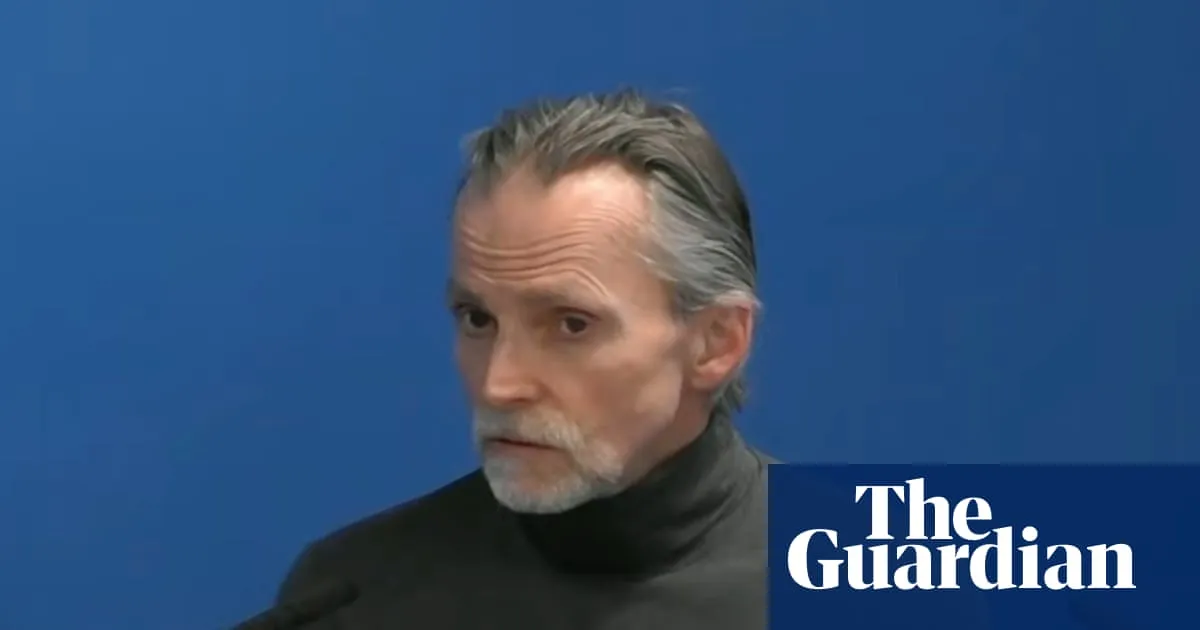
Senior police officers praised an undercover officer who had lied to a court about his real identity during a prosecution of environmental activists, secret documents aired at the spycops public inquiry have revealed.Jim Boyling, an undercover officer, gave evidence under his fake identity when he was prosecuted while masquerading as an activist. He was prosecuted alongside six campaigners for public order offences, but senior officers decided not to tell the court that he was actually a police spy.His superiors authorised him to maintain his false identity through the legal case, adding later that he certainly “should be praised for the way in which he dealt with each of the court appearances”.Two activists’ criminal convictions were overturned when the subterfuge later came to light.The Spycops Inquiry has heard that over decades, senior officers had a deliberate policy of not disclosing the true identities of undercover officers to courts when they were prosecuted.The inquiry, led by the retired judge Sir John Mitting, is continuing to examine how many activists have been wrongly convicted as a result.An internal police review concluded in 2009 that the undercover officers in the covert Scotland Yard unit the Special Demonstration Squad (SDS) “did, with their management’s knowledge, blessing and support, mislead the courts”.The review concluded that the deceitful tactic prejudiced the rights of activists to a fair trial, describing it as “grossly unprofessional … and completely ‘off piste’ from accepted practice”.The spycops scandal involves 139 undercover officers who spied on tens of thousands of predominantly leftwing campaigners in secret operations that began in 1968 and lasted until at least 2010.So far the inquiry has heard evidence that between 1970 and 1998, undercover officers concealed their real identities in at least 13 trials of activists who were supporting causes such as anti-fascism, anti-apartheid and animal rights. The trials mainly concerned public order offences.David Barr, the inquiry’s chief barrister, said: “The SDS appears to have put the security of its operation over and above its duty to the court and the rule of law.”Senior police officers believed that disclosing the real identities of undercover officers in court would inevitably cut short their deployments. It would also have led to public controversy that would have jeopardised the existence of the unit.They also believed that being prosecuted boosted the credibility of their spies among the activists they were infiltrating.This week, the inquiry heard evidence from Boyling, who infiltrated environmental and animal rights activists between 1995 and 2000.In 1996, he was arrested under his fake identity while taking part in an environmental demonstration at the Transport for London offices.The managers of the SDS told him to maintain his false persona throughout the legal proceedings.He gave evidence as his fake identity when he and the activists were prosecuted for public order offences over three days at a magistrates court in 1997. The magistrate was not told that he was an undercover officer.Barr asked him: “Was there any consideration of the impact of the court not knowing that you were, in fact, an undercover police officer?” Boyling replied: “No.”Boyling and the activists were acquitted. After the trial, DCI Keith Edmondson, the head of the SDS, wrote in a memo: “DC Boyling’s operation has been strengthened by this involvement in this case, not least for the way in which he has been seen to stand his ground against the ‘authorities’. Certainly he is to be praised for the way in which he dealt with each of the court appearances.”Barr said the memo suggested that Edmondson “had no qualms whatsoever about one of his undercover police officers giving evidence in a false identity in a trial with co-defendants. Is that fair?” Boyling replied: “Yes”.Edmondson previously said: “We did not consider that he would be misleading the court by appearing in a cover identity.”Supt Eric Docker, a more senior officer who oversaw the SDS, sent a memo up the chain of command, reporting a “most satisfactory conclusion” which “once again, highlights the professionalism and dedication of our SDS officers”.After Boyling was unmasked as an undercover officer in 2011, two activists who had been convicted of related offences in the protest had their convictions overturned.
SRCThe Guardian - World News
LANGEN
LEANCenter-Left
WORDS687
ENT6
SUN · 2026-02-15 · 07:00 GMTBRIEF NSR-2026-0215-16374
NSR-2026-0215-16374News Report·EN·Legal & Judicial
Senior police praised undercover officer who lied to court about identity, papers at spycops inquiry show
A public inquiry into undercover policing in the UK has revealed that senior police officers praised an undercover officer, Jim Boyling, for lying to a court about his identity during the prosecution of environmental activists. Boyling was prosecuted alongside activists while posing as one of them, and his superiors authorized him to maintain his false identity throughout the legal case.
Rob EvansThe Guardian - World NewsFiled 2026-02-15 · 07:00 GMTLean · Center-LeftRead · 3 min
The Guardian - World NewsFIG 01
Reading time
3min
Word count
687words
Sources cited
3cited
Entities identified
6entities
Quality score
100%
§ 01
Briefing Summary
AI-generatedNEWSAR · AI
A public inquiry into undercover policing in the UK has revealed that senior police officers praised an undercover officer, Jim Boyling, for lying to a court about his identity during the prosecution of environmental activists. Boyling was prosecuted alongside activists while posing as one of them, and his superiors authorized him to maintain his false identity throughout the legal case. The inquiry is examining how many activists were wrongly convicted due to this practice, which an internal review deemed "grossly unprofessional." The Special Demonstration Squad (SDS) unit, involved in the scandal, operated from 1968 to at least 2010, with officers concealing their identities in at least 13 trials between 1970 and 1998. Police leaders prioritized the security of undercover operations over their duty to the court and the rule of law.
Confidence 0.90Sources 3Claims 5Entities 6
§ 02
Article analysis
Model · rule-basedFraming
Legal & Judicial
Political Strategy
Tone
Measured
AI-assessed
CalmNeutralAlarmist
Factuality
0.80 / 1.00
Factual
LowHigh
Sources cited
3
Well sourced
FewMany
§ 03
Key claims
5 extracted01
Between 1970 and 1998, undercover officers concealed their real identities in at least 13 trials of activists.
factualArticle's own claim based on inquiry findings
Confidence
1.00
02
The SDS appears to have put the security of its operation over and above its duty to the court and the rule of law.
quoteDavid Barr, the inquiry’s chief barrister
Confidence
1.00
03
An internal police review concluded in 2009 that SDS officers misled the courts with management's knowledge.
factualInternal police review
Confidence
1.00
04
Two activists’ criminal convictions were overturned when the subterfuge later came to light.
factualArticle's own claim
Confidence
1.00
05
Senior police officers praised an undercover officer who lied to a court about his real identity.
factualArticle's own claim based on inquiry findings
Confidence
1.00
§ 04
Full report
3 min read · 687 words§ 05
Entities
6 identifiedKey playerOppositionContextPositiveNeutralNegative
Organizations2
Locations1
§ 06
Keywords & salience
9 termsundercover officer
1.00
spycops inquiry
0.90
false identity
0.80
police misconduct
0.70
activists
0.70
court
0.60
public order offences
0.50
special demonstration squad
0.50
fair trial
0.40
§ 07
Topic connections
Interactive graph No topic relationship data available yet. This graph will appear once topic relationships have been computed.