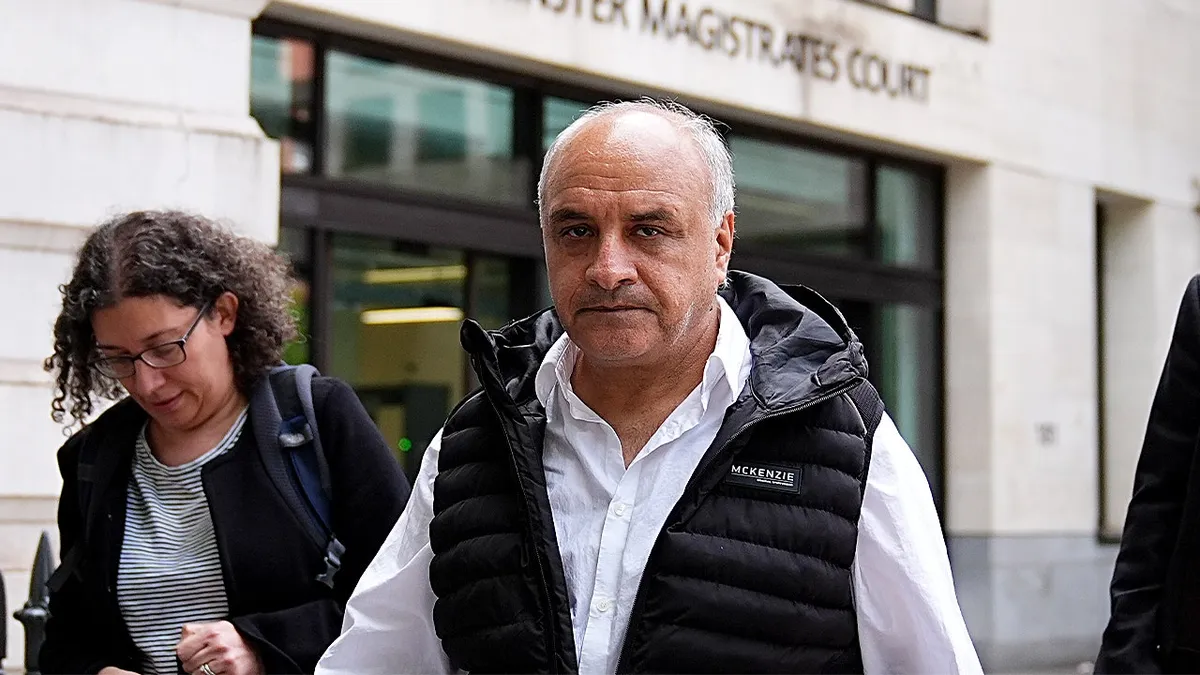
The Trump administration is weighing involvement in the case of a protester who was fined for burning a Quran outside the Turkish Consulate in London, as U.K. prosecutors look to reinstate his overturned conviction, according to reports. Officials are said to be discussing granting 51-year-old Hamit Coskun refugee status if the Crown Prosecution Service (CPS) wins its appeal, with a senior U.S. administration official telling The Telegraph the case is one of several "the administration has made note of." Coskun, of Armenian-Kurdish descent, had initially sought asylum in the U.K. from Turkey, where he says Islamic extremists "destroyed" his family’s life and where he was jailed for protesting Islamist governance. DAN GAINOR: ENGLAND DOESN’T HAVE FREE SPEECH AND WANTS TO TAKE OURS AWAY, TOO On Feb. 13, 2025, he traveled to the Turkish Consulate in London and set fire to a copy of the Quran while shouting slogans including "Islam is [the] religion of terrorism" and "f--- Islam." There he was attacked by Moussa Kadri, a passerby who chased him with a knife, kicked him and spat on him. Kadri later received a suspended prison sentence after being convicted of assault and having a bladed article in a public place. Initially charged with harassing the " religious institution of Islam ," Coskun’s case drew intervention from the National Secular Society and the Free Speech Union, who argued prosecutors were effectively reviving blasphemy laws already abolished in 2008. MARCO RUBIO VOICES CONCERN THAT AMERICANS MAY SOMEDAY BE ARRESTED FOR SOCIAL MEDIA POSTS WHEN VISITING EUROPE Coskun was convicted of a religiously aggravated public order offense and fined in June 2025. That October, Coskun’s conviction was overturned when a judge ruled that while burning a Quran was "desperately upsetting and offensive" to many Muslims, the right to free expression "must include the right to express views that offend, shock or disturb." The CPS is now seeking to reverse that decision at London's High Court, with Coskun telling The Telegraph that if the appeal goes against him, he may be forced "to flee" the country. IRISH COMEDIAN SAYS UK PM STARMER HIDES FROM CULTURE WARS AS 'ORDINARY PEOPLE' FIGHT DAILY BATTLES "For me, as the victim of Islamic terrorism, I cannot remain silent. I may be forced to flee the UK and move to the USA, where President Trump has stood for free speech and against Islamic extremism," he told the outlet. "If I have to do so, then, to me, the UK will have effectively fallen to Islamism and the speech codes that it wishes to impose on the non-Muslim world," he added. President Donald Trump and the U.S. administration have already criticized the U.K. and European governments over increased restrictions on expression. In 2025, Trump slammed the U.K.'s laws around online speech, saying "strange things are happening" there and that it was "not a good thing." At the Munich Security Conference in 2025, Vice President JD Vance also said, "In Britain and across Europe, free speech , I fear, is in retreat." Fox News Digital has reached out to the Department of State for comment.
SRCFox News - World
LANGEN
LEANCenter-Right
WORDS514
ENT7
MON · 2026-02-16 · 01:00 GMTBRIEF NSR-2026-0216-16545
NSR-2026-0216-16545News Report·EN·Legal & Judicial
Man who burned Quran in London may get US asylum as case draws Trump administration attention
The Trump administration is considering granting asylum to Hamit Coskun, a man of Armenian-Kurdish descent, who burned a Quran outside the Turkish Consulate in London in February 2025. Coskun, who previously sought asylum in the UK from Turkey, was initially convicted of a religiously aggravated public order offense, but the conviction was later overturned.
Emma BusseyFox News - WorldFiled 2026-02-16 · 01:00 GMTLean · Center-RightRead · 3 min
Fox News - WorldFIG 01
Reading time
3min
Word count
514words
Sources cited
3cited
Entities identified
7entities
Quality score
100%
§ 01
Briefing Summary
AI-generatedNEWSAR · AI
The Trump administration is considering granting asylum to Hamit Coskun, a man of Armenian-Kurdish descent, who burned a Quran outside the Turkish Consulate in London in February 2025. Coskun, who previously sought asylum in the UK from Turkey, was initially convicted of a religiously aggravated public order offense, but the conviction was later overturned. Now, the Crown Prosecution Service is appealing that decision, potentially forcing Coskun to leave the UK. Coskun argues his actions were a form of protest against Islamic extremism, citing his past experiences in Turkey. The US administration's potential involvement highlights concerns about free speech and religious expression, particularly in the context of Islamic extremism.
Confidence 0.90Sources 3Claims 5Entities 7
§ 02
Article analysis
Model · rule-basedFraming
Legal & Judicial
Human Rights
Tone
Mixed Tone
AI-assessed
CalmNeutralAlarmist
Factuality
0.70 / 1.00
Factual
LowHigh
Sources cited
3
Well sourced
FewMany
§ 03
Key claims
5 extracted01
The Crown Prosecution Service is seeking to reverse the overturned conviction.
factualArticle
Confidence
1.00
02
Coskun's conviction was overturned by a judge.
factualArticle
Confidence
1.00
03
Coskun was fined for burning a Quran outside the Turkish Consulate in London.
factualArticle
Confidence
1.00
04
Coskun says he may be forced to flee the UK and move to the USA if the appeal goes against him.
quoteCoskun
Confidence
0.90
05
The Trump administration is weighing involvement in the case of Hamit Coskun.
factualArticle
Confidence
0.90
§ 04
Full report
3 min read · 514 words§ 05
Entities
7 identifiedKey playerOppositionContextPositiveNeutralNegative
Organizations2
§ 06
Keywords & salience
9 termsquran burning
0.90
political asylum
0.80
free speech
0.80
religious offense
0.70
trump administration
0.70
islamic extremism
0.60
refugee status
0.50
crown prosecution service
0.50
united kingdom
0.50
§ 07
Topic connections
Interactive graph Network visualization showing 51 related topics
View Full Graph Person Organization Location Event|Click node to navigate|Edge numbers = shared articles