A new UN report says migrants, refugees, and asylum seekers in Libya are being forcibly rounded up and abused.Published On 17 Feb 2026The United Nations has warned that migrants in Libya, including young girls, face the risk of being killed, tortured, raped, or forced into domestic slavery.According to a UN Human Rights Office report released on Tuesday, migrants, asylum seekers, and refugees are being forcibly abducted and jailed for long periods until they’re sold or kidnappers receive ransom from relatives.Recommended Stories list of 4 itemslist 1 of 4Why did Saif al-Islam Gaddafi have to die?list 2 of 4At least seven dead, dozens missing as migrant boat capsizes off The Gambialist 3 of 4France bans 10 far-right UK activists for targeting migrant boatslist 4 of 4Two babies among 53 people dead or missing after boat capsizes off Libyaend of list“They endure prolonged detention and are coerced through torture and inhumane treatment into paying for their release,” said the report titled “Business as Usual”.The report is based on interviews with almost 100 migrants between January 2024 and November 2025, with interviewees both inside and outside Libya.“These violations are executed through a business model – one that turns human mobility into a supply chain and human suffering into profit,” the report said.“Detention has become a revenue stream within an exploitative, profit-driven system. Survival depends on payment. Those without money are passed along, sold, or erased.”‘Journey of hell’Libya has become a transit route for migrants from South Asia, the Middle East and Africa who are fleeing conflict and poverty and journeying across the Mediterranean to Europe since the 2011 fall of dictator Muammar Gaddafi to a NATO-backed uprising. Factional conflict has split the country into rival western and eastern administrations since 2014.In recent years, the European Union has supported and trained the Libyan Coast Guard, which returns migrants stopped at sea to detention centres, and funded Libyan border management programmes.
SRCAl Jazeera
LANGEN
LEANCenter
WORDS316
ENT8
TUE · 2026-02-17 · 20:36 GMTBRIEF NSR-2026-0217-17041
NSR-2026-0217-17041News Report·EN·Human Rights
‘Journey of hell’: Migrants in Libya endure torture, rape, forced labour
A UN report released in February 2026 details widespread abuse of migrants, refugees, and asylum seekers in Libya between January 2024 and November 2025. The report, based on interviews with nearly 100 migrants, reveals that individuals are forcibly abducted, detained, and subjected to torture, rape, forced labor, and extortion.
Al JazeeraFiled 2026-02-17 · 20:36 GMTLean · CenterRead · 2 min
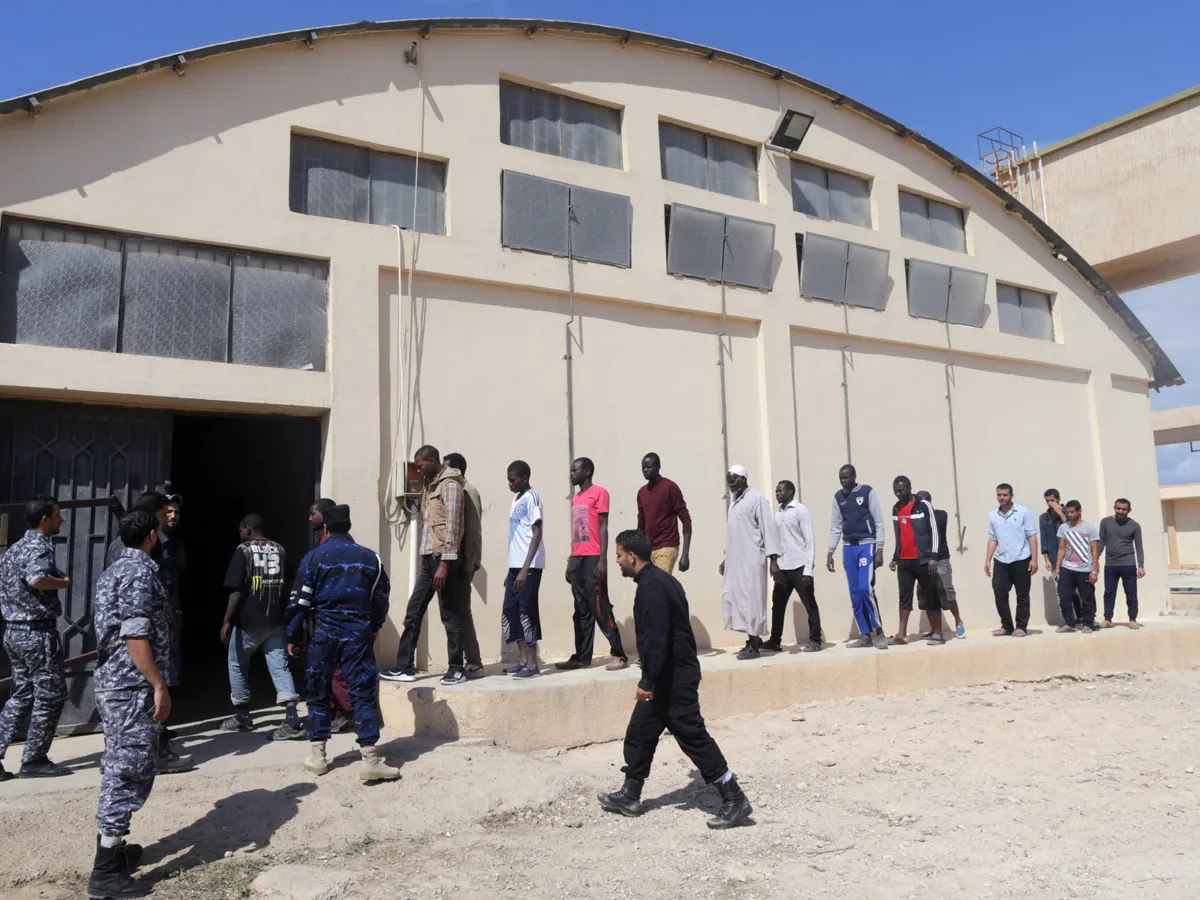
Al JazeeraFIG 01
Reading time
2min
Word count
316words
Sources cited
1cited
Entities identified
8entities
Quality score
100%
§ 01
Briefing Summary
AI-generatedNEWSAR · AI
A UN report released in February 2026 details widespread abuse of migrants, refugees, and asylum seekers in Libya between January 2024 and November 2025. The report, based on interviews with nearly 100 migrants, reveals that individuals are forcibly abducted, detained, and subjected to torture, rape, forced labor, and extortion. These abuses are part of a profit-driven system where migrants are exploited for ransom or sold. Libya has become a major transit route for migrants from South Asia, the Middle East, and Africa seeking to reach Europe. The EU has supported the Libyan Coast Guard, which returns migrants intercepted at sea to detention centers, further contributing to the cycle of abuse.
Confidence 0.90Sources 1Claims 5Entities 8
§ 02
Article analysis
Model · rule-basedFraming
Human Rights
Political Strategy
Tone
Mixed Tone
AI-assessed
CalmNeutralAlarmist
Factuality
0.80 / 1.00
Factual
LowHigh
Sources cited
1
Limited
FewMany
§ 03
Key claims
5 extracted01
The EU has supported and trained the Libyan Coast Guard and funded Libyan border management programmes.
factual
Confidence
1.00
02
Libya has become a transit route for migrants fleeing conflict and poverty.
factual
Confidence
0.90
03
Migrants are being forcibly abducted and jailed for long periods until ransom is paid.
factualUN Human Rights Office report
Confidence
0.90
04
Migrants in Libya face the risk of being killed, tortured, raped, or forced into domestic slavery.
factualUnited Nations
Confidence
0.90
05
Detention has become a revenue stream within an exploitative, profit-driven system.
quoteUN Human Rights Office report
Confidence
0.80
§ 04
Full report
2 min read · 316 words§ 05
Entities
8 identifiedKey playerOppositionContextPositiveNeutralNegative
Organizations4
§ 06
Keywords & salience
10 termsmigrants
1.00
libya
0.90
human rights abuses
0.80
rape
0.70
torture
0.70
forced labour
0.70
detention centers
0.60
human trafficking
0.60
refugees
0.50
asylum seekers
0.50
§ 07
Topic connections
Interactive graph Network visualization showing 51 related topics
View Full Graph Person Organization Location Event|Click node to navigate|Edge numbers = shared articles