Major auto brands including Mazda, Nissan and Subaru face the possibility of millions of dollars in penalties after failing to meet climate targets for new vehicles in Australia.The first six months of data since the Albanese government introduced a new vehicle efficiency standard shows 40 companies – 68% of the total – beat their initial target for the average emissions efficiency of the new cars they sold.Many of these – including BYD, Toyota, Tesla, Kia, Ford, Volkswagen, BMW and Polestar – were found to have sold cars that, on average across their company fleet, released less carbon dioxide per kilometre than required.But 19 companies missed their targets and could have to buy credits or pay penalties if they do not substantially improve their performance over the next two-and-a-half years. Mazda has accrued a potential liability of about $25m, Nissan of more than $10m and Subaru $7m. Liabilities can accumulate or reduce, and become due in 2029.Other companies to have missed their initial target include Hyundai, General Motors, Honda, Porsche, Ferrari and Jaguar.The federal transport minister, Catherine King, said average pollution for new light passenger vehicles across the industry outperformed the target by 21%. “These results make it clear the [standard] supports both lower emissions and consumer affordability,” she said.Electric vehicles were 12% of new sales in the second half of last year – an increase, but significantly short of what will be needed for the scheme to play its forecast role in meeting national climate targets. The remaining 88% were petrol and hybrid vehicles.Globally, about 25% of new cars sold last year were electric. Australia has consistently trailed other developed, and many developing, countries in EV uptake. China is by far the world’s biggest EV market. Our World in Data last year reported China was home to more than 60% of global EV sales.The Australia vehicle efficiency standard requires carmakers to supply new vehicles that meet an average per-kilometre emissions target. The target will be reduced over time to encourage cleaner cars. No cars are banned. More polluting models can still be sold and offset by EVs or low emissions vehicles.Companies that beat their target are awarded units, or credits, that can be sold to those that miss their target and need to offset the extra pollution from their vehicles.In the first six months, companies earned 17.2m credits for beating their targets. Those that missed their target faced a combined potential liability of 1.3m tonnes. It leaves a net surplus of 15.9 credits that can be used to meet targets in future years.The Electric Vehicle Council said the results showed the standard was a success.The council’s chief executive Julie Delvecchio said when the [standard] was legislated critics had warned of “supply shortages, soaring prices and market disruption”. She said the reality was emissions were coming down, the choice of new cars was expanding and EV sales were growing.“Instead, the first performance report shows strong industry performance, healthy competition and a clear acceleration in cleaner vehicles coming to Australia,” she said. “The data confirms what we said all along: clear, predictable standards drive innovation and investment. They don’t break markets, they modernise them.”Delvecchio said the results showed an upcoming review should lead to targets being strengthened. If they were not, there was a risk the momentum in introducing clean cars could be slowed as companies collected excess credits for beating targets that were not exacting enough, she said.The National Automotive Leasing and Salary Packaging Association said the results were encouraging but showed Australia was likely to fall short on EV uptake and climate targets if a contentious fringe benefits tax exemption on clean cars was removed.
SRCThe Guardian - World News
LANGEN
LEANCenter-Left
WORDS605
ENT12
WED · 2026-02-18 · 09:06 GMTBRIEF NSR-2026-0218-17184
NSR-2026-0218-17184News Report·EN·Environmental
Carmakers face possible heavy fines in Australia for failing to meet climate targets
Under Australia's new vehicle efficiency standard, some major car manufacturers face potential fines for failing to meet emissions targets for new vehicles. Data from the first six months of the standard shows that while 68% of companies, including Toyota and Tesla, exceeded their targets, 19 companies, such as Mazda, Nissan, and Subaru, did not.
Adam MortonThe Guardian - World NewsFiled 2026-02-18 · 09:06 GMTLean · Center-LeftRead · 3 min
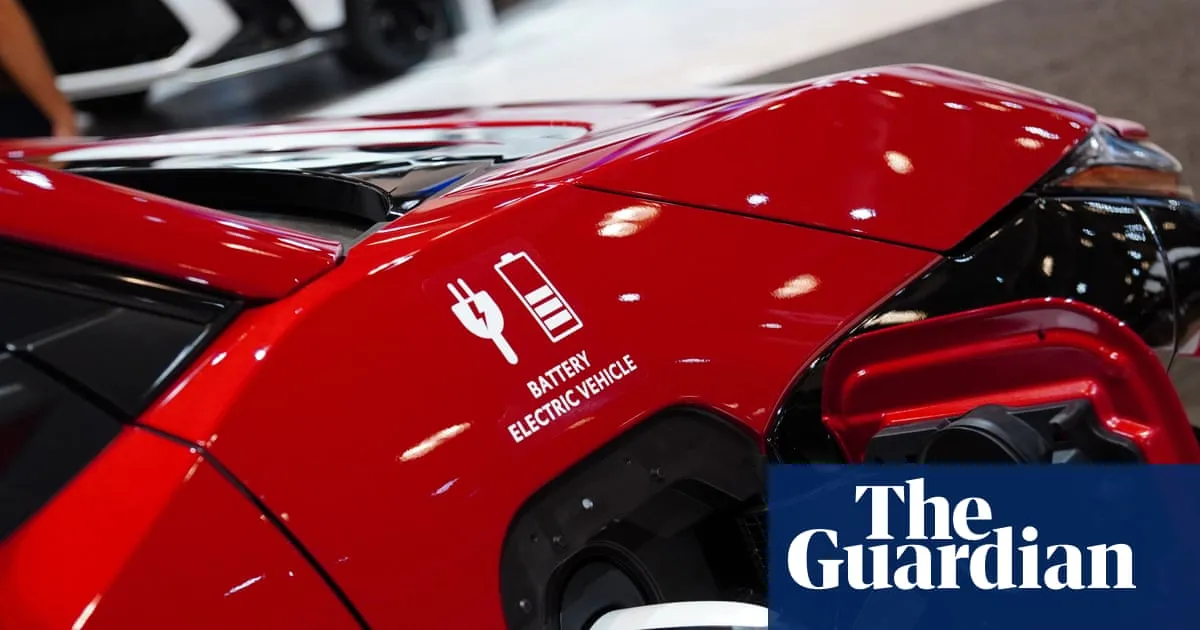
The Guardian - World NewsFIG 01
Reading time
3min
Word count
605words
Sources cited
3cited
Entities identified
12entities
Quality score
100%
§ 01
Briefing Summary
AI-generatedNEWSAR · AI
Under Australia's new vehicle efficiency standard, some major car manufacturers face potential fines for failing to meet emissions targets for new vehicles. Data from the first six months of the standard shows that while 68% of companies, including Toyota and Tesla, exceeded their targets, 19 companies, such as Mazda, Nissan, and Subaru, did not. These companies could face penalties if they don't improve their performance by 2029. The standard aims to reduce average per-kilometer emissions by awarding credits to companies exceeding targets, which can be sold to those who fall short. While electric vehicle sales are increasing, they still lag behind global averages, with petrol and hybrid vehicles dominating the Australian market.
Confidence 0.90Sources 3Claims 5Entities 12
§ 02
Article analysis
Model · rule-basedFraming
Environmental
Economic Impact
Tone
Measured
AI-assessed
CalmNeutralAlarmist
Factuality
0.80 / 1.00
Factual
LowHigh
Sources cited
3
Well sourced
FewMany
§ 03
Key claims
5 extracted01
Mazda has accrued a potential liability of about $25m, Nissan of more than $10m and Subaru $7m.
factual
Confidence
1.00
02
Average pollution for new light passenger vehicles across the industry outperformed the target by 21%.
quoteCatherine King, federal transport minister
Confidence
1.00
03
Electric vehicles were 12% of new sales in the second half of last year.
statistic
Confidence
1.00
04
40 companies (68%) beat their initial target for average emissions efficiency of new cars sold.
statistic
Confidence
1.00
05
Mazda, Nissan and Subaru face potential penalties for failing to meet climate targets for new vehicles in Australia.
factual
Confidence
1.00
§ 04
Full report
3 min read · 605 words§ 05
Entities
12 identifiedKey playerOppositionContextPositiveNeutralNegative
People1
Organizations10
Locations1
§ 06
Keywords & salience
9 termsvehicle efficiency standard
0.90
climate targets
0.80
car emissions
0.70
electric vehicles
0.70
carbon dioxide emissions
0.60
fines
0.60
credits
0.50
australia
0.50
automakers
0.40
§ 07
Topic connections
Interactive graph Network visualization showing 51 related topics
View Full Graph Person Organization Location Event|Click node to navigate|Edge numbers = shared articles