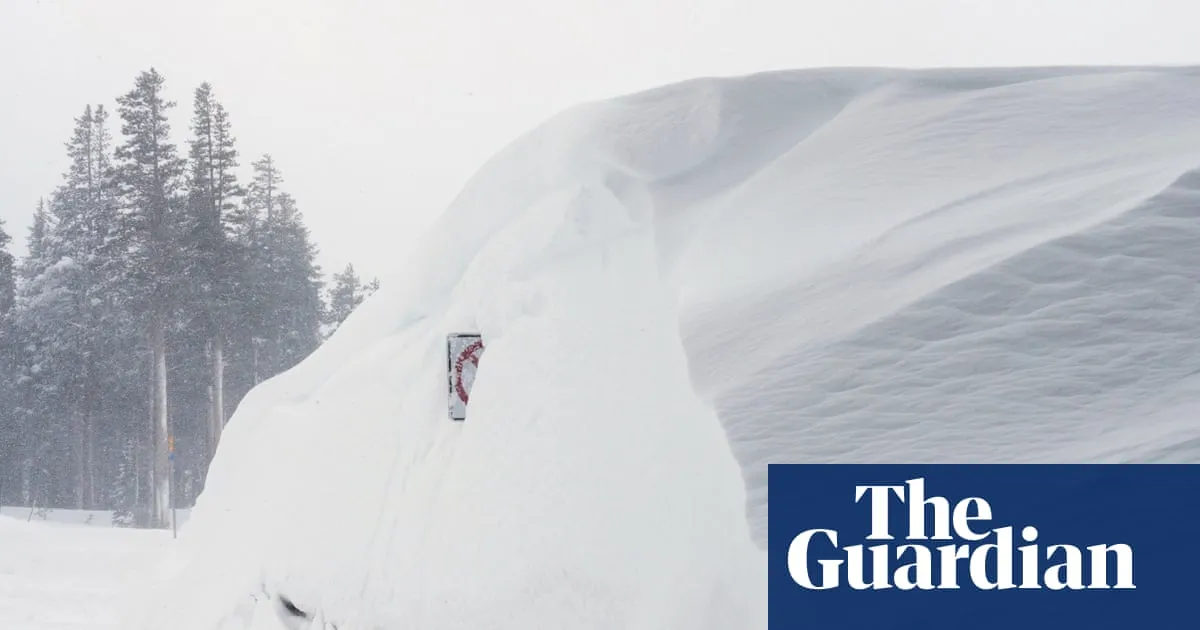
The many weeks of a worrying snow drought in the western US is driven by the climate crisis and helped set the stage for the deadly avalanche this week in the Sierra Nevada mountains of northern California, according to experts.Perilous avalanches are not uncommon in the region, according to the National Avalanche Center, which maintains a map of locations where avalanche danger is highest, and the risk is now particularly high in the Lake Tahoe area.The death toll of eight backcountry skiers so far in Tuesday’s avalanche makes it among the deadliest in US history. One skier is still unaccounted for while six others were rescued after being stranded for some time. The avalanche now ranks as the deadliest single such event in the US in 45 years.The avalanche risk had become severe after several feet of new snow fell since Sunday, when the ski group started its trip, settling on top of an earlier layer that had hardened, making it unstable and easily triggered.The new snow did not have time to bond to the earlier layer before the avalanche came down, according to Craig Clements, a meteorology professor at San Jose State University in northern California.When weather is dry and clear, as it had been in the Sierra Nevada since January, snow crystals change and can become angular or round over time, Clements said. Heavy new snow is different and doesn’t bond to the snowpack, forming something known as a “storm slab” over the weaker layer of snow.“Because it’s on a mountain, it will slide” when it’s triggered by any change in the tension above or below, sometimes naturally, but also because of people traversing through the area, Clements said.Authorities have not said what triggered Tuesday’s avalanche.If there had been more consistent snowfall throughout the winter, different layers could have bonded more easily, Clements said. But even when a snow slab forms, the danger often only lasts a couple of days until the new snow stabilizes, he said.The climate crisis can lead to weather extremes that include both drought and heavier precipitation. Clements said he did not believe this individual avalanche can be directly linked to the climate crisis, and it was “a meteorological phenomenon, not a climate phenomenon”.However, the record-low snowpack out west this season is mostly due to how warm the region has been, which is connected to the climate crisis from the burning of coal, oil and natural gas, several scientists said.Since 1 December, there have been more than 8,500 daily high temperature records broken or tied in the US west, according to National Oceanic and Atmospheric Administration (Noaa) data.Much of the precipitation that would normally fall as snow and stay in the mountains for months is instead falling as rain, which runs off more quickly, Daniel Swain, a climate scientist at the University of California’s Water Resources Institute, said.It’s a problem scientists have warned about with the climate crisis.“It was so warm, especially in December, that the snow was only falling at the highest parts of the mountains. And then we moved into January and it got really dry almost everywhere for the last three to four weeks and stayed warm,” Daniel McEvoy, a researcher with the Western Regional Climate Center, said.The Associated Press contributed reporting
SRCThe Guardian - World News
LANGEN
LEANCenter-Left
WORDS541
ENT7
THU · 2026-02-19 · 14:30 GMTBRIEF NSR-2026-0219-17569
NSR-2026-0219-17569News Report·EN·Environmental
Climate-driven snow drought set stage for deadly California avalanche, experts say
A deadly avalanche in the Sierra Nevada mountains of northern California, which killed eight backcountry skiers on Tuesday, is among the deadliest in US history. Experts say a climate-driven snow drought in the western US contributed to the conditions that caused the avalanche.
Guardian staff and agencyThe Guardian - World NewsFiled 2026-02-19 · 14:30 GMTLean · Center-LeftRead · 3 min
The Guardian - World NewsFIG 01
Reading time
3min
Word count
541words
Sources cited
3cited
Entities identified
7entities
Quality score
100%
§ 01
Briefing Summary
AI-generatedNEWSAR · AI
A deadly avalanche in the Sierra Nevada mountains of northern California, which killed eight backcountry skiers on Tuesday, is among the deadliest in US history. Experts say a climate-driven snow drought in the western US contributed to the conditions that caused the avalanche. Weeks of dry weather created a hardened snow layer, upon which several feet of new snow fell since Sunday. This new snow did not bond to the earlier layer, creating an unstable "storm slab." While authorities haven't determined the trigger, experts note that consistent snowfall throughout the winter could have allowed layers to bond more easily. Although one expert stated this specific avalanche was a meteorological phenomenon, scientists agree the record-low snowpack is linked to the climate crisis.
Confidence 0.90Sources 3Claims 5Entities 7
§ 02
Article analysis
Model · rule-basedFraming
Environmental
Human Interest
Tone
Mixed Tone
AI-assessed
CalmNeutralAlarmist
Factuality
0.70 / 1.00
Factual
LowHigh
Sources cited
3
Well sourced
FewMany
§ 03
Key claims
5 extracted01
This individual avalanche can't be directly linked to the climate crisis; it was a meteorological phenomenon.
quoteCraig Clements, a meteorology professor
Confidence
1.00
02
The avalanche now ranks as the deadliest single such event in the US in 45 years.
factual
Confidence
1.00
03
The death toll of eight backcountry skiers makes it among the deadliest avalanches in US history.
factual
Confidence
1.00
04
The record-low snowpack out west this season is mostly due to how warm the region has been.
factualseveral scientists
Confidence
0.90
05
Climate-driven snow drought helped set the stage for the deadly avalanche in the Sierra Nevada.
factualexperts
Confidence
0.80
§ 04
Full report
3 min read · 541 words§ 05
Entities
7 identifiedKey playerOppositionContextPositiveNeutralNegative
Organizations2
§ 06
Keywords & salience
8 termsavalanche
1.00
snow drought
0.90
climate crisis
0.80
sierra nevada
0.70
snowpack
0.60
storm slab
0.50
meteorological phenomenon
0.50
lake tahoe
0.40
§ 07
Topic connections
Interactive graph Network visualization showing 8 related topics
View Full Graph Person Organization Location Event|Click node to navigate|Edge numbers = shared articles