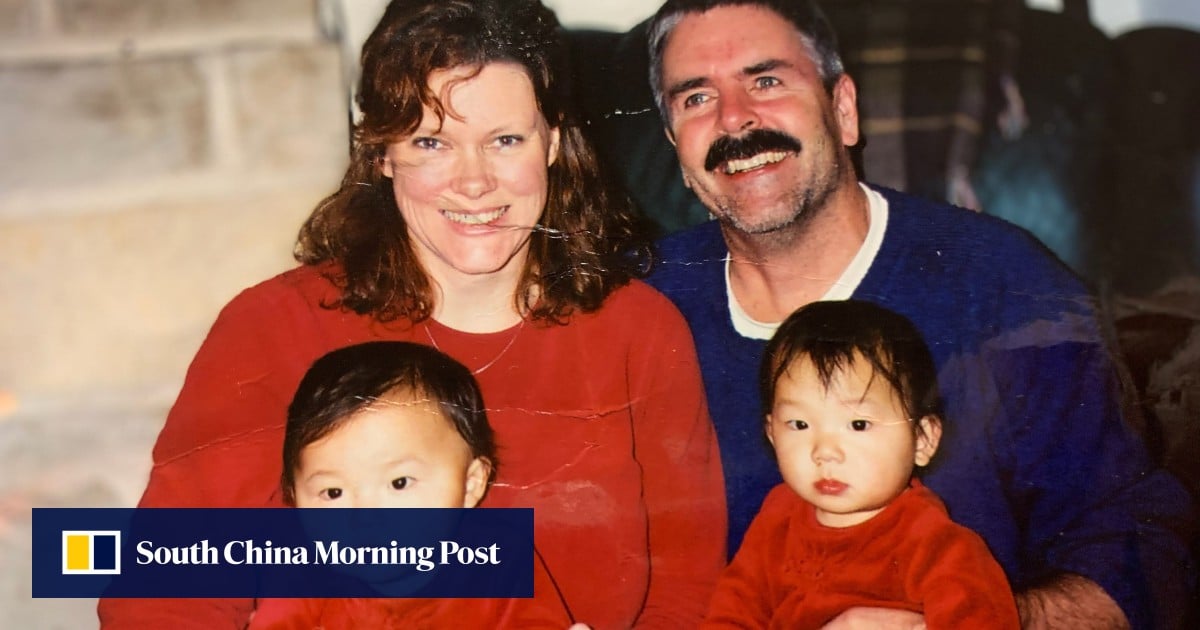
Lunar New Year wasn’t always on LuLu Grant’s radar. Adopted at two from Fuzhou, China and raised in the US state of Washington, Grant decided to cut her birth country out of her life at a young age. Decades later, she would celebrate Spring Festival alongside her birth family with a complex array of feelings about her two worlds.“People think that finding your birth family is so joyous, and part of it is, but it’s also very sad and very difficult,” she said, adding that “it’s not how I wish it were, and sadly, it’s never going to be that. That’s impossible.”Growing up in Illinois, Phoebe McChesney’s parents tried to incorporate Chinese culture into their lives after adopting her and her twin sister from Hunan, China.Her family would often celebrate Lunar New Year, with her father cooking well-meaning but sometimes questionable Cantonese food. It was his effort to connect with Chinese culture, she said, despite her heritage being Hunanese, a region with very different cuisine.The Lunar New Year is a time for Chinese people to come together to celebrate family. Yet for some adoptees like Grant and McChesney, it can bring up complicated feelings about their heritage and birth families. These children, now adults, are examining their identities through the lens of their past, as they search for answers about both what it means to be Chinese and what it means to be American.China’s international adoption programme began in 1992, during the country’s one-child policy era, which began in 1980 to curb population growth. China today has one of the lowest birth rates in the world. Its shrinking population led to the end of the one-child policy in 2015. These factors are assumed to be why China ended its adoption programme in 2024.According to non-profit organisation China’s Children International, many families resorted to giving up their children due to the “societal importance of males within China’s traditional familial structure and compounded by the economic pressures faced by many families in rural areas”.
SRCSouth China Morning Post
LANGEN
LEANCenter-Right
WORDS332
ENT5
THU · 2026-02-19 · 14:03 GMTBRIEF NSR-2026-0219-17588
NSR-2026-0219-17588News Report·EN·Human Interest
Born in China, raised in US: adoptees explore the meaning of identity at Lunar New Year
The article explores the complex feelings of Chinese adoptees raised in the US during Lunar New Year. For many, the holiday evokes mixed emotions about their heritage, birth families, and identity.
Lucy QuagginSouth China Morning PostFiled 2026-02-19 · 14:03 GMTLean · Center-RightRead · 2 min
South China Morning PostFIG 01
Reading time
2min
Word count
332words
Sources cited
2cited
Entities identified
5entities
Quality score
100%
§ 01
Briefing Summary
AI-generatedNEWSAR · AI
The article explores the complex feelings of Chinese adoptees raised in the US during Lunar New Year. For many, the holiday evokes mixed emotions about their heritage, birth families, and identity. Adopted children, now adults, are examining what it means to be both Chinese and American, often navigating feelings of joy, sadness, and difficulty. China's international adoption program, which began in 1992 due to the one-child policy and societal preference for males, ended in 2024 because of the country's shrinking population. Organizations like China's Children International cite the one-child policy and traditional familial structures as reasons for families giving up their children.
Confidence 0.90Sources 2Claims 5Entities 5
§ 02
Article analysis
Model · rule-basedFraming
Human Interest
Social Justice
Tone
Measured
AI-assessed
CalmNeutralAlarmist
Factuality
0.70 / 1.00
Factual
LowHigh
Sources cited
2
Limited
FewMany
§ 03
Key claims
5 extracted01
"People think that finding your birth family is so joyous, and part of it is, but it’s also very sad and very difficult."
quoteLuLu Grant
Confidence
1.00
02
China ended its adoption programme in 2024.
factualArticle's own claim
Confidence
1.00
03
China's international adoption programme began in 1992 during the one-child policy era.
factualArticle's own claim
Confidence
1.00
04
Lunar New Year can bring up complicated feelings about their heritage and birth families for some adoptees.
factualArticle's own claim
Confidence
0.90
05
Many families resorted to giving up their children due to the societal importance of males.
factualChina’s Children International
Confidence
0.80
§ 04
Full report
2 min read · 332 words§ 05
Entities
5 identified§ 06
Keywords & salience
10 termsinternational adoption
0.90
chinese adoptees
0.80
lunar new year
0.80
birth family
0.70
identity
0.70
chinese culture
0.60
one-child policy
0.60
china
0.50
heritage
0.50
cultural identity
0.40
§ 07
Topic connections
Interactive graph Network visualization showing 51 related topics
View Full Graph Person Organization Location Event|Click node to navigate|Edge numbers = shared articles