Through a new land registration drive, Israel is trying to secure through paperwork what warfare alone has failed to deliver.An Israeli flag flies over an Israeli settlement in the old city in Hebron in the Israeli-occupied West Bank, February 9, 2026. [Mussa Qawasma/Reuters]Palestinian American writer based in Ramallah.Published On 19 Feb 2026Israel always had a plan to annex more land in the occupied West Bank, and its actions prove it.This week, the Israeli cabinet approved a plan to claim Palestinian lands in the West Bank as “state land”. The proposal, pushed by far-right Israeli leaders, including Finance Minister Bezalel Smotrich, Justice Minister Yariv Levin and Defence Minister Israel-katz" class="entity-link entity-person" data-entity-id="4249" data-entity-type="person">Israel Katz, emphasises Israeli supremacy over Palestinians.The Israeli government has created 35 new positions and allocated 244.1 million shekels (nearly $79m) for the land registration project from 2026 to 2030.The process outlined in the proposal is not new in itself. It is a process that has been frozen since 1967, and the most recent resumption is a continuation of Israel’s longstanding plan to take over Palestinian lands. While Israel suspended the land registration process in 1967, it did not suspend its practices of ethnic cleansing, colonial violence and de facto land annexation.For Palestinians, this decision does not mark a new escalation but a solidification of the Israeli presence in the West Bank. While it may seem like mere paperwork, it is actually a milestone in Israel’s gradual takeover of the West Bank, the last remaining territorial obstacle to the completion of Israel’s colonial project in Palestine.Bureaucracy as annexationThis shift cannot be understood without revisiting the Oslo Accords. Under the 1993 and 1995 agreements, the West Bank was carved into Areas A, B and C as an “interim” arrangement that was never meant to become permanent. Area C, the largest area containing the most land and resources, remained under full Israeli control while Areas A and B were left as fragmented Palestinian islands with limited Palestinian authority.That made Area C the real battlefield.As part of the new policy, land registration in Area C, which constitutes more than 62 percent of the West Bank, is to take place through the Land Title Settlement Administration, part of Israel’s Ministry of Justice. What this in effect does is shift Area C from military administration into direct Israeli civilian governance.These measures should not be taken lightly. They are telling of Israel’s latest annexation strategy: governance.On February 8, a week before the Israeli cabinet’s approval to register West Bank lands as state land, Israeli authorities adopted new measures that open land purchase mechanisms for settlers while reducing oversight. That same day, Israeli authorities also moved to further erode Palestinian Authority powers in Areas A and B, which under international agreements signed by Israel should be under full administrative Palestinian control.Taken together, these measures mark a new phase of Zionist territorial conquest in the 21st century – one that relies less on overt warfare and more on administrative consolidation.In 1948, Zionist militias pursued territorial conquest through large-scale warfare, mass displacement and the redrawing of borders. Today, conquest increasingly operates through clerical mechanisms.It is not accidental that a minister as vocally racist as Smotrich explained the plan as an attempt to end “current chaos that is bad for everyone – Jews and Arabs alike”. While Israel’s goal of taking over Palestinian lands has remained unchanged, the post-Oslo era and the reputational damage Israel has sustained during its genocidal war on Gaza mean that visible and large-scale violence is not sustainable for long-term achievements in the West Bank.So rather than tanks, bombs and dramatic declarations of territorial conquest, Israel is lowering both regional and international alarm by consolidating land through perceived bureaucracy.From paperwork to dispossessionIsrael is pushing its West Bank policies as neutral cadastral clean-up when in reality they are large-scale land grabs carried out through administrative means. It is an act of state building that allows Zionist Israelis to determine whose claims over Palestinian lands are legal and whose vanish.This is precisely why land registration matters: Once land is entered into the Israeli registry as “state land”, it becomes a legal reality far more difficult to reverse than a temporary military seizure.For Palestinians, this policy signals serious danger because we have seen it before. After the large-scale dispossession of hundreds of thousands of Palestinians from their lands in 1948, about 150,000 Palestinians remained in what became Israel.These Palestinians were put under military rule until the 1960s despite holding Israeli citizenship. This was not done for security; it was done to ensure territorial restructuring. Lands that did not have Palestinians physically present on them were absorbed through the Absentees Property Law.A similar dynamic is unfolding today in the West Bank, where physical displacement and restricted access are again being converted into legal dispossession. In the West Bank, the last two years have seen alarming rates of settler violence that have pushed thousands of Palestinians off their lands while other areas have been taken and declared closed military zones. This denied Palestinians access to their homes, farmlands and properties. Under Israeli law, these can all be considered absentee lands, even if their rightful owners are just a few metres away and unable to reach their lands due to Israeli hostilities.Through this, Israel is creating a system in which the default legal outcome produces territorial absorption. The bureaucratic aspect of this means that annexation becomes irreversible. It is no longer a temporary military seizure operation; it is transforming territory into property operating within a state system, in this case the Israeli legal system.More dangerously, historical evidence shows that Israel has not only absorbed Palestinian lands through bureaucracy but also coerced Palestinians to engage with Israeli legal structures as a final avenue.Still today, Palestinians with Israeli citizenship in areas such as Ein Hod are in legal battles over land. Not only were they displaced from their village, which now serves as a Jewish artist colony, but Palestinians are also just a few kilometres away, holding Israeli citizenship. Decades later, they remain in legal battles to secure building permits to live on the nearby lands they were forced to move to.It is important to realise that all of this was made possible by the international community’s refusal to address the criminality of the Israeli regime as a whole.Condemnations of individual Israeli settler attacks in the last two years and refusal to disarm Israel despite having committed genocide are precisely what is allowing Israel to persist in its colonial expansion. For years Palestinians, as well as international human rights organisations, have warned not only of rising Israeli settler violence but also of a clear synchronisation of efforts by the army and armed Israeli militias in the West Bank.Palestinians shared reports, tried to tell the stories of trees uprooted by the thousands, of water pipelines being destroyed by Israelis, of large-scale arson attacks and pogroms across different cities and towns, of settlers being armed with military-grade weapons and trained by the army in illegal settlements.However, the world defined violence only when it came in the shape of bullets and bombs, which is what allowed Israel to shift strategies in the West Bank. While Palestinians are disarmed in the West Bank, all that was left were outcries and calls for media coverage. Violence enacted against Palestinians was reduced to random and exceptional acts of hostility.Yet in the West Bank, Israel did not choose dramatic war; it chose subtlety. In the last two years, the battlefield in the West Bank has diffused into everyday life and relocated into the nervous system. Violence no longer depends on constant lethal force but on permanent anticipation of a settler attack, a military raid or a court demolition order. Constant surveillance, drones overhead, incessant home invasions, arrests and checkpoints every few metres hold the body captive.All of these practices paved the way for the ongoing displacement and dispossession of Palestinians from their lands. More importantly, they are precisely why Israel is able to push renewed policies to register lands as state lands and to allow Israelis to buy lands with little oversight.What this must teach us is that sometimes war exists in the subtleties, and the absence of relentless bombing does not mean the absence of war.The views expressed in this article are the author’s own and do not necessarily reflect Al Jazeera’s editorial stance.
SRCAl Jazeera
LANGEN
LEANCenter
WORDS1 381
ENT11
THU · 2026-02-19 · 17:40 GMTBRIEF NSR-2026-0219-17627
NSR-2026-0219-17627Analysis·EN·Political Strategy
The quiet conquest of the West Bank and the death of the Oslo Accords
In February 2026, the Israeli cabinet approved a plan to claim Palestinian lands in the West Bank as "state land," allocating nearly $79 million for a land registration project from 2026 to 2030. This initiative, spearheaded by far-right Israeli leaders, aims to resume a process frozen since 1967.
Mariam BarghoutiAl JazeeraFiled 2026-02-19 · 17:40 GMTLean · CenterRead · 6 min
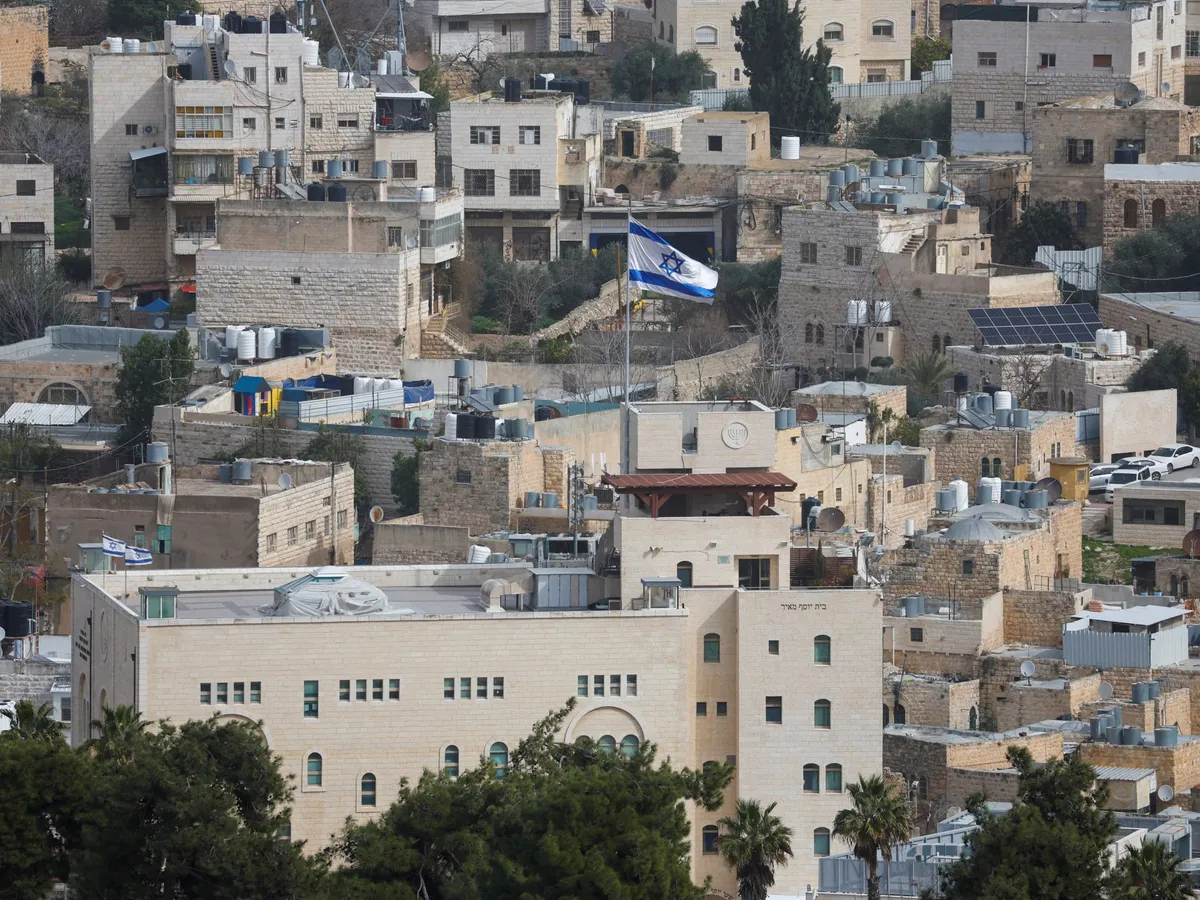
Al JazeeraFIG 01
Reading time
6min
Word count
1 381words
Sources cited
1cited
Entities identified
11entities
Quality score
100%
§ 01
Briefing Summary
AI-generatedNEWSAR · AI
In February 2026, the Israeli cabinet approved a plan to claim Palestinian lands in the West Bank as "state land," allocating nearly $79 million for a land registration project from 2026 to 2030. This initiative, spearheaded by far-right Israeli leaders, aims to resume a process frozen since 1967. The policy focuses on Area C, which constitutes over 62% of the West Bank, shifting it from military administration to direct Israeli civilian governance through the Land Title Settlement Administration. Critics argue this move solidifies Israeli presence and represents a gradual takeover of the West Bank, undermining the Oslo Accords' division of the territory into Areas A, B, and C. The plan involves creating 35 new positions to facilitate the land registration process.
Confidence 0.90Sources 1Claims 5Entities 11
§ 02
Article analysis
Model · rule-basedFraming
Political Strategy
Conflict
Tone
Mixed Tone
AI-assessed
CalmNeutralAlarmist
Factuality
0.40 / 1.00
Mixed
LowHigh
Sources cited
1
Limited
FewMany
§ 03
Key claims
5 extracted01
On February 8, Israeli authorities adopted new measures that open land purchase mechanisms for settlers while reducing oversight.
factualArticle
Confidence
1.00
02
Land registration in Area C, which constitutes more than 62 percent of the West Bank, is to take place through the Land Title Settlement Administration.
factualArticle
Confidence
1.00
03
The Israeli government has created 35 new positions and allocated 244.1 million shekels for the land registration project from 2026 to 2030.
statisticArticle
Confidence
1.00
04
Israeli cabinet approved a plan to claim Palestinian lands in the West Bank as “state land”.
factualArticle
Confidence
1.00
05
Israel always had a plan to annex more land in the occupied West Bank, and its actions prove it.
predictionArticle
Confidence
0.70
§ 04
Full report
6 min read · 1 381 words§ 05
Entities
11 identifiedKey playerOppositionContextPositiveNeutralNegative
People3
Organizations1
Locations6
§ 06
Keywords & salience
8 termswest bank
1.00
land registration
0.90
israeli annexation
0.80
oslo accords
0.70
area c
0.70
palestinian lands
0.60
israeli settlements
0.50
colonial project
0.40
§ 07
Topic connections
Interactive graph Network visualization showing 51 related topics
View Full Graph Person Organization Location Event|Click node to navigate|Edge numbers = shared articles