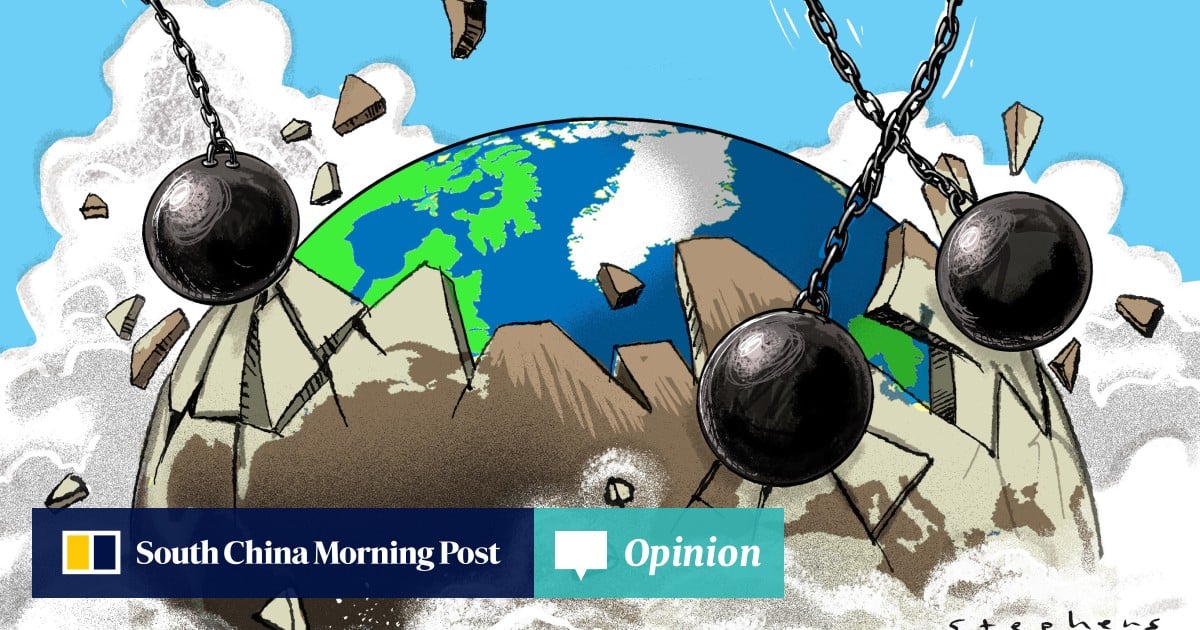
The global order has outgrown itself. The 2026 Munich Security Report describes this moment as a period of “wrecking-ball politics”, in which the post-war order constructed in 1945 is “under destruction”.However, that order was designed for a world shaped by bipolar rivalry and later sustained by American predominance. Today’s global system looks very different: economically diffuse, environmentally constrained and politically fragmented but deeply interconnected by both trade and technology.Meanwhile, rising populism in Western countries seeks to tear down multilateral structures perceived as holding back national prosperity.Yet multilateral institutions remain anchored in yesterday’s distribution of power, while today’s challenges – climate change, digital fragmentation, supply-chain insecurity, debt distress and geopolitical rivalry – demand frameworks that reflect contemporary realities. Global governance has struggled to keep pace with these changes.That old architecture was built for a world of steel, grain and territorial sovereignty. The system now finds itself confronting problems driven by data flows, artificial intelligence, cross-border platforms, atmospheric physics and globally integrated capital markets. Governance remains predominantly state-centric, while value creation and systemic risk increasingly transcend borders and sectors.The late 20th century was defined by confidence in a rules-based international order that could universalise principles under Western stewardship. It was also built on fading asymmetries of influence and supported by states that wholeheartedly backed these ideas.
SRCSouth China Morning Post
LANGEN
LEANCenter-Right
WORDS214
ENT2
THU · 2026-02-19 · 21:30 GMTBRIEF NSR-2026-0219-17668
NSR-2026-0219-17668Analysis·EN·Political Strategy
It’s time for global governance to reflect the new realities
The current global order, established after World War II, is struggling to address contemporary challenges. The 2026 Munich Security Report highlights a period of "wrecking-ball politics" where the post-war order is being dismantled.
Wang HuiyaoSouth China Morning PostFiled 2026-02-19 · 21:30 GMTLean · Center-RightRead · 1 min
South China Morning PostFIG 01
Reading time
1min
Word count
214words
Sources cited
1cited
Entities identified
2entities
Quality score
100%
§ 01
Briefing Summary
AI-generatedNEWSAR · AI
The current global order, established after World War II, is struggling to address contemporary challenges. The 2026 Munich Security Report highlights a period of "wrecking-ball politics" where the post-war order is being dismantled. This system, designed for a bipolar world and later American dominance, now faces a diffuse economic landscape, environmental constraints, and political fragmentation. Rising populism further threatens multilateral structures. However, existing global governance institutions are rooted in outdated power distributions and struggle to manage issues like climate change, digital fragmentation, and geopolitical rivalry. The system, built for a world of physical goods and territorial sovereignty, is ill-equipped to handle data flows, AI, and global capital markets, requiring frameworks that reflect current realities.
Confidence 0.90Sources 1Claims 5Entities 2
§ 02
Article analysis
Model · rule-basedFraming
Political Strategy
Economic Impact
Tone
Measured
AI-assessed
CalmNeutralAlarmist
Factuality
0.40 / 1.00
Mixed
LowHigh
Sources cited
1
Limited
FewMany
§ 03
Key claims
5 extracted01
Today’s challenges demand frameworks that reflect contemporary realities.
factual
Confidence
0.90
02
The post-war order constructed in 1945 is “under destruction”.
quote2026 Munich Security Report
Confidence
0.90
03
Governance remains predominantly state-centric.
factual
Confidence
0.80
04
Rising populism in Western countries seeks to tear down multilateral structures.
factual
Confidence
0.80
05
Multilateral institutions remain anchored in yesterday’s distribution of power.
factual
Confidence
0.70
§ 04
Full report
1 min read · 214 words§ 05
Entities
2 identifiedKey playerOppositionContextPositiveNeutralNegative
Organizations1
Locations1
§ 06
Keywords & salience
10 termsglobal governance
1.00
multilateral institutions
0.80
international order
0.70
geopolitical rivalry
0.60
climate change
0.60
artificial intelligence
0.50
supply-chain insecurity
0.50
digital fragmentation
0.50
systemic risk
0.40
populism
0.40
§ 07
Topic connections
Interactive graph No topic relationship data available yet. This graph will appear once topic relationships have been computed.