The ecological health of China’s Yangtze River is undergoing a meaningful recovery, just halfway through a 10-year fishing ban to restore the ecosystem, a new study has found.As one of the country’s vital waterways – and among the world’s most biodiverse rivers – the Yangtze has long supported immense economic and social functions. At its peak, it contributed more than 60 per cent of China’s freshwater fisheries output.Yet from the 1950s, the river basin faced sustained ecological decline due to overfishing, dam construction, water pollution and heavy shipping traffic. Over 70 years, freshwater catches dropped to just a quarter of historical highs, and 135 fish species documented in previous surveys have not been recorded in recent ones.To reverse the decline, Beijing enacted a 10-year fishing moratorium in 2021 along critical sections of the Yangtze, including its main stem, major tributaries, large connected lakes and designated estuarine areas.The scale of the undertaking was immense: more than 111,000 fishing vessels were recalled and 231,000 fishers were resettled, backed by an investment of more than US$2.7 billion.The ban was reinforced by the Yangtze River Protection Law, which also took effect in 2021. It introduced stricter regulations on water quality, sand mining and shoreline restoration.
SRCSouth China Morning Post
LANGEN
LEANCenter-Right
WORDS201
ENT3
SAT · 2026-02-21 · 04:00 GMTBRIEF NSR-2026-0221-18058
NSR-2026-0221-18058News Report·EN·Environmental
China’s Yangtze River fishing ban brings biomass surge, boosts finless porpoise
A new study has found that China's Yangtze River is undergoing a meaningful recovery halfway through a 10-year fishing ban enacted in 2021. The ban, which was reinforced by the Yangtze River Protection Law, aimed to restore the ecosystem and reverse decades of ecological decline caused by overfishing, dam construction, water pollution, and heavy shipping traffic.
Zhang TongSouth China Morning PostFiled 2026-02-21 · 04:00 GMTLean · Center-RightRead · 1 min
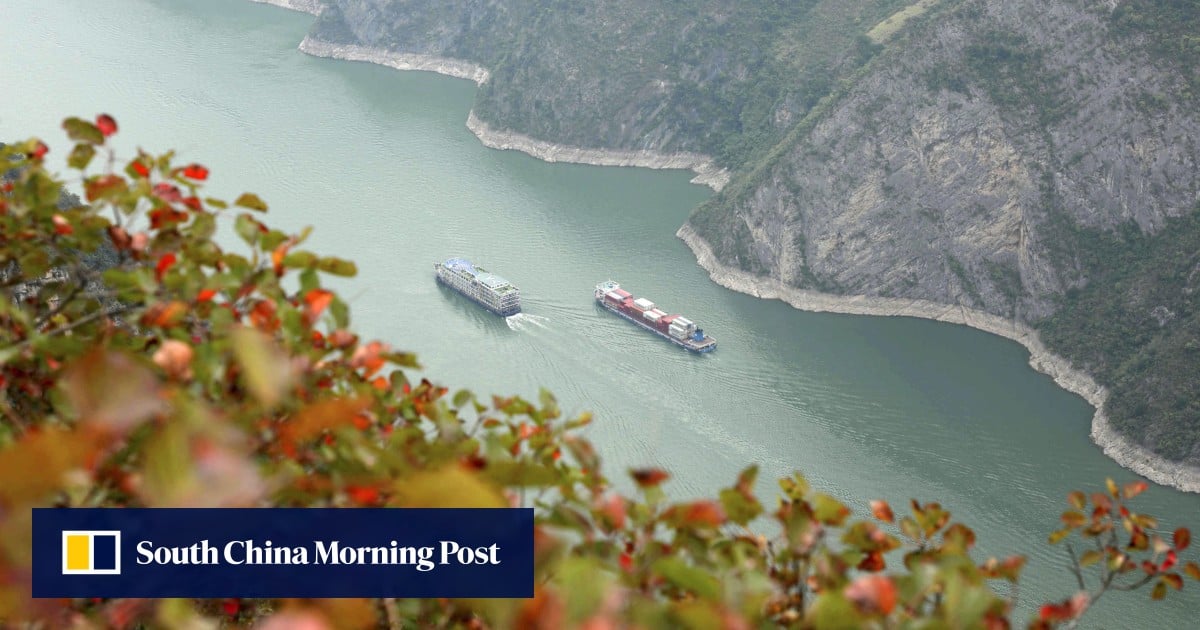
South China Morning PostFIG 01
Reading time
1min
Word count
201words
Sources cited
1cited
Entities identified
3entities
Quality score
100%
§ 01
Briefing Summary
AI-generatedNEWSAR · AI
A new study has found that China's Yangtze River is undergoing a meaningful recovery halfway through a 10-year fishing ban enacted in 2021. The ban, which was reinforced by the Yangtze River Protection Law, aimed to restore the ecosystem and reverse decades of ecological decline caused by overfishing, dam construction, water pollution, and heavy shipping traffic. Prior to the ban, freshwater catches had dropped to just a quarter of historical highs, with 135 fish species documented in previous surveys no longer recorded. The fishing moratorium has led to a biomass surge, particularly for the finless porpoise, which is now thriving in the river. Over 111,000 fishing vessels were recalled and 231,000 fishers were resettled as part of the undertaking. The ban has been backed by an investment of over US$2.7 billion.
Confidence 0.90Sources 1Claims 5Entities 3
§ 02
Article analysis
Model · rule-basedFraming
Environmental
Economic Impact
Tone
Measured
AI-assessed
CalmNeutralAlarmist
Factuality
0.80 / 1.00
Factual
LowHigh
Sources cited
1
Limited
FewMany
§ 03
Key claims
5 extracted01
The fishing ban was backed by an investment of more than US$2.7 billion.
statistic
Confidence
1.00
02
More than 111,000 fishing vessels were recalled and 231,000 fishers were resettled.
statistic
Confidence
1.00
03
Freshwater catches dropped to just a quarter of historical highs.
statistic
Confidence
1.00
04
At its peak, the Yangtze contributed more than 60 per cent of China’s freshwater fisheries output.
statistic
Confidence
1.00
05
The ecological health of China’s Yangtze River is undergoing a meaningful recovery.
factualnew study
Confidence
0.90
§ 04
Full report
1 min read · 201 words§ 05
Entities
3 identifiedKey playerOppositionContextPositiveNeutralNegative
§ 06
Keywords & salience
7 termsyangtze river fishing ban
0.90
ecological recovery
0.80
biodiversity surge
0.70
finless porpoise
0.60
fishing moratorium
0.50
water pollution
0.50
ecosystem restoration
0.40
§ 07
Topic connections
Interactive graph Network visualization showing 4 related topics
View Full Graph Person Organization Location Event|Click node to navigate|Edge numbers = shared articles