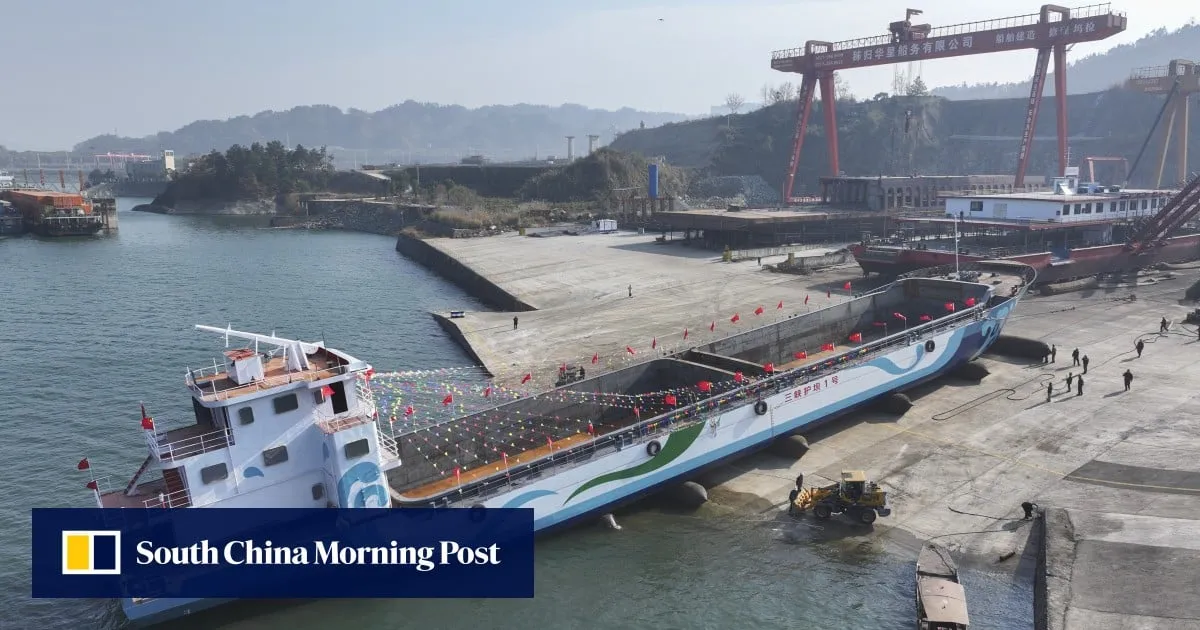
Having electrified its highways, China is mobilising its shipbuilding prowess and battery giants such as CATL to overhaul some shipping fleets, betting that the revolution in green transport can float as well as it drives.The shift towards clean energy underscores Beijing’s broader decarbonisation commitment – vowing to peak carbon emissions by 2030 and achieve neutrality by 2060. These goals have spurred substantial strides in renewable capacity installation, end-use revamps, new technology development and carbon trading.More than 1,000 vessels powered by electricity or alternative fuels are currently operating on China’s vast network of inland waterways, including 485 e-vessels, most of which are river passenger ships, according to data from the Ministry of Transport.However, some governments and companies are pivoting towards the development of electric cargo vessels, moving beyond short-haul passenger ships but largely confining this shift for now to domestic waterways rather than international deep-sea freight.Fujian Shipbuilding Industry Group launched a pure-electric cargo ship on February 7. Designed to transport up to 1,000 tonnes of freight on the Min River, the vessel boasts a 200km (124-mile) range on a single charge.Contemporary Amperex Technology (CATL), the world’s largest EV battery producer, has partnered with Jining Energy, a state-owned firm in Shandong province, to develop electric vessels with a 2,000-tonne load capacity and a range of up to 270km (158 miles) on a single charge. Five units were launched in December, with Jining Energy placing orders for an additional 50 ships.
SRCSouth China Morning Post
LANGEN
LEANCenter-Right
WORDS238
ENT4
SUN · 2026-02-22 · 08:00 GMTBRIEF NSR-2026-0222-18275
NSR-2026-0222-18275News Report·EN·Environmental
China amps up electric ships in push to decarbonise waterways, leverage EV prowess
China is expanding its electric vehicle technology to its waterways, aiming to decarbonize shipping and meet its broader climate goals. Over 1,000 electric or alternative fuel vessels are already operating on inland waterways, with 485 being electric.
Carol YangSouth China Morning PostFiled 2026-02-22 · 08:00 GMTLean · Center-RightRead · 1 min
South China Morning PostFIG 01
Reading time
1min
Word count
238words
Sources cited
2cited
Entities identified
4entities
Quality score
100%
§ 01
Briefing Summary
AI-generatedNEWSAR · AI
China is expanding its electric vehicle technology to its waterways, aiming to decarbonize shipping and meet its broader climate goals. Over 1,000 electric or alternative fuel vessels are already operating on inland waterways, with 485 being electric. While most current e-vessels are passenger ships, companies are now developing electric cargo ships for domestic routes. Fujian Shipbuilding Industry Group launched an electric cargo ship with a 200km range, and CATL is partnering with Jining Energy to produce vessels with a 270km range, with orders for 50 additional ships already placed. This shift leverages China's EV battery production capabilities to transform its shipping industry.
Confidence 0.90Sources 2Claims 5Entities 4
§ 02
Article analysis
Model · rule-basedFraming
Environmental
Economic Impact
Tone
Measured
AI-assessed
CalmNeutralAlarmist
Factuality
0.80 / 1.00
Factual
LowHigh
Sources cited
2
Limited
FewMany
§ 03
Key claims
5 extracted01
CATL partnered with Jining Energy to develop electric vessels with a 2,000-tonne load capacity.
factual
Confidence
1.00
02
Fujian Shipbuilding Industry Group launched a pure-electric cargo ship on February 7.
factual
Confidence
1.00
03
More than 1,000 vessels powered by electricity or alternative fuels are operating on China’s waterways.
statisticMinistry of Transport
Confidence
1.00
04
China aims to peak carbon emissions by 2030 and achieve neutrality by 2060.
factual
Confidence
1.00
05
China is electrifying its shipping fleets to decarbonize waterways.
factual
Confidence
0.90
§ 04
Full report
1 min read · 238 words§ 05
Entities
4 identifiedKey playerOppositionContextPositiveNeutralNegative
Organizations1
§ 06
Keywords & salience
9 termselectric ships
1.00
decarbonisation
0.80
china
0.70
electric vehicles
0.60
battery technology
0.60
inland waterways
0.50
cargo vessels
0.50
green transport
0.40
catl
0.40
§ 07
Topic connections
Interactive graph Network visualization showing 51 related topics
View Full Graph Person Organization Location Event|Click node to navigate|Edge numbers = shared articles