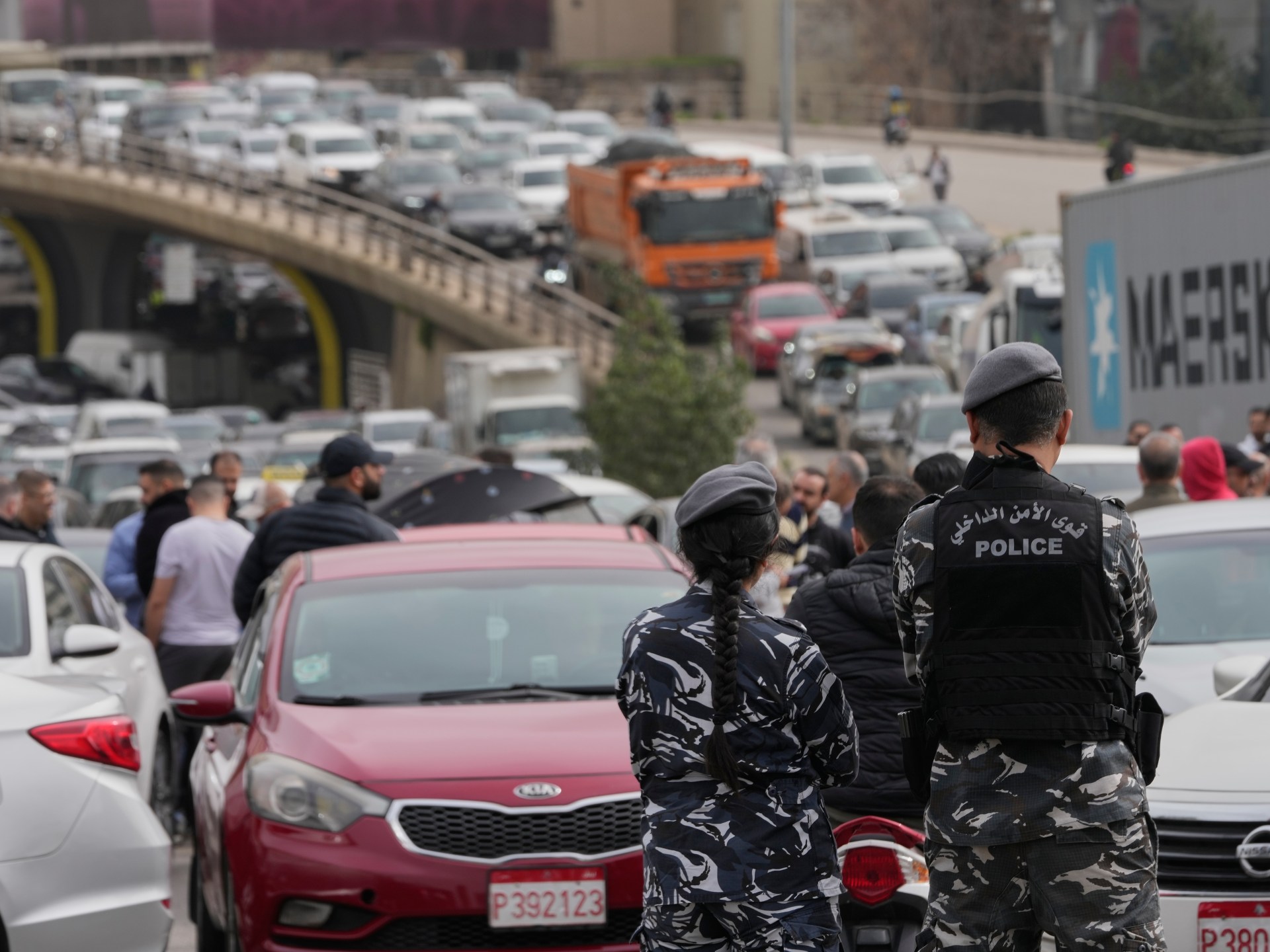
Prime Minister Nawaf Salam has announced hikes on petrol and sales taxes. Analysts say it is a regressive policy.Lebanese police stand in front of taxi drivers who block a main highway with their cars during a protest against the increased taxes and petrol prices issued by the Lebanese cabinet on Monday, in Beirut, Lebanon, Tuesday, February 17, 2026 [File: Hussein Malla/AP]Published On 23 Feb 2026Beirut, Lebanon – Anger in Lebanon is growing after the government of Prime Minister Nawaf Salam announced increases in petrol taxes and value-added taxes (VATs) last week.The rises in what economists and analysts have called “regressive” taxes led to two protests on February 17 and an array of criticism against the government, including from media and voices that had previously been friendly to Salam’s reformist administration.Recommended Stories list of 3 itemslist 1 of 3Gaza child dies after Israel blocks medical evacuationlist 2 of 3‘You either fight or die’: Kenyans tricked into joining Russia-Ukraine warlist 3 of 3Who was El Mencho? What drug lord’s killing means for Mexicoend of list“The government lost its mind,” Megaphone News, an independent, progressive news outlet published on a social media account in response to Salam’s government announcing a 300,000 Lebanese pound ($3.35) price increase on 20 litres (about 5.3 gallons) of petrol or gasoline and a one percent increase from 11 to 12 percent on VAT – a consumption tax charged on goods and services at each stage of production.A taxi driver lies on the ground in front of a truck as taxi drivers block a main road with their vehicles during a protest in Beirut, Lebanon, on February 17, 2026 [File: Wael Hamzeh/EPA]On the morning of February 17, a handful of taxi drivers blocked the Ring Bridge in downtown Beirut to protest the rise in taxes. Later that evening, in Riad al-Solh Square, around 50 or so protesters gathered to express their discontent with the government’s decision.“You have no housing, you have no loans, you have no safety, I mean, you live here in a prison, brother,” one angry protester told Lebanese television station Al Jadeed from the Ring Bridge protest.His comments represent the frustration felt by many Lebanese – that the tax increases are yet another indignity the population must live through, including near-daily Israeli attacks and violations of the 2024 ceasefire, collapsing buildings in the north, and an ongoing economic crisis since 2019.Salam doubles downThe last time a tax spike sent Lebanese people to the streets was in 2019. Anger in Lebanon had boiled after decades of economic and political mismanagement by the government. Then, as the country’s economy started collapsing, the government tried to implement a series of taxes, including on WhatsApp calls.The response was widespread protests that collapsed the government, led at the time by then-Prime Minister Saad al-Hariri. But they failed to dislodge the wider sectarian system that many activists and experts say plagues Lebanon and prevents reform.Last week’s protests were on a far smaller scale than 2019, however.Then, protesters forced the government to walk back the taxes. But Salam, the prime minister, defended the tax hike on Friday. The government’s argument is that the taxes are necessary to pay salaries and pensions for state employees and retirees.“We had to find a quick source to fund the raises,” he said. “These are exceptional measures… but the government wants to reform the tax system, not just impose new taxes.”Salam also said that his government inherited a “very difficult” financial situation and promised that he would rebuild trust between the state and the people by working to establish a fair tax system.Lebanon’s Finance Minister Yassine Jaber said the fuel price increase would take effect immediately, but that VAT increases would need parliament’s approval.“More than 50 per cent of the budget today is allocated to salaries, and it was necessary to take steps to secure the funds,” he said.VAT is a regressive taxBut not everyone agreed with the decision, including some ministers themselves. The right-wing Lebanese Forces bloc – which is part of the government coalition – voiced objection to the tax increase, calling for a study of the impacts.Analysts, meanwhile, were heavily critical of the tax increase. They said that the rise of petrol prices and VAT would punish the country’s most vulnerable and would further widen the gap between rich and poor in Lebanon.“The people who are most affected by value-added taxes are usually the poorest of the poor and the most vulnerable, given the type of their consumption, which is mostly filled of the goods and the services that are affected by taxation, and whereby the proportion of the taxation is significant,” Farah al-Shami, senior fellow and programme director for Social Protection at the Arab Reform Initiative, told Al Jazeera. “VAT is by nature the most regressive type of taxation. Studies have shown that it affects the full supply chain, meaning everything that goes into the production, for example, of a certain good is affected.”A price increase at every step of the supply chain means that prices compound to end up being more expensive for consumers.In 2019, decades of government mismanagement of the economy ended in the collapse of the banking sector and the depreciation of the Lebanese pound by over 90 percent. Before 2019, $1 was equivalent to 1,500 Lebanese pounds, whereas now $1 is valued at nearly 89,500 Lebanese pounds.Many lost their life savings with the currency freefall. Banks quickly shut their doors and limited withdrawals. More than six years later, many Lebanese have not recovered, nor has the economy.Scandalous undertaxingThe high cost of living is a regular talking point among Lebanese, particularly in the capital, Beirut. Many are struggling to make ends meet and rely on the $5.8bn in remittances from family or contacts abroad (these are 2024 figures).With so many struggling, a tax increase that impacts the entire population is a recipe for anger. And analysts said that if the government is in need of tax revenue, there are plenty of undertaxed sources to draw from.“Property in Lebanon remains scandalously undertaxed,” Dania Arayssi, a senior analyst at New Lines Institute for Strategy and Policy Luxury, told Al Jazeera. “Real estate in Beirut — some of the most expensive per square metre in the region — generates a fraction of the public revenue it could and should. Capital gains on property are minimal. Wealth held in land and assets is effectively sheltered. Similarly, luxury goods face no meaningful additional burden.”Fouad Debs, a lawyer and member of the Depositors Union, a group founded after the 2019 banking crisis to protect the rights of depositors, said the decision went against the government’s stated goals of reform.“All of this is to keep the [current] system intact and save the banks, instead of having them also pay the taxes that they should pay,” Debs said.
SRCAl Jazeera
LANGEN
LEANCenter
WORDS1 129
ENT5
MON · 2026-02-23 · 19:47 GMTBRIEF NSR-2026-0223-18674
NSR-2026-0223-18674News Report·EN·Economic Impact
Lebanon’s tax hikes draw anger from economically frustrated public
In Lebanon, Prime Minister Nawaf Salam's government announced increases in petrol and sales taxes, sparking public anger and protests. On February 17, 2026, taxi drivers blocked roads in Beirut, and demonstrators gathered in Riad al-Solh Square to voice their discontent.
Justin SalhaniAl JazeeraFiled 2026-02-23 · 19:47 GMTLean · CenterRead · 5 min
Al JazeeraFIG 01
Reading time
5min
Word count
1 129words
Sources cited
3cited
Entities identified
5entities
Quality score
100%
§ 01
Briefing Summary
AI-generatedNEWSAR · AI
In Lebanon, Prime Minister Nawaf Salam's government announced increases in petrol and sales taxes, sparking public anger and protests. On February 17, 2026, taxi drivers blocked roads in Beirut, and demonstrators gathered in Riad al-Solh Square to voice their discontent. Critics, including media outlets, have called the tax hikes "regressive," adding to the population's frustration amid an ongoing economic crisis since 2019, near-daily Israeli attacks, and collapsing buildings. The tax increases include a 300,000 Lebanese pound increase on 20 liters of petrol and a one percent increase in VAT. The public feels the tax increases are another indignity they must live through.
Confidence 0.90Sources 3Claims 5Entities 5
§ 02
Article analysis
Model · rule-basedFraming
Economic Impact
Political Strategy
Tone
Measured
AI-assessed
CalmNeutralAlarmist
Factuality
0.70 / 1.00
Factual
LowHigh
Sources cited
3
Well sourced
FewMany
§ 03
Key claims
5 extracted01
Tax spike in 2019 sent Lebanese people to the streets.
factualnull
Confidence
1.00
02
A one percent increase from 11 to 12 percent on VAT was announced.
factualnull
Confidence
1.00
03
Salam’s government announced a 300,000 Lebanese pound ($3.35) price increase on 20 litres of petrol.
factualnull
Confidence
1.00
04
The government lost its mind.
quoteMegaphone News
Confidence
1.00
05
Prime Minister Nawaf Salam announced increases in petrol taxes and value-added taxes (VATs).
factualnull
Confidence
1.00
§ 04
Full report
5 min read · 1 129 words§ 05
Entities
5 identifiedKey playerOppositionContextPositiveNeutralNegative
Organizations1
§ 06
Keywords & salience
7 termslebanon
0.90
tax hikes
0.80
economic crisis
0.80
regressive policy
0.70
protest
0.70
petrol taxes
0.60
vat increases
0.50
§ 07
Topic connections
Interactive graph Network visualization showing 51 related topics
View Full Graph Person Organization Location Event|Click node to navigate|Edge numbers = shared articles