Four years after Russia launched its full-scale invasion of Ukraine, the war is grinding into a fifth year with no clear end in sight, despite renewed diplomatic efforts and a fresh push for a negotiated settlement. Peace talks have accelerated since President Donald Trump returned to office, reviving direct and indirect channels between Moscow and Kyiv. Ukrainian President Volodymyr Zelenskyy said earlier this month that the United States is pushing for a peace agreement by June, with the Trump administration expected to apply pressure on both sides as U.S.-mediated talks continue following temporary pauses in energy infrastructure strikes and a series of recent prisoner exchanges. But despite those steps, fighting has not slowed. Ukraine RACES TO BOLSTER AIR DEFENSES AS PUTIN’S STRIKE PAUSE NEARS END On the battlefield, Russian forces continue incremental, costly advances in eastern Ukraine , particularly in the contested Donetsk region. The pace is far removed from the rapid territorial gains seen in the war’s early weeks, with progress now measured in foot-by-foot advances, according to the Institute for the Study of War (ISW), a non-partisan, public policy research organization that tracks the frontlines. At the same time, Ukraine has mounted counteroffensive operations on a tactical scale in the northeastern Kupyansk direction, reclaiming territory even as the Kremlin continues to portray steady forward momentum. Russia LOSING 'MASSIVE' 25,000 TROOPS MONTHLY IN Ukraine AS WAR GRINDS ON, NATO CHIEF SAYS Christina Harward, Russia deputy team lead at the ISW, said in an interview with Fox News Digital that Moscow's public posture suggests little willingness to compromise, as officials continue to reiterate the same core demands outlined before the war began. "What the Kremlin has been doing really consistently is delaying, stalling, and blaming anyone but Russia for this delaying and this stalling. We see them trying to dangle different carrots and also using sticks in order to try to influence President Trump and his administration to give in to the Russian demands," she said. Harward noted that Russia continues to press for control over the remaining Ukrainian-held areas of Donetsk, including the heavily fortified "fortress belt" cities that Kyiv has been building up since 2014. Preparations for a potential spring or summer offensive, she explained, suggest Moscow is positioning for a prolonged war rather than moving toward an imminent peace. TRUMP MEETS WITH ZELENSKYY; TALKS COULD UNLOCK FIRST ZELENSKYY-PUTIN CALL IN FIVE YEARS: SOURCE Beyond territorial disputes, negotiations remain entangled in broader security questions. Russia has rejected the prospect of Western security guarantees for postwar Ukraine and warned that foreign troops would be considered legitimate targets . Kyiv and its European partners, meanwhile, contend that without meaningful guarantees, any ceasefire could simply provide Russia time to regroup and rearm. Ret. Army Maj. Gen. Matt Smith told Fox News Digital he does not believe the latest round of diplomacy has brought the sides meaningfully closer to a deal, arguing that Russian President Vladimir Putin faces intense internal pressure that limits his ability to compromise. TRUMP, ZELENSKYY SAY Ukraine PEACE DEAL CLOSE BUT 'THORNY ISSUES' REMAIN AFTER FLORIDA TALKS "The stakes are potentially much higher for him personally, in terms of life and limb in the most dramatic sense, but also in terms of his internal political power," Smith said. "If he's to compromise in any way, he has nothing to show for an extraordinary expense in lives, time, economics. You know, he's paid a tremendous price." Russian forces have suffered approximately 1.2 million casualties (as many as 325,000 killed, with the rest being injured or missing) since February 2022, according to a January analysis by the Center for Strategic and International Studies (CSIS). The report estimates that combined Russian and Ukrainian casualties could reach nearly 2 million by the spring of 2026 if current rates persist. CSIS found that Russian forces have advanced at an average rate of between 15 and 70 meters per day, roughly 16 to 77 yards, in their most prominent offensives, slower than almost any major offensive campaign in any war in the last century. Gen. Smith likened the situation to the final years of the Vietnam War, saying the outcome on the battlefield may already be clearer than the politics surrounding it. "The war’s already over," he told Fox News Digital. "People just haven’t stopped dying yet. He [Putin’s] already lost. The question is, how do you get him to admit it?"
SRCFox News - World
LANGEN
LEANCenter-Right
WORDS728
ENT11
TUE · 2026-02-24 · 15:44 GMTBRIEF NSR-2026-0224-18906
NSR-2026-0224-18906News Report·EN·Conflict
‘Delaying, stalling and blaming’: Russia shows little sign of compromise as war enters fifth year, expert says
As the Russia-Ukraine war enters its fifth year, peace talks have accelerated, particularly with renewed U.S. involvement under President Trump, who aims for a peace agreement by June.
Ashley CarnahanFox News - WorldFiled 2026-02-24 · 15:44 GMTLean · Center-RightRead · 3 min
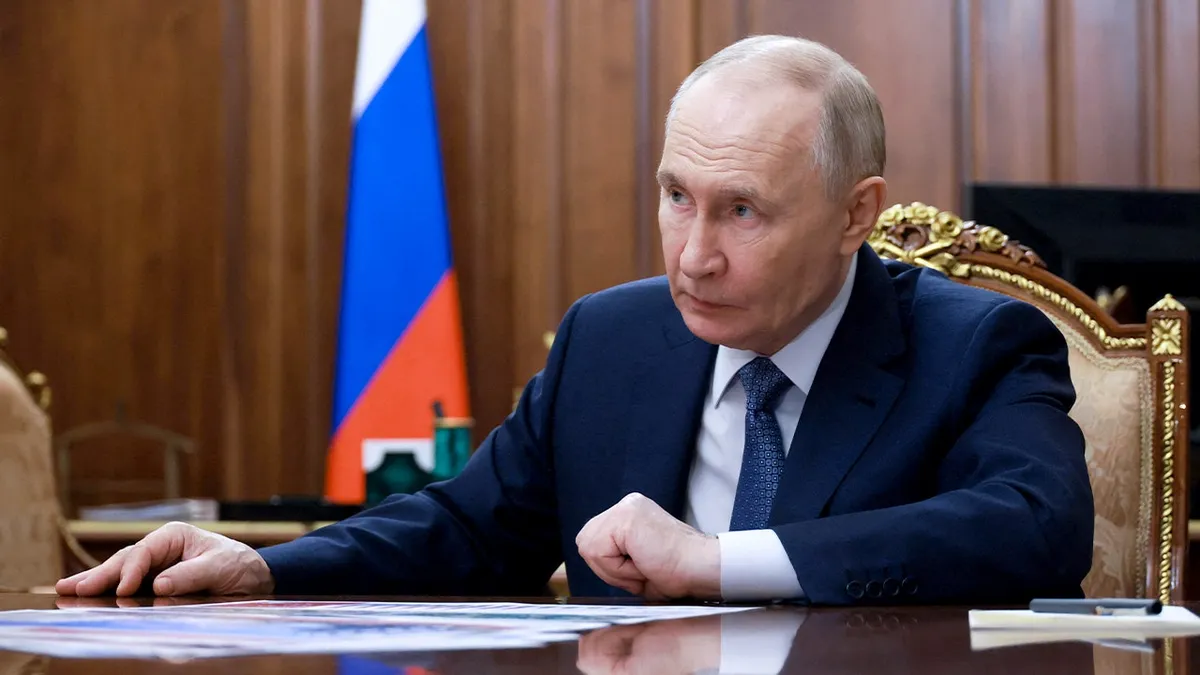
Fox News - WorldFIG 01
Reading time
3min
Word count
728words
Sources cited
3cited
Entities identified
11entities
Quality score
100%
§ 01
Briefing Summary
AI-generatedNEWSAR · AI
As the Russia-Ukraine war enters its fifth year, peace talks have accelerated, particularly with renewed U.S. involvement under President Trump, who aims for a peace agreement by June. Despite these efforts, fighting continues, with Russia making slow, costly advances in eastern Ukraine, particularly in the Donetsk region, while Ukraine mounts tactical counteroffensives. According to the Institute for the Study of War, Russia shows little sign of compromise, reiterating pre-war demands and employing tactics to influence the U.S. administration. An expert from ISW suggests Russia is positioning for a prolonged war, evidenced by preparations for a potential spring or summer offensive and continued focus on capturing remaining Ukrainian-held areas of Donetsk.
Confidence 0.90Sources 3Claims 5Entities 11
§ 02
Article analysis
Model · rule-basedFraming
Conflict
Political Strategy
Tone
Measured
AI-assessed
CalmNeutralAlarmist
Factuality
0.70 / 1.00
Factual
LowHigh
Sources cited
3
Well sourced
FewMany
§ 03
Key claims
5 extracted01
The war in Ukraine is grinding into its fifth year.
factual
Confidence
1.00
02
Russian forces continue incremental, costly advances in eastern Ukraine.
factual
Confidence
0.90
03
Moscow's public posture suggests little willingness to compromise.
quoteChristina Harward, ISW
Confidence
0.80
04
The United States is pushing for a peace agreement by June.
quoteVolodymyr Zelenskyy
Confidence
0.80
05
Russia is losing 'massive' 25,000 troops monthly in Ukraine.
quoteNATO Chief
Confidence
0.70
§ 04
Full report
3 min read · 728 words§ 05
Entities
11 identifiedKey playerOppositionContextPositiveNeutralNegative
§ 06
Keywords & salience
8 termsrussia-ukraine war
1.00
peace talks
0.80
negotiated settlement
0.70
russian demands
0.70
donetsk region
0.60
stalemate
0.50
offensive operations
0.50
territorial gains
0.40
§ 07
Topic connections
Interactive graph Network visualization showing 51 related topics
View Full Graph Person Organization Location Event|Click node to navigate|Edge numbers = shared articles