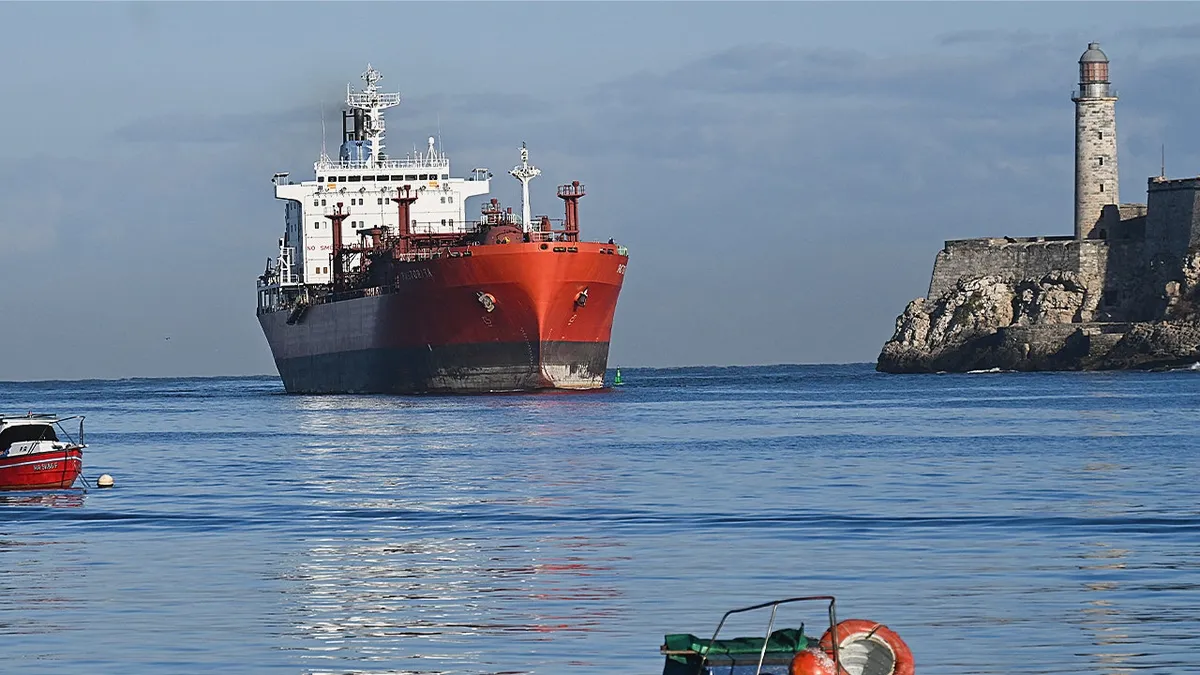
A tanker allegedly carrying Russian fuel en route to Cuba is using deceptive "dark fleet" tactics, including signal manipulation and offshore ship-to-ship transfers, according to maritime intelligence firm Windward . According to MarineTraffic, the vessel, called Sea Horse, was located Tuesday on the U.S. East Coast with its signal, noted as "roaming." The move comes as the U.S. pressured Cuba’s fuel supplies, disrupting deliveries and targeting third-party countries that provide oil, following new sanctions and the detention of Venezuelan leader Nicolás Maduro. On Jan. 29, President Donald Trump also signed an executive order declaring a national emergency with respect to Cuba and authorizing tariffs on imports from countries that sell or supply oil there. Windward reported that the Russian oil tanker initially broadcast Havana as its destination on Feb. 7, and was "Hong Kong-flagged" before quietly changing tack. Windward said the tanker had an expected arrival in Cuba in early March. US FORCES INTERDICT ANOTHER FUGITIVE TANKER SHIP IN INDIAN OCEAN The vessel altered its Automatic Identification System (AIS) signal to show it would arrive in the " Caribbean Sea" within two weeks — a vague designation the firm said is often used to hide a ship’s final port of call. The destination was later switched again to Gibraltar for orders, even after the tanker had already transited the strait, a move Windward described as inconsistent with standard commercial routing. Windward’s analysis also suggests the vessel loaded its cargo through a ship-to-ship (STS) transfer conducted offshore near Cyprus. RUSSIAN OIL TANKER ‘THE GRINCH’ INTERCEPTED AS US, ALLIES ESCALATE SANCTIONS CRACKDOWN During the loading process, the tanker’s AIS signal was temporarily switched off — "a tactic of deceptive maritime operations designed to avoid regulatory scrutiny," Windward said. Windward data also shows the vessel’s draft increased on Feb. 8, several days after leaving an area used for floating storage and transshipment of Russian middle distillate cargoes originating from Black Sea ports. The tanker had loitered in that zone for roughly two weeks before departing, Windward said. "Ship-to-ship transfers outside territorial waters, where port-state oversight is limited, have become a common practice in oil trade to circumvent sanctions and regulatory scrutiny," Windward noted. 'IRREGULAR' ARMED GUARDS ABOARD RUSSIAN SHADOW TANKERS ALARM NORDIC-BALTIC GOVERNMENTS The company added that AIS manipulation, offshore transfers and ambiguous destination reporting are now standard features of shadow-fleet activity sustaining Russian oil exports despite any U.S. sanctions. Cuba is also facing an energy crisis that has worsened in recent weeks after oil shipments from Venezuela, its primary supplier, were halted following U.S. action in early January. Mexico, another major supplier, also suspended oil shipments, according to The Associated Press .
SRCFox News - World
LANGEN
LEANCenter-Right
WORDS440
ENT10
WED · 2026-02-25 · 00:26 GMTBRIEF NSR-2026-0225-19007
NSR-2026-0225-19007News Report·EN·Political Strategy
Russian ‘dark fleet’ tanker believed to be delivering oil to Cuba, detected off US coast amid Trump ban
A Russian tanker, the Sea Horse, suspected of carrying fuel to Cuba, was detected off the U.S. East Coast, potentially violating U.S.
Emma BusseyFox News - WorldFiled 2026-02-25 · 00:26 GMTLean · Center-RightRead · 2 min
Fox News - WorldFIG 01
Reading time
2min
Word count
440words
Sources cited
3cited
Entities identified
10entities
Quality score
100%
§ 01
Briefing Summary
AI-generatedNEWSAR · AI
A Russian tanker, the Sea Horse, suspected of carrying fuel to Cuba, was detected off the U.S. East Coast, potentially violating U.S. sanctions. Maritime intelligence firm Windward reports the tanker is employing "dark fleet" tactics, including manipulating its AIS signal and conducting ship-to-ship transfers offshore near Cyprus to obscure its movements. The tanker initially indicated Havana as its destination before changing it multiple times, including a false designation of Gibraltar after already passing the strait. These actions coincide with increased U.S. pressure on Cuba's fuel supply and sanctions targeting countries that provide oil to the island, following President Trump's executive order declaring a national emergency regarding Cuba. Windward's analysis suggests the tanker loaded its cargo via ship-to-ship transfer, a common practice to circumvent sanctions.
Confidence 0.90Sources 3Claims 5Entities 10
§ 02
Article analysis
Model · rule-basedFraming
Political Strategy
National Security
Tone
Mixed Tone
AI-assessed
CalmNeutralAlarmist
Factuality
0.80 / 1.00
Factual
LowHigh
Sources cited
3
Well sourced
FewMany
§ 03
Key claims
5 extracted01
President Donald Trump signed an executive order declaring a national emergency with respect to Cuba on Jan. 29.
factual
Confidence
1.00
02
The vessel, called Sea Horse, was located Tuesday on the U.S. East Coast with its signal, noted as "roaming."
factualMarineTraffic
Confidence
1.00
03
The Russian oil tanker initially broadcast Havana as its destination on Feb. 7.
factualWindward
Confidence
0.90
04
A tanker allegedly carrying Russian fuel en route to Cuba is using deceptive "dark fleet" tactics.
factualWindward
Confidence
0.80
05
AIS manipulation, offshore transfers and ambiguous destination reporting are now standard features of shadow-fleet activity.
factualWindward
Confidence
0.70
§ 04
Full report
2 min read · 440 words§ 05
Entities
10 identifiedKey playerOppositionContextPositiveNeutralNegative
§ 06
Keywords & salience
9 termsdark fleet
0.90
oil tanker
0.80
sanctions
0.70
cuba
0.70
ship-to-ship transfer
0.70
russian oil
0.60
ais signal manipulation
0.60
maritime intelligence
0.50
regulatory scrutiny
0.40
§ 07
Topic connections
Interactive graph Network visualization showing 51 related topics
View Full Graph Person Organization Location Event|Click node to navigate|Edge numbers = shared articles